
Part 3. The Physical Frontier
From 'The Long Horizon: A Vision of Frontier Technology from 2026 to 2400' - an AI-authored book produced on Comuvia's BookWriter system. Each chapter below is shown as its Business Editorial poster with a one-paragraph synopsis.
Chapter 26. Programmable Robotics and the Autonomous Factory
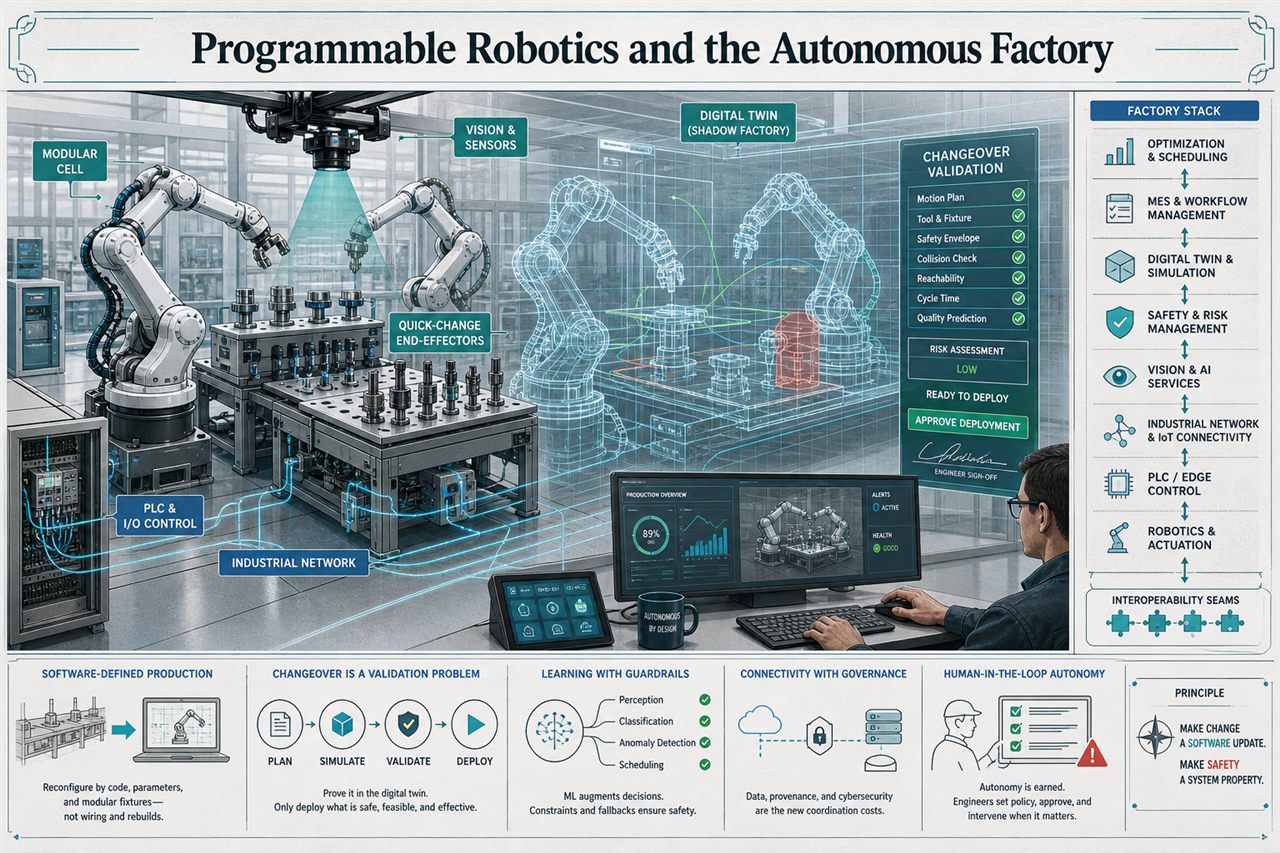
Programmable robotics pushes factories toward software-defined production, where motion, tooling, sensing, scheduling, quality control, and safety can be reconfigured fast enough that changeovers become validated software-and-fixture updates rather than manual rebuilds. By 2026, robots excel at repeatable tasks; the bottleneck is flexible redeployment across variable products, suppliers, and real-world conditions. The operating stack spans robots, PLCs, vision, industrial networks, MES, digital twins, safety-rated controls, optimization, and human approvals, but remains vendor-fragmented and integration-heavy. Learning helps perception and planning, yet dependable contact-rich operation still needs constrained models, rigorous testing, fallback logic, and engineered safety cases, alongside strong interoperability and cybersecurity governance.
Chapter 27. Humanoids, Cobots, and the Industrial Workforce Transition
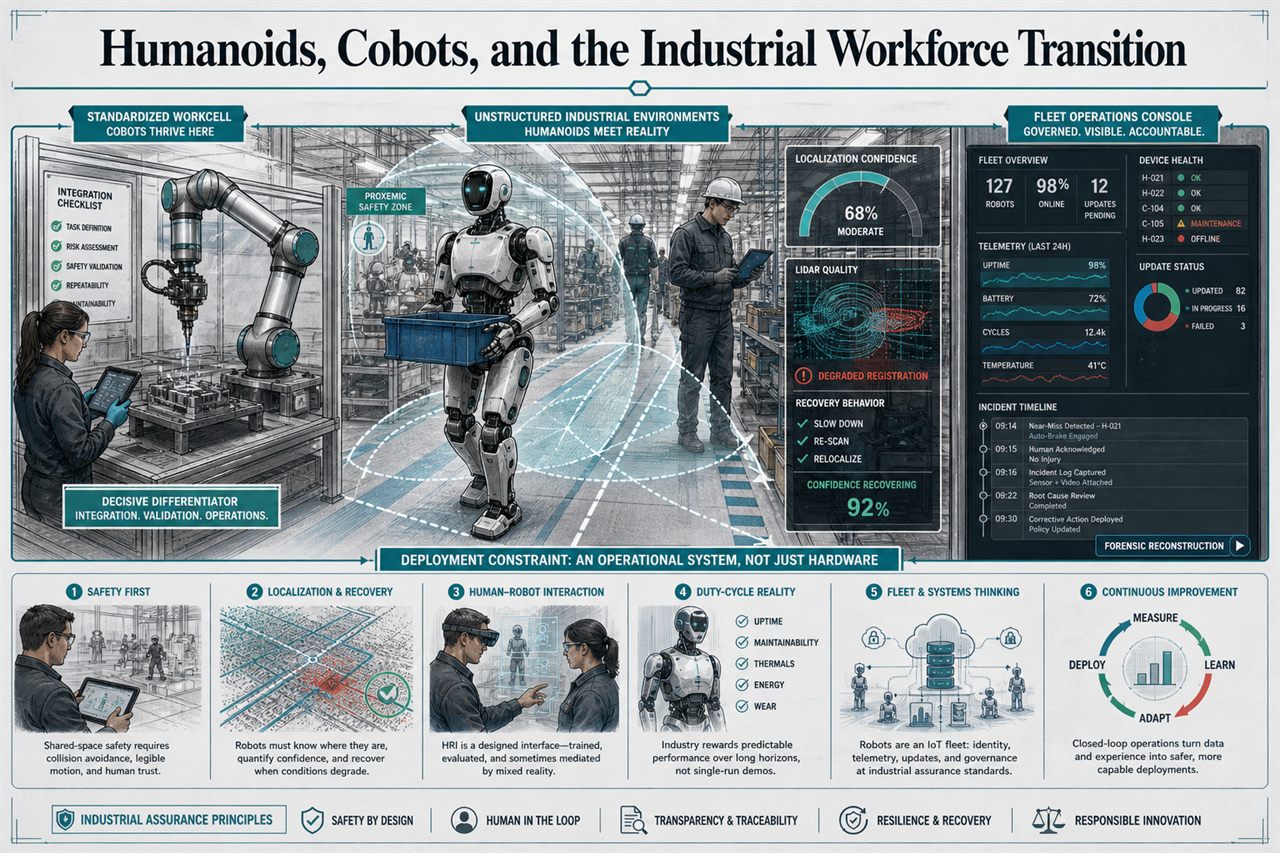
Humanoids and cobots promise sustained productive work in human-built industrial settings, but the binding constraint is reliable deployment: safety assurance, robust mobility and localization, dexterous manipulation under variance, maintainability, and economically sound integration. Cobots already succeed in standardized, repetitive tasks, where the main work is tooling, workflow redesign, and assurance rather than raw capability. Humanoids remain mostly demonstrative, with open questions about duty cycle, serviceability, and how to construct credible safety cases for shared spaces. Practical progress hinges on measurable human-robot interaction factors such as perceived safety and predictability, improved localization with confidence management and recovery behaviors, and clearer command channels that reduce training time and ambiguity. At scale, fleets must be governed like IoT systems, with identity, telemetry, updates, and incident reconstruction treated as core infrastructure.
Chapter 28. Robots Building Robots - Recursive Industrial Automation
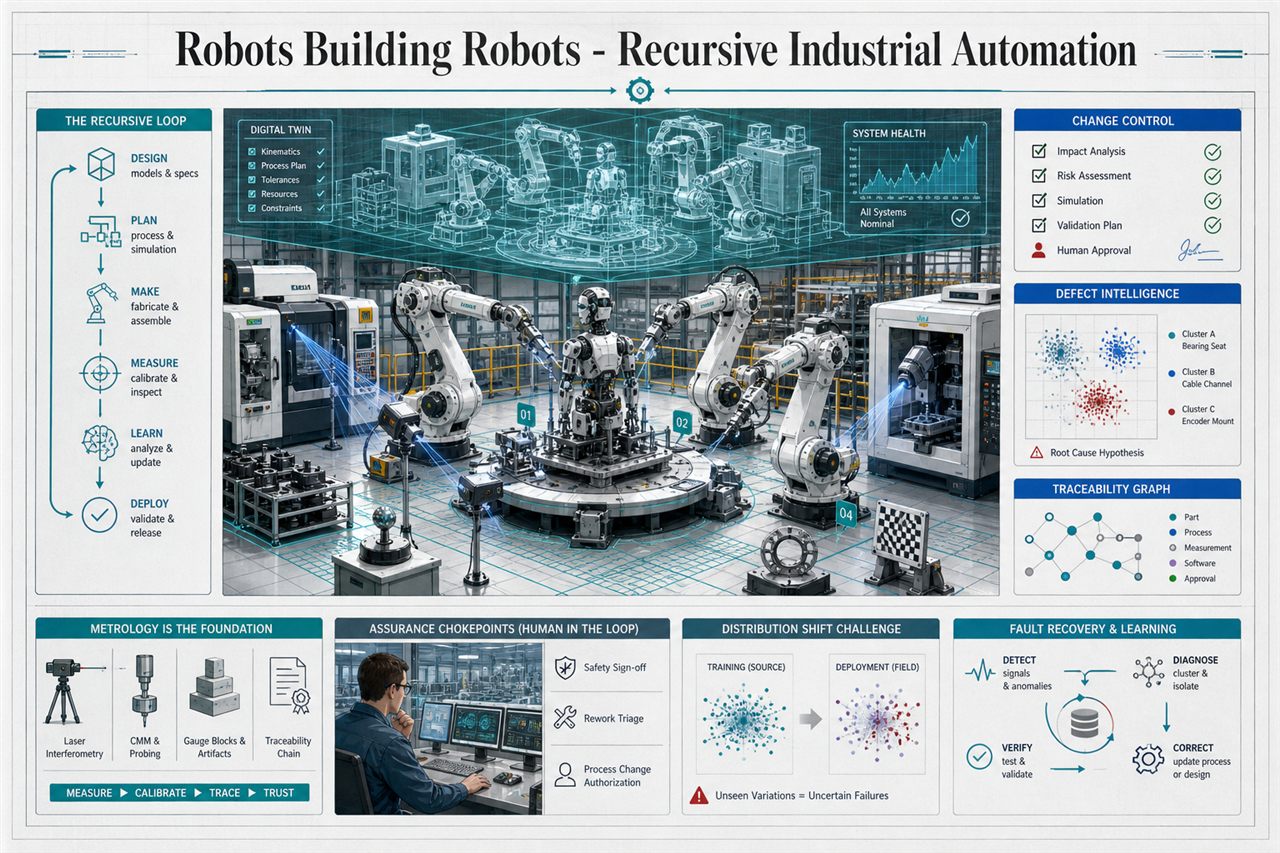
Recursive industrial automation means factories can fabricate, assemble, calibrate, inspect, repair, and iteratively upgrade their own robotic production equipment with limited human intervention. Today’s industrial robots excel at structured, repeatable tasks, and “partial recursion” already exists because automated machine tools, PCB lines, and inspection systems help produce robot components. The limiting factor is system integration: tightly closed-loop links among sensors, Industrial IoT, controllers, quality data, digital twins, defect analytics, explainable logs, and rigorous change-control. Learning-based perception and adaptive control work in bounded settings but face distribution shift, validation burden, and safety/explainability demands. Treat it as a whole-factory capability, not self-sufficient robot reproduction.
Chapter 29. Microrobotics, Microsurgery, and Microscale Engineering
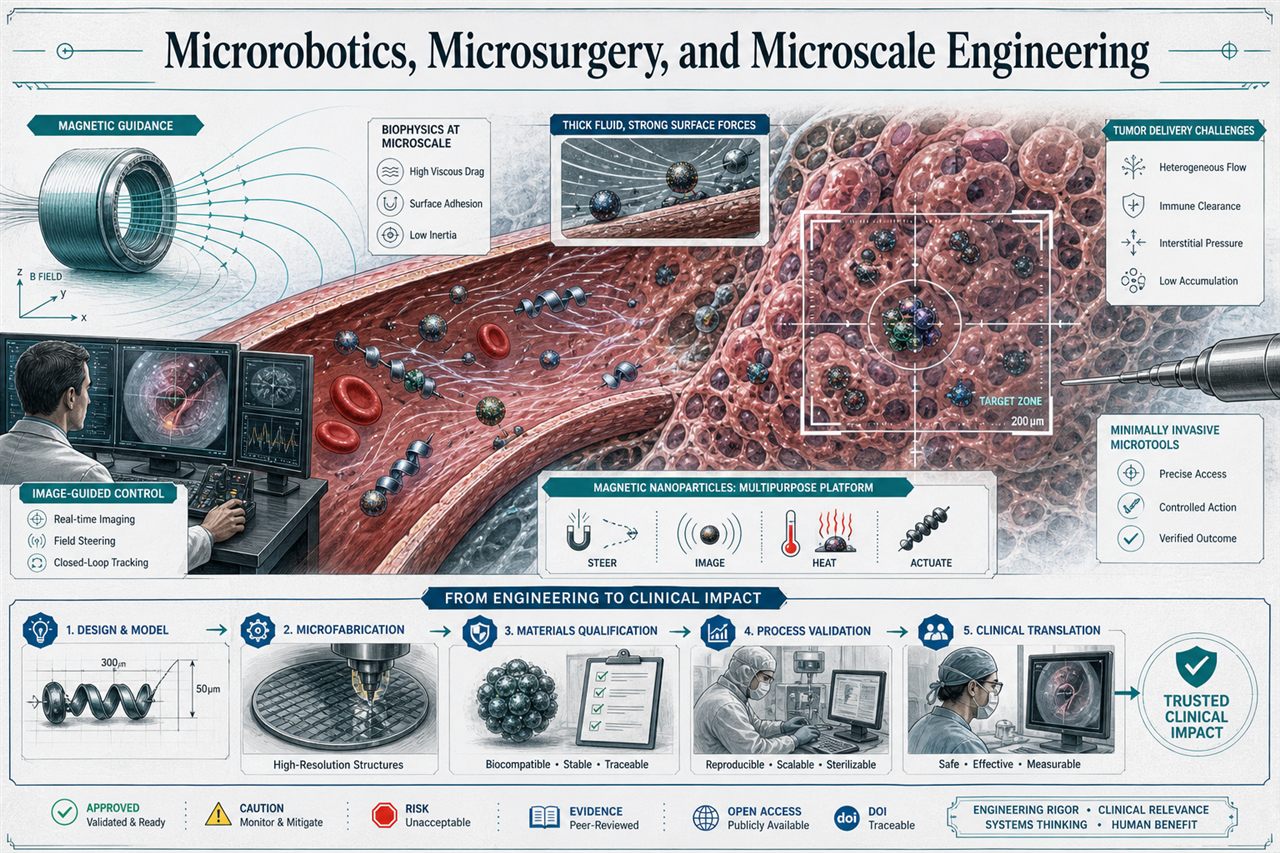
Microrobotics and microsurgery aim for reliable, controllable intervention at micrometer-to-millimeter scales where surface forces, fluid drag, localization, biocompatibility, and power delivery dominate. As of 2026, clinically credible work concentrates on targeted drug delivery, nanoparticle and carrier design, image-guided minimally invasive tools, and microfabricated components, not autonomous in-body microrobot surgery. Active in vivo micromotor delivery has been demonstrated in constrained settings such as stomach infection treatment, but remains indication-specific. Tumor nanoparticle delivery is still limited by vascular heterogeneity, clearance, immune effects, interstitial pressure, and low efficiency. Magnetic actuation and advanced microfabrication look enabling, but translation hinges on safety, reproducibility, materials qualification, sterilization, validation, and traceability.
Chapter 30. Nanorobotics and Molecular Machines
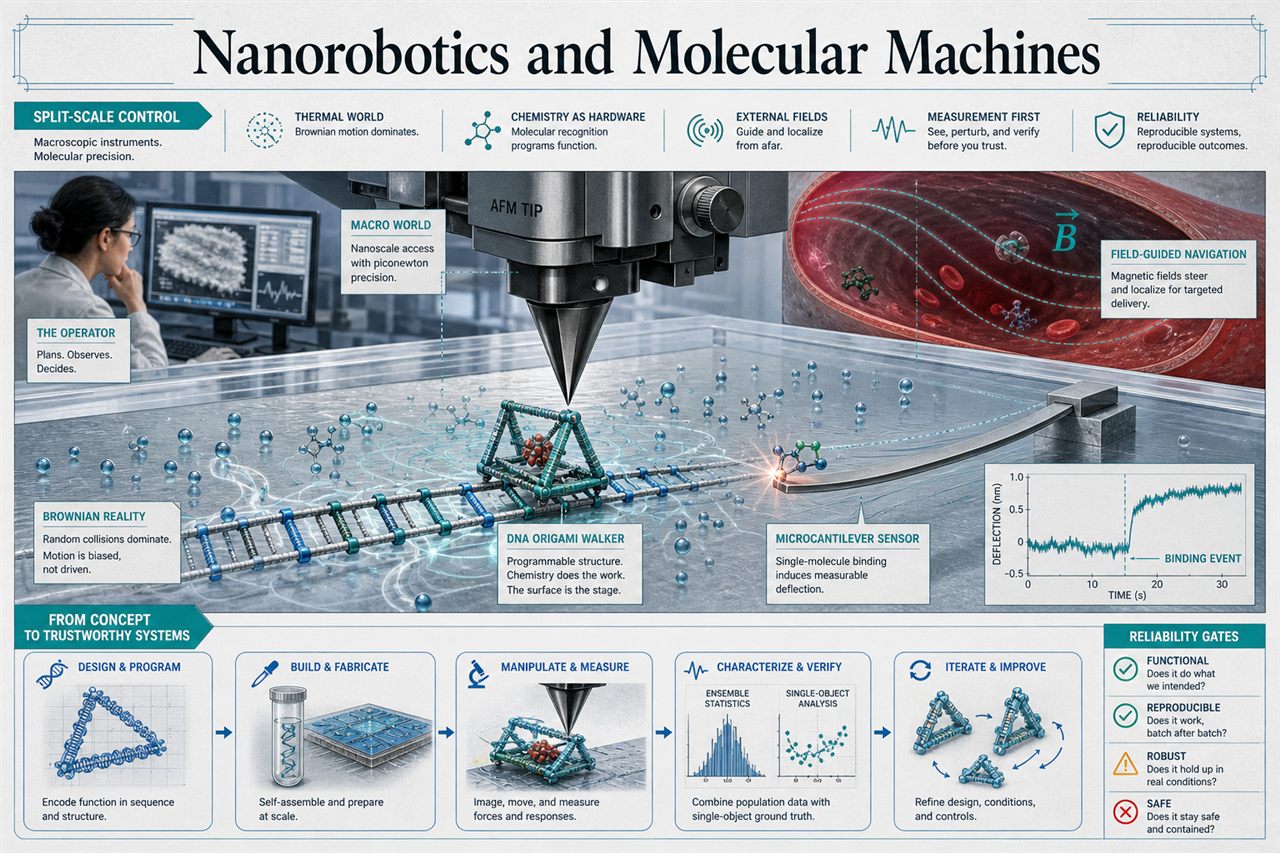
Nanorobotics is best understood as several nanoscale control regimes for building functional devices around 1–100 nm, where Brownian motion, surface chemistry, stochastic binding, and low-Reynolds-number physics dominate. As of 2026, demonstrated capability is concentrated in lab systems: AFM-based manipulation and measurement, DNA/nucleic-acid machines that encode geometry and state transitions, and nanomechanical sensors that transduce biochemical interactions into signals. Biomedical “nanorobots” are largely research concepts and targeted-therapy platforms, not clinically deployed autonomous robots. Practical takeaways: prioritize verification, reproducibility, metrology, and environment-specific validation; invest where nanoscale control compounds into targeted intervention, delivery, inspection, programmable matter, and advanced materials.
Chapter 31. Industrial 3D Printing and Additive Manufacturing
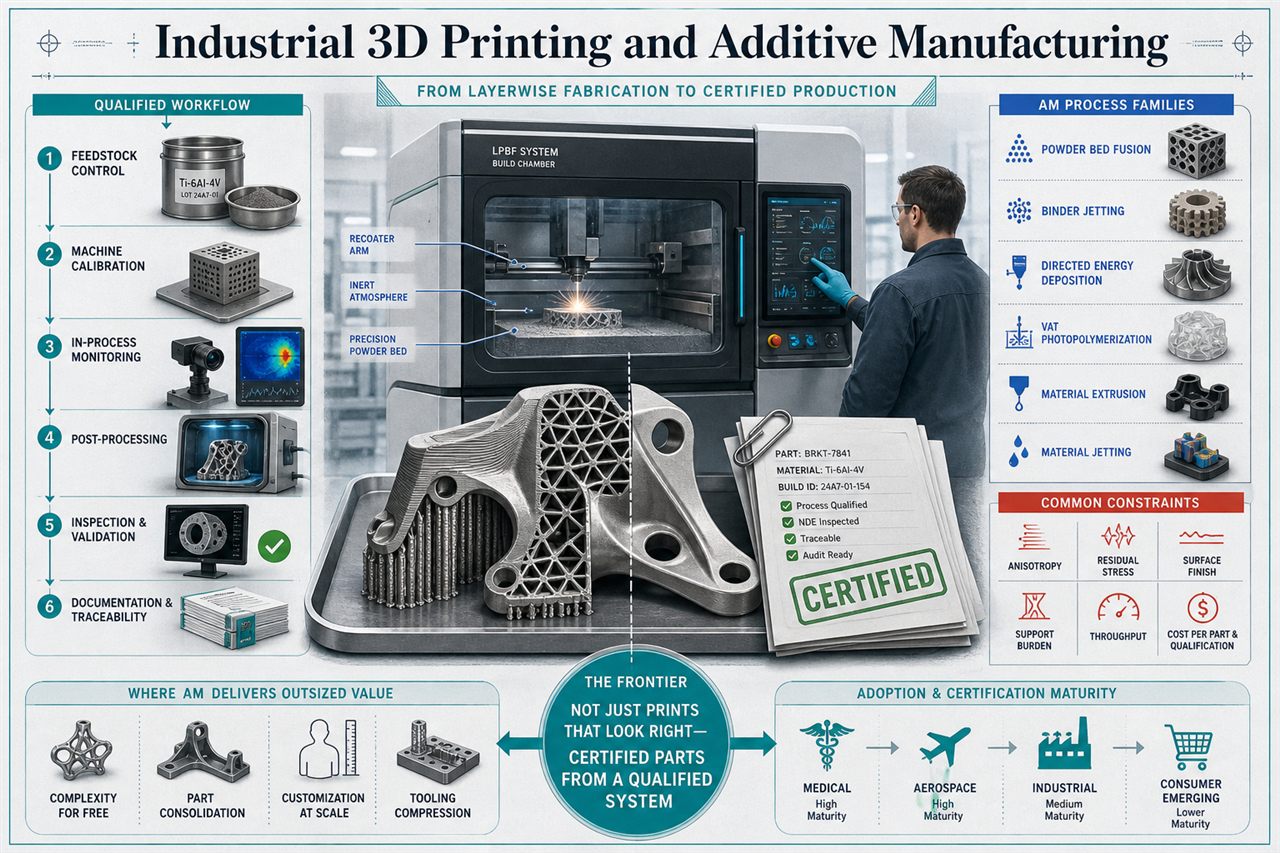
Industrial 3D printing is advancing toward certified, load-bearing end-use parts, but still trails conventional manufacturing on throughput, cost per part, qualification speed, material consistency, and repeatability. It pays off when complexity, customization, part consolidation, tool-free iteration, low-volume economics, or spare-part availability outweigh unit-cost disadvantages. Major process families span polymers and metals and bring tradeoffs in build size, anisotropy, distortion, surface finish, and post-processing. The practical shift is from “prototype vs production” to “uncertified output vs qualified manufacturing system,” requiring design-for-AM, feedstock control, calibration, monitoring, heat treatment, inspection, documentation, and standards-backed quality systems.
Chapter 32. AI-Driven Generative Design and Topology Optimization
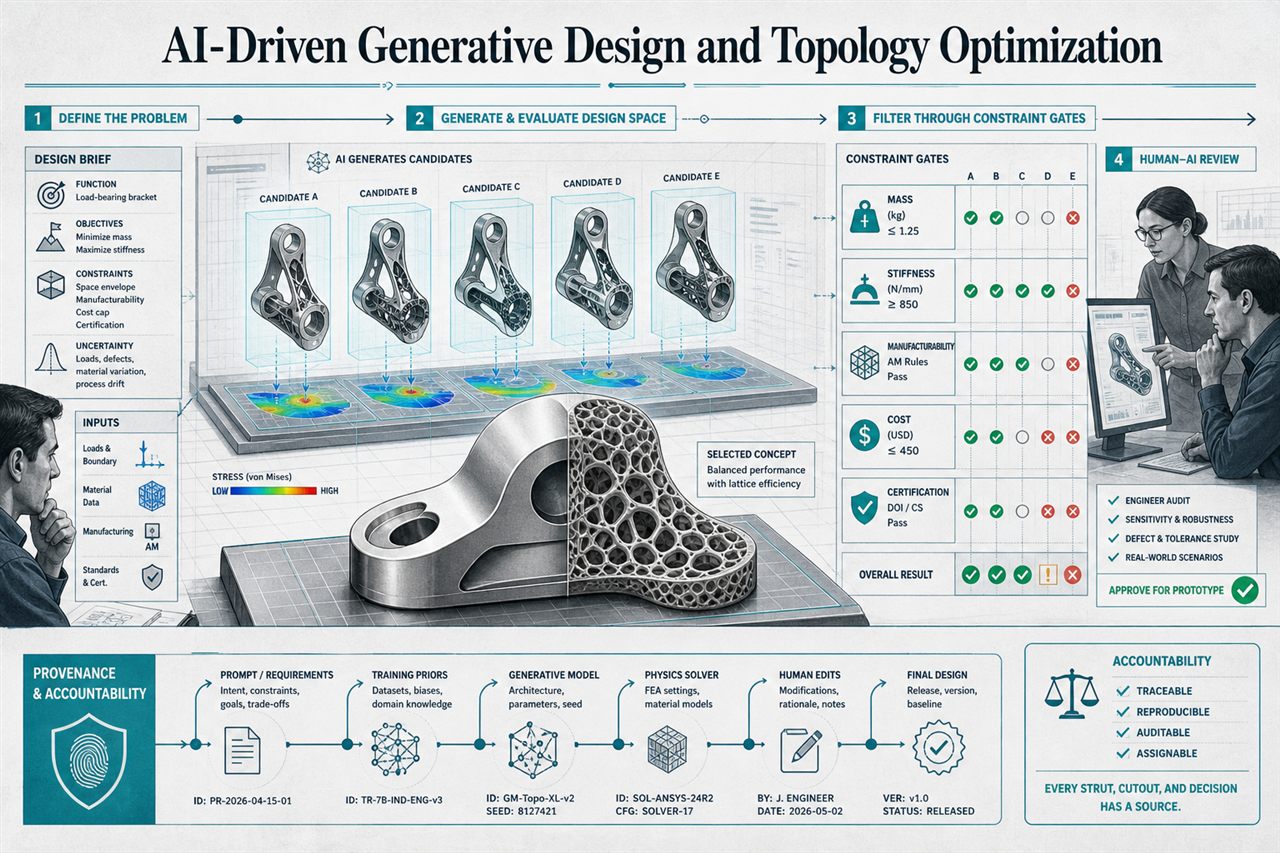
AI-driven generative design and topology optimization automate search over structural forms, lattices, and material layouts under constraints like loads, mass, manufacturability, cost, provenance, and compliance, but press against solver fidelity, objective specification, and liability. By 2026, best practice stays hybrid: classical optimization provides the backbone, while AI generates candidates, builds surrogates, interprets multimodal constraints, automates workflows, and supports human–AI review. Additive manufacturing makes topology-optimized lattices especially valuable. The binding constraint is qualification: proving safety, inspectability, and certifiability under uncertainty, defects, process drift, and incomplete load cases. Governance, IP ownership, and accountability must be designed in.
Chapter 33. Atomically Precise Manufacturing
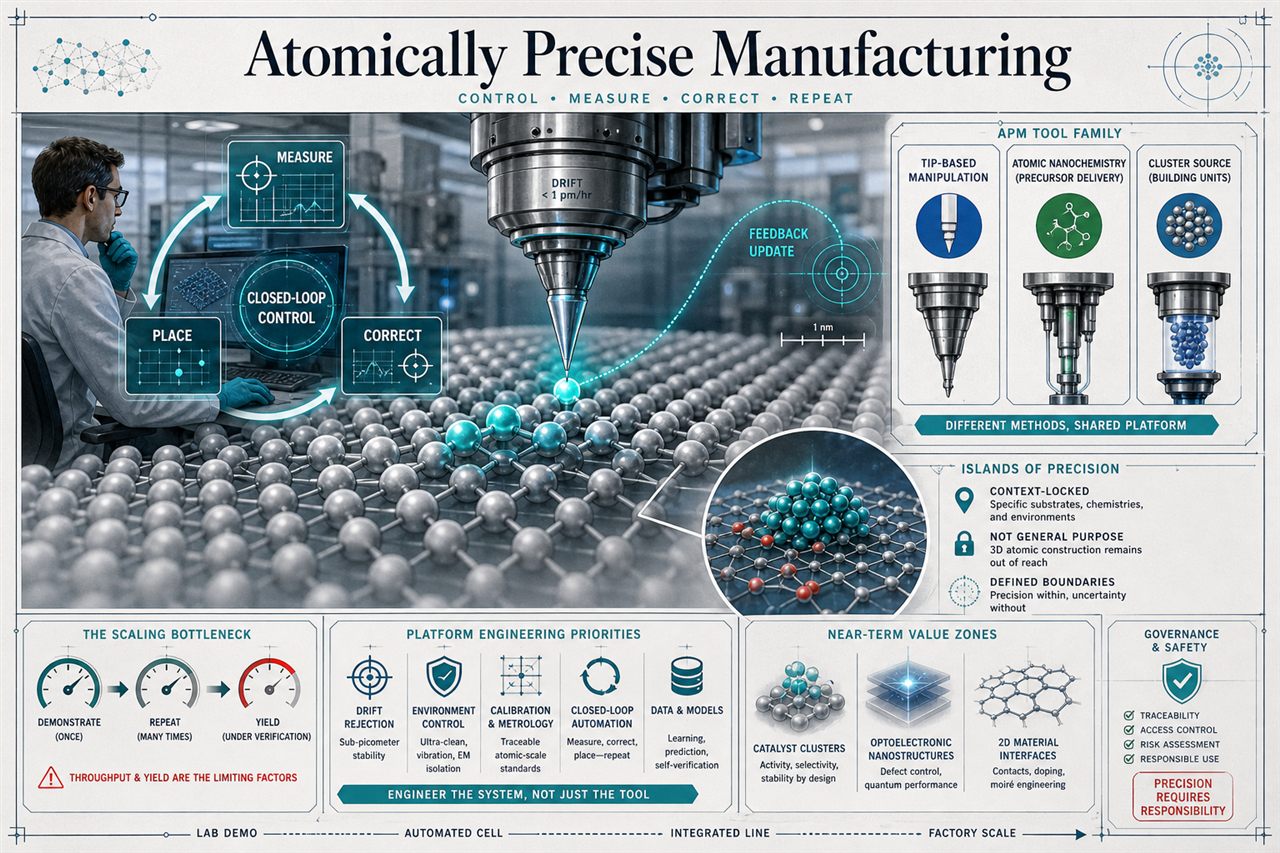
Atomically precise manufacturing means placing, removing, and assembling matter with single-atom to small-molecule fidelity, but progress is constrained by tight coupling among control, metrology, error correction, throughput, and governance. It is a family of bounded methods—tip-based manipulation, mechatronics, nanochemistry, cluster synthesis, self-assembly, and 2D-material workflows—where precision is achieved only in specific substrates and motifs, not general-purpose 3D macroscopic fabrication. The pivotal challenge is scaling: producing, verifying, correcting, and replicating atomic configurations with useful yield. Near-term value concentrates in domains where arrangement dictates function, especially catalysts, clusters, optoelectronics, and 2D interfaces, alongside standards and dual-use governance.
Chapter 34. Programmable Matter and Active Materials
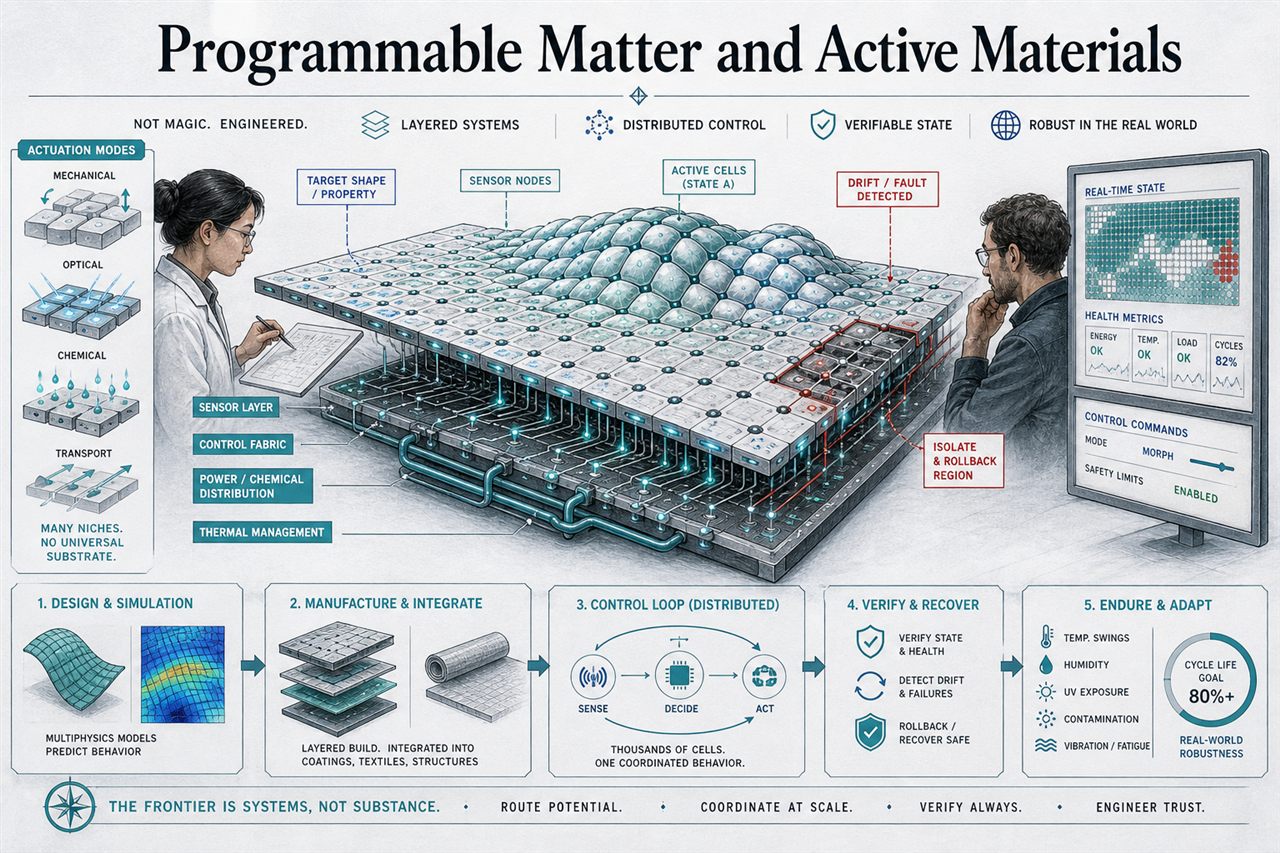
Programmable matter remains a patchwork of specialized active materials and reconfigurable structures, not a general-purpose, bulk, universally addressable substrate. Most systems work only in narrow operating envelopes, with limits in force density, environmental tolerance, addressability, and repeatable cycling. Near-term value concentrates in “programmable layers” on conventional products—coatings, textiles, soft-robotic parts, morphing components, and responsive optics—rather than fully reconfigurable solids. The decisive constraints are power and heat routing, distributed sensing and closed-loop control, rigorous cycle-life testing across real environments, manufacturing QA for heterogeneous stacks, and reliable state verification with rollback or replacement after partial failures.
Chapter 35. Living and Bio-Synthetic Materials
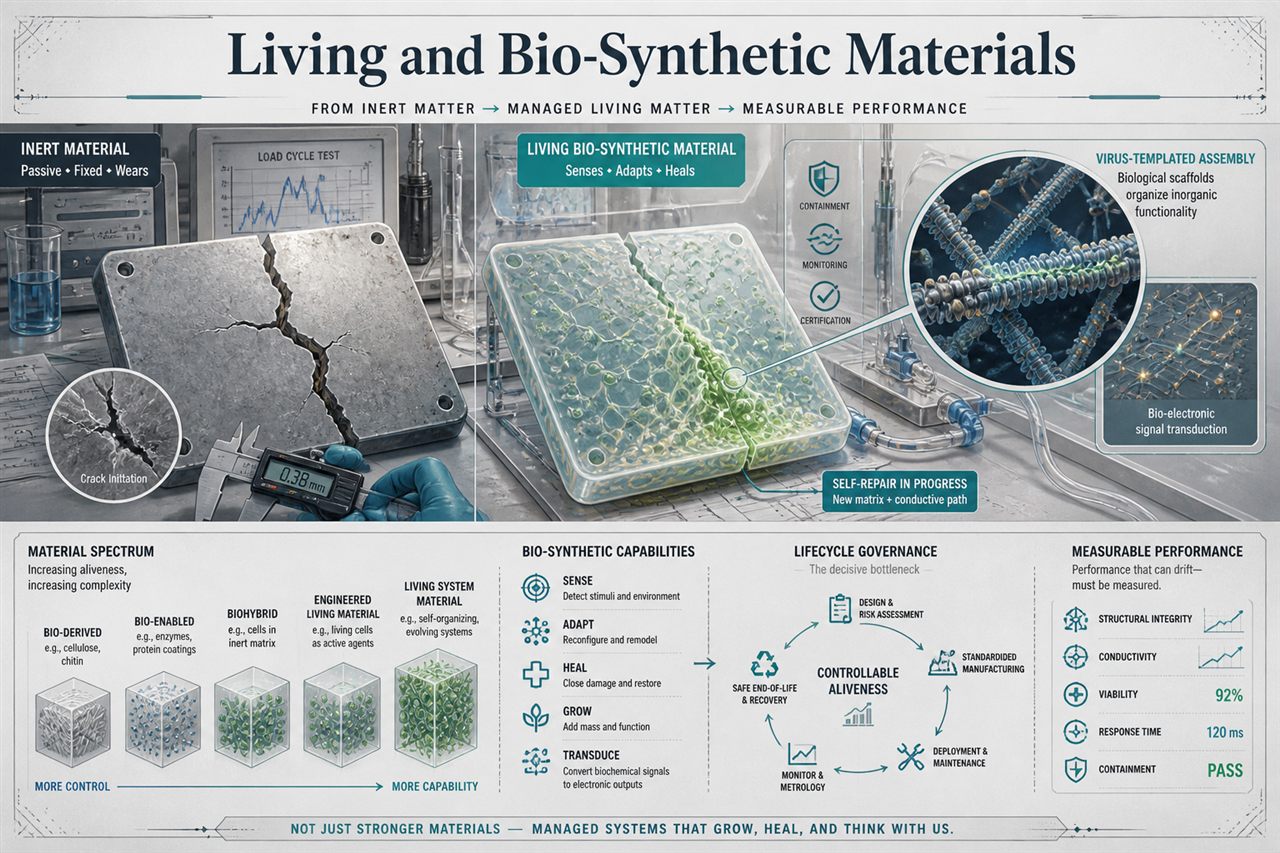
Engineered materials that incorporate cells, proteins, virus templates, or biologically coupled polymerization aim to add sensing, growth, self-repair, adaptive shape, and bio-electronic function to otherwise inert industrial matter. Progress sits across distinct classes—bio-derived, bio-enabled, biohybrid, and engineered living materials—each with different containment, regulation, and reliability implications. Demonstrations include protein-modified systems, inorganic–protein hybrids, virus-templated functional materials, protein-integrated electronic nanodevices, polymer nanocomposites, and living synthetic polymerizations. For human-contact uses, host response, compatibility, degradation, and performance drift dominate. The core hurdle is industrial reproducibility: manufacturing, metrology, containment, certification, repair, and end-of-life.
Chapter 36. Adaptive Textiles, Suits, and Environment-Responsive Garments
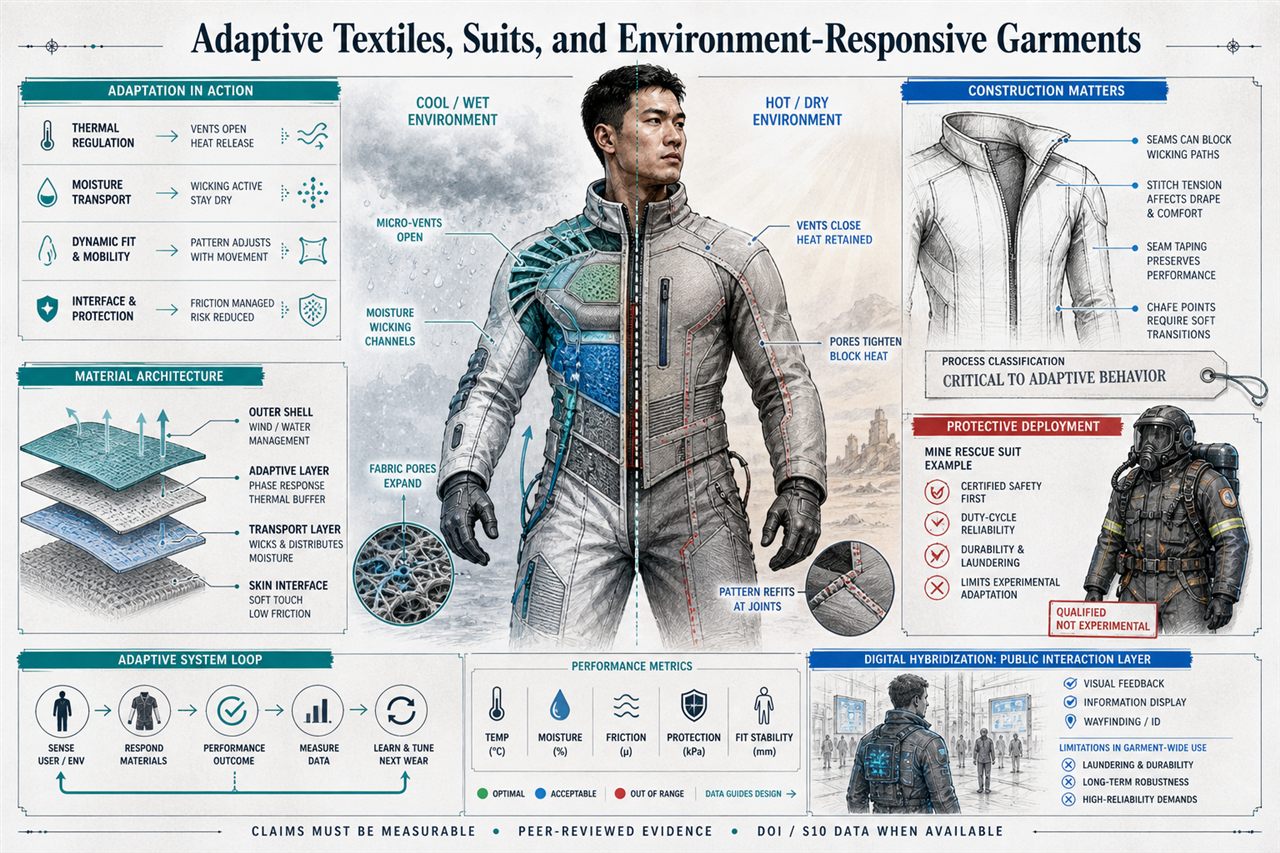
Adaptive textiles treat clothing as a responsive system that can change heat management, moisture transport, fit, interfaces, and protection based on user and environment. As of 2026, the most credible progress sits in materials and garment engineering—adaptive polymers, moisture-transfer behavior, sizing logic, and how seams and construction alter drape and performance. Working demonstrations often rely on pattern architecture and user feedback loops rather than embedded computing. High-stakes protective use is clearest in mine-rescue gear, where qualification, durability, and duty-cycle reliability dominate. Digital hybrid textiles show promise for public-space interaction but remain limited by laundering, robustness, and integration constraints.
Chapter 37. Self-Healing Composites and Responsive Structural Systems
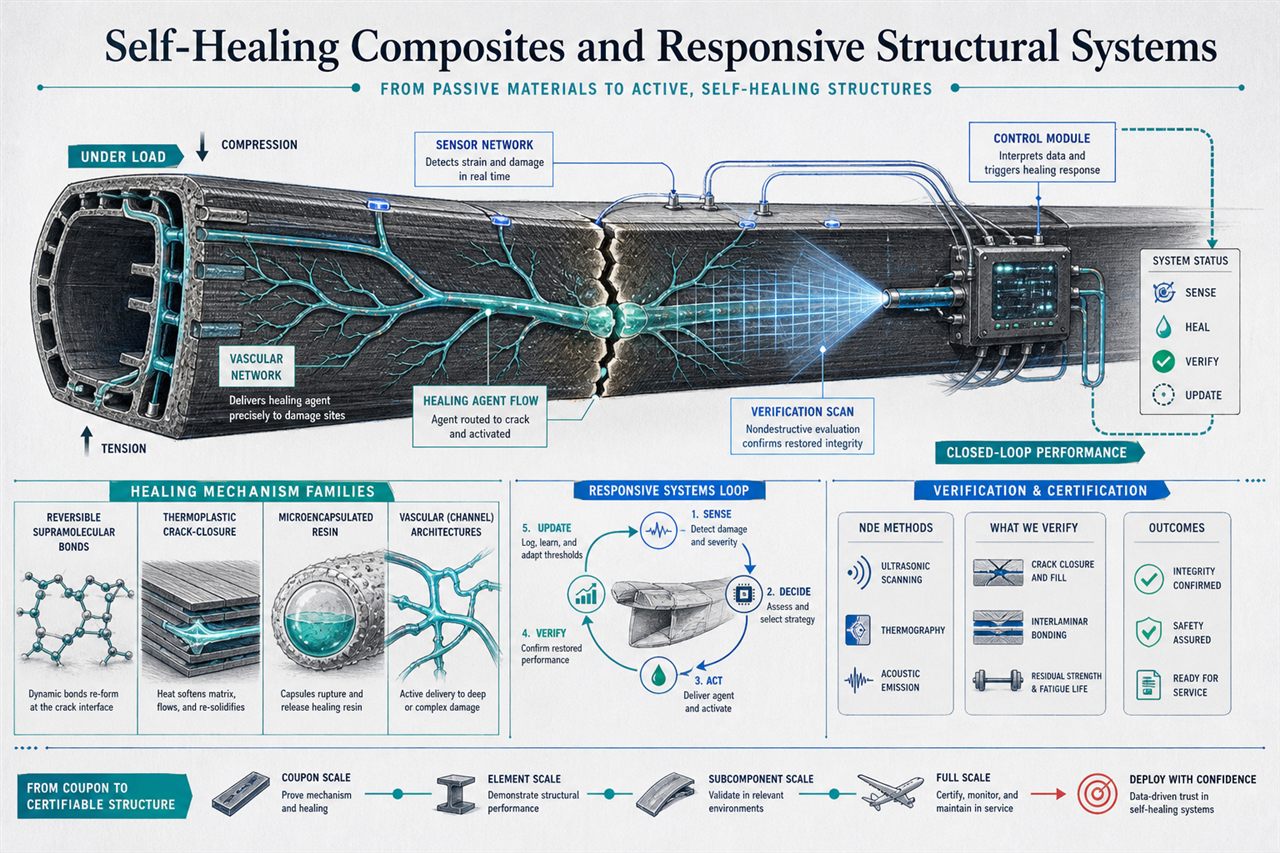
Self-healing composites aim to restore load-bearing performance after damage using reversible chemistry, supramolecular bonding, thermoplastic crack-closure, encapsulated agents, vascular delivery networks, cementitious self-curing, or environment-triggered healing. Research is broad across polymers, fiber-reinforced composites, thermoplastic-containing laminates, and concrete, but maturity is uneven: many demonstrations are coupon-scale, while safety-critical qualification is constrained by repeatability, residual-strength retention, fatigue-life proof, nondestructive verification, and standards gaps. A key shift is toward responsive structural systems that sense damage, trigger repair, verify recovery, and update maintenance decisions, making metrology and certification pathways as important as materials chemistry.
Chapter 38. Slow-Substrate Manufacturing and Deliberate-Pace Records
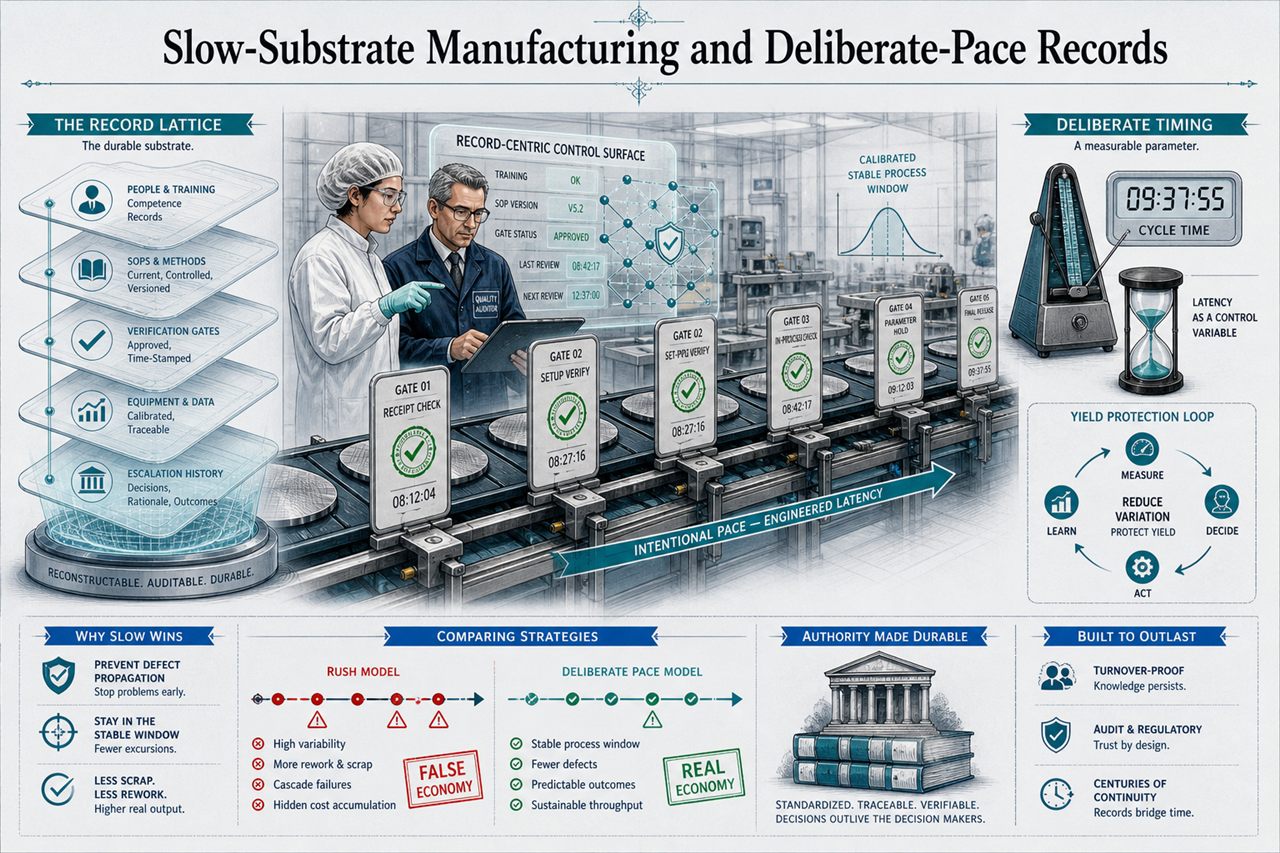
Slow-substrate manufacturing treats time as a controllable process variable, trading peak throughput for endurance, traceability, controlled latency, and the ability to reconstruct authority long after people, tools, or organizations change. In regulated GxP settings, training records, staff qualification, procedures, and retrievable documentation function as production-critical control layers, not back-office paperwork. Sustainable manufacturing logic similarly favors paced loops when defect propagation and scrap cost more than delay. A key precedent is a 1959 report that deliberate discharge cycling increased production under specified conditions, demonstrating that slower cycling can be performance-positive. Practical takeaway: invest in durable records, verification gates, and competence cadence as core infrastructure.
Chapter 39. Civic Living Architecture and Biological Infrastructure
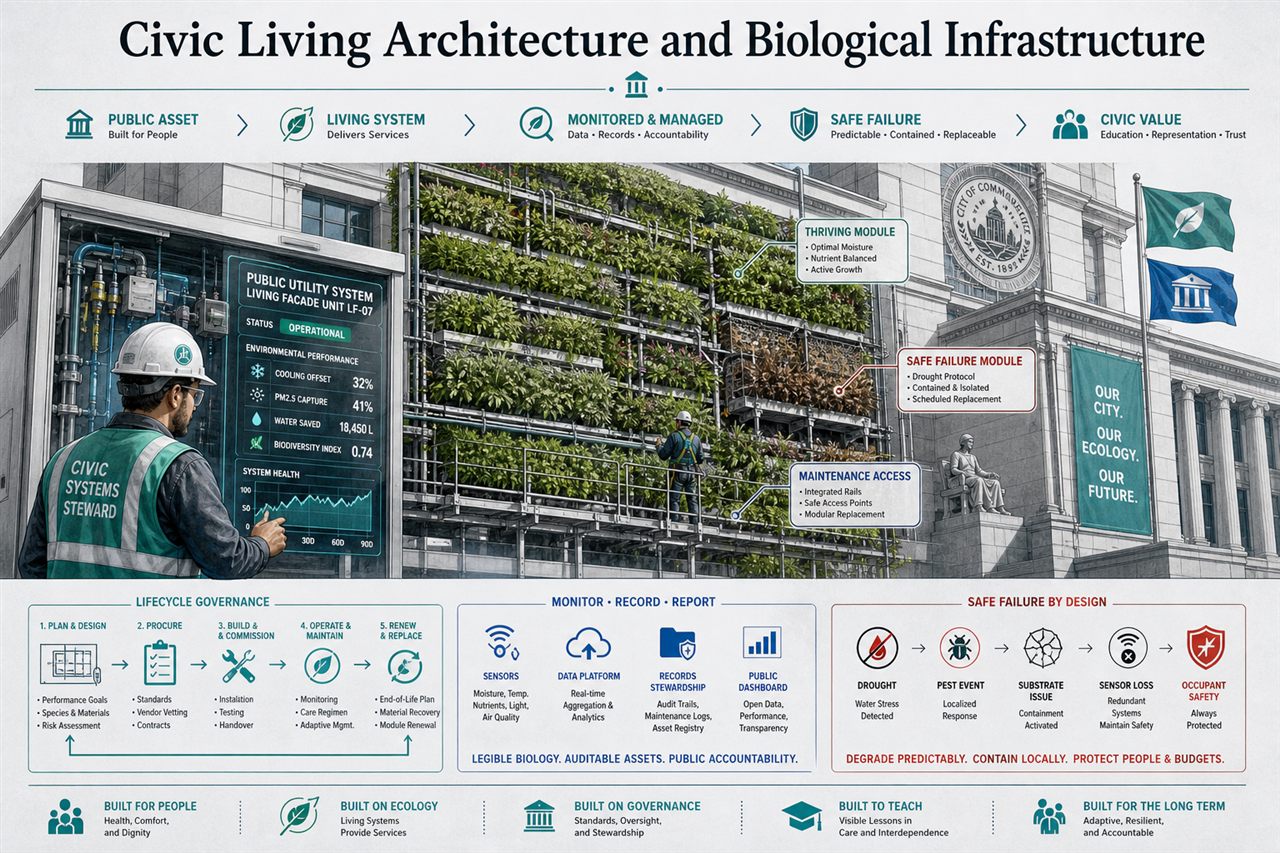
Civic living architecture treats public buildings as hybrid ecological assets that provide measurable environmental services while also functioning as civic representation and education. As of 2026, deployments are mostly limited to living walls, green façades, planting-integrated interiors, and bio-derived finishes, with success driven by practical variables: plant choice, substrate, irrigation, nutrients, access for upkeep, replacement cycles, and clear maintenance responsibility. The central bottleneck is lifecycle governance—procurement, operations, monitoring, records stewardship, and safe failure—more than biological feasibility. Research on desiccation tolerance and protein-surface mechanisms hints at durability pathways, but not yet a validated civic product class.
Chapter 40. Advanced Materials - Graphene, MOFs, and Designer Composites
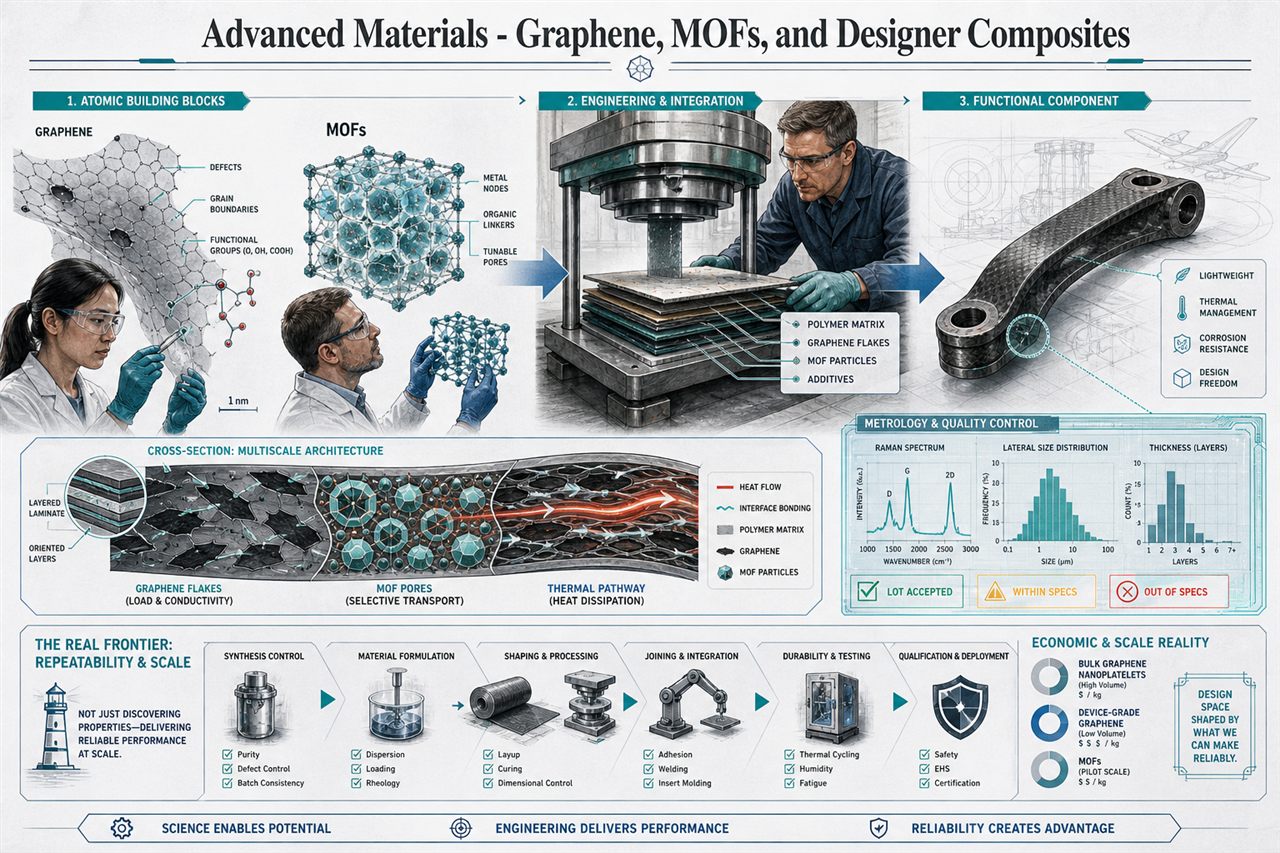
Advanced graphene systems, MOFs, and designer composites aim to beat bulk-material limits by tuning defects, porosity, interfaces, and multiphase architectures for adsorption, transport, sensing, thermal management, photonics, energy storage, and structural use. Graphene has reached early commercial adoption mainly as additives, coatings, films, thermal interfaces, sensing layers, and composite reinforcement, but product performance depends more on controllable quality factors than on ideal single-layer properties. MOFs show strong promise for separations and storage, yet scale remains limited. The core bottleneck is repeatable synthesis, metrology, durability, EHS qualification, and procurement-grade testing, not ideas.
Chapter 41. Self-Replicating Systems and Industrial Recursion
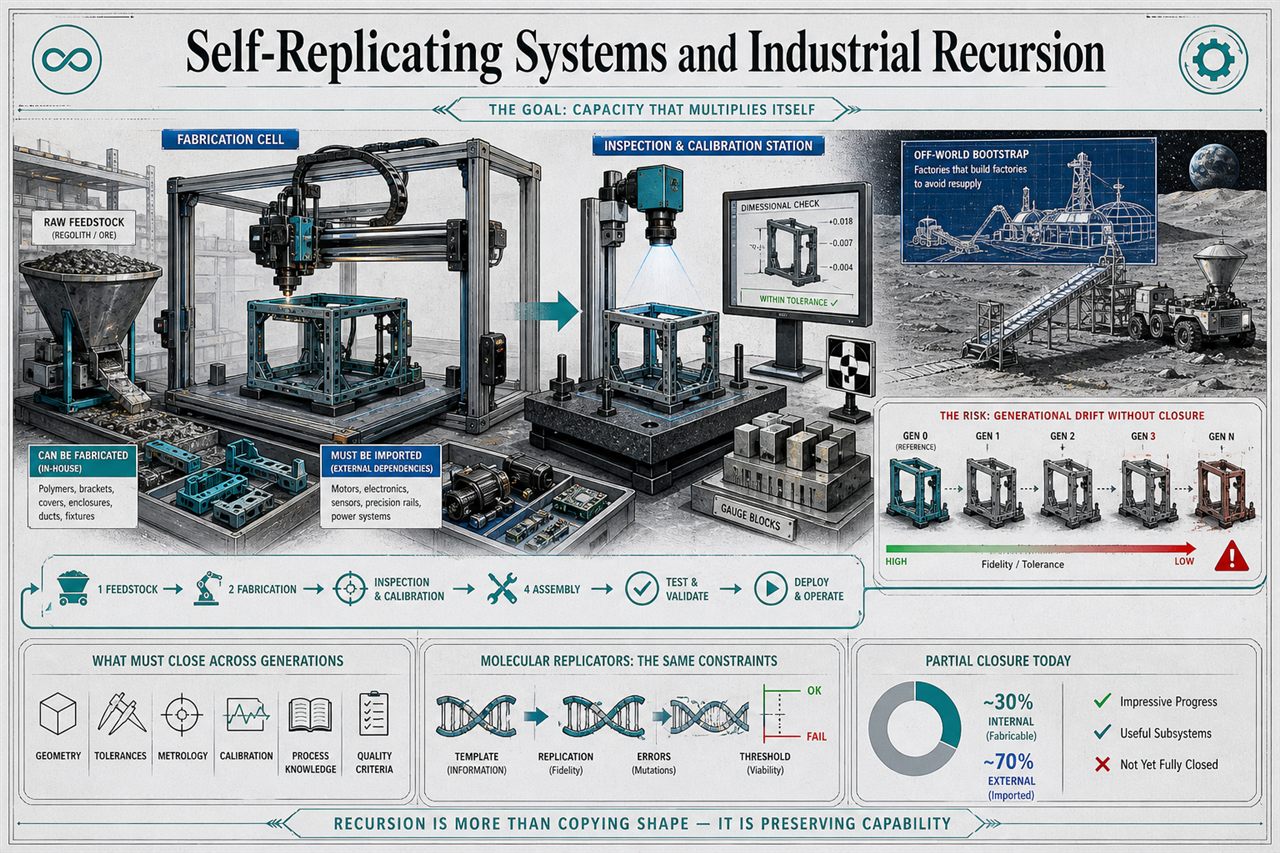
Self-replicating systems aim to manufacture functional descendants from external feedstocks, breaking the usual constraint that capacity grows only via externally supplied capital equipment, labor, metrology, and supply chains. As of 2026, demonstrated “self-replication” remains partial: constrained robotic setups, modular artificial-life platforms, open-hardware self-fabrication, and molecular/DNA templated systems. RepRap exemplifies industrial recursion by printing some structural parts while still depending on motors, electronics, sensors, precision rails, power, and materials. The central hurdle is multi-generation closure: reproducing tolerances, calibration, inspection, process knowledge, repair, and rejection criteria, with remote and space concepts largely remaining design studies.
Chapter 42. Closed-Loop Mining, Recycling, and Circular Manufacturing
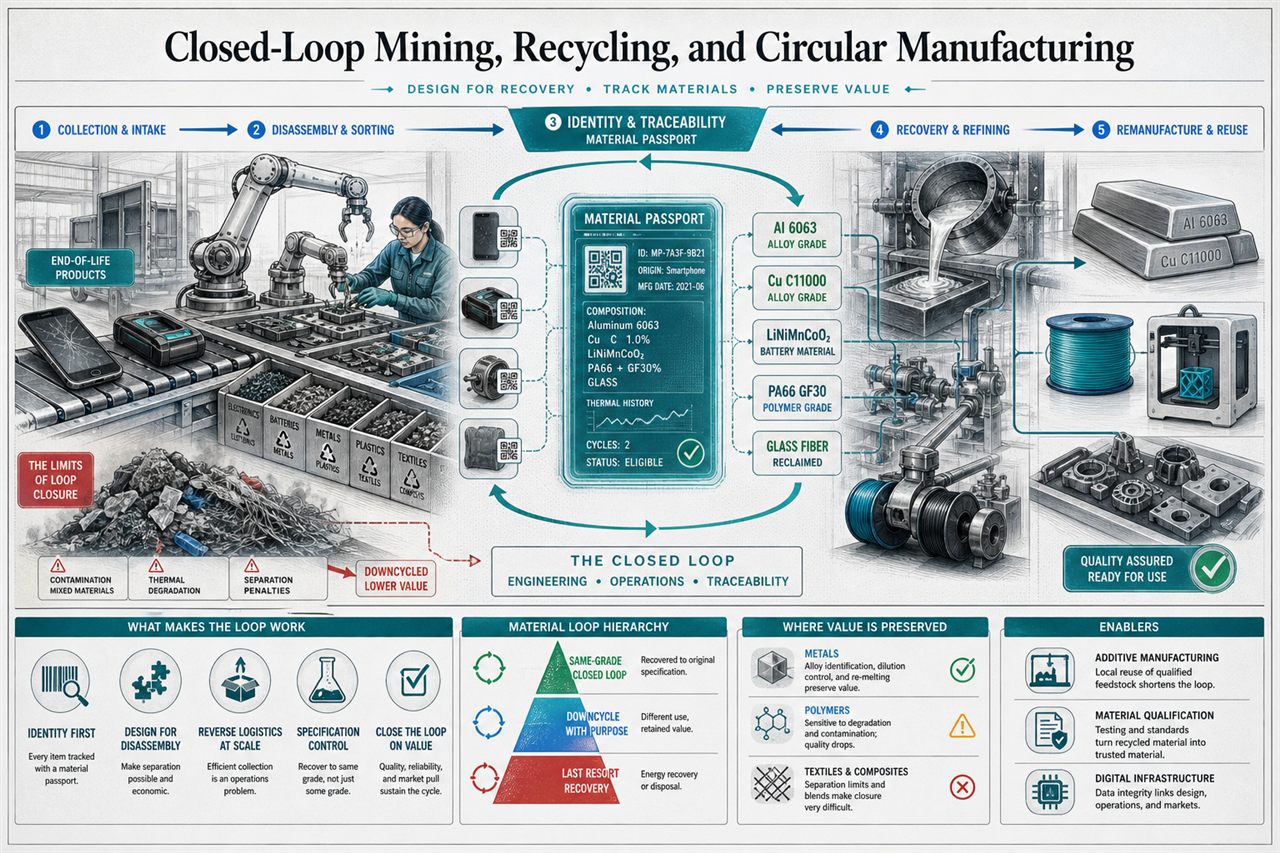
Closed-loop systems aim to recover end-of-life materials and process residues into equivalent-quality feedstocks, but progress is usually partial because contamination, dispersion, degradation, and reverse-logistics coordination cap performance. In practice, “closed loop” in mining and metallurgy often means integrated recovery, coupled processes, waste-stream valorization, and traceability across extraction-to-recovery systems rather than zero-loss circularity. Metals are the best candidates for repeated high-value recovery if sorting purity, chemistry control, and dilution are managed; plastics, textiles, and composites suffer larger property-loss and separation costs.
Chapter 43. Construction, Megastructures, and Continental-Scale Engineering
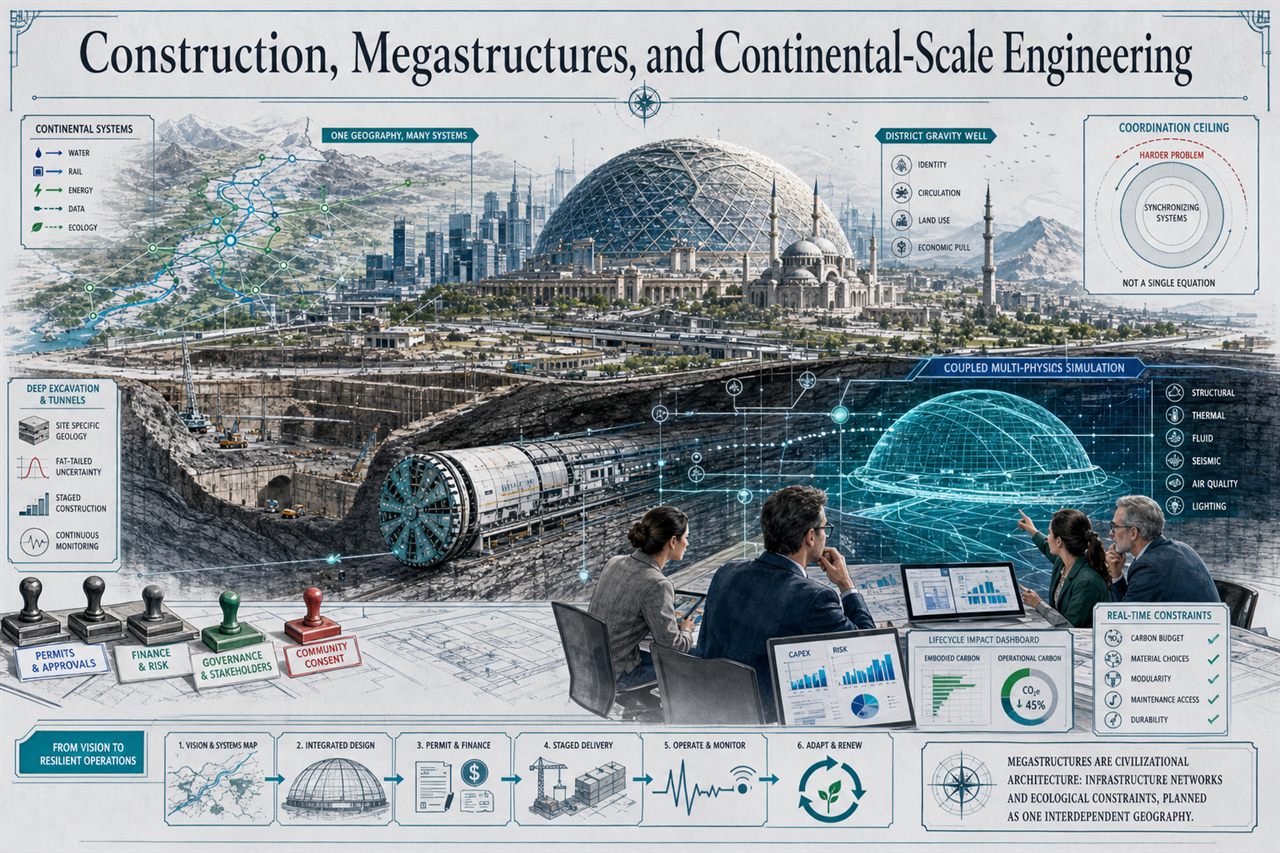
Megastructures and continental-scale engineering test the coordination ceiling: aligning design, finance, permitting, fabrication, monitoring, adaptation, and governance when the built system becomes regional architecture. Practice is evidenced by peer-reviewed cases of large-span civic and landmark structures, including a lightweight 100 m-span dome in Manila and the Great Mosque of Algiers functioning as a city-district anchor. Deep excavation and tunneling are mature, but outcomes remain constrained by site geology and uncertainty tails. The frontier is coupling multi-physics “skin” simulations and making lifecycle and embodied-impact accounting a core design variable, while planning increasingly uses kilometer-scale climate simulations despite fragmented institutions.
Chapter 44. From Earth Manufacturing to In-Space Industry
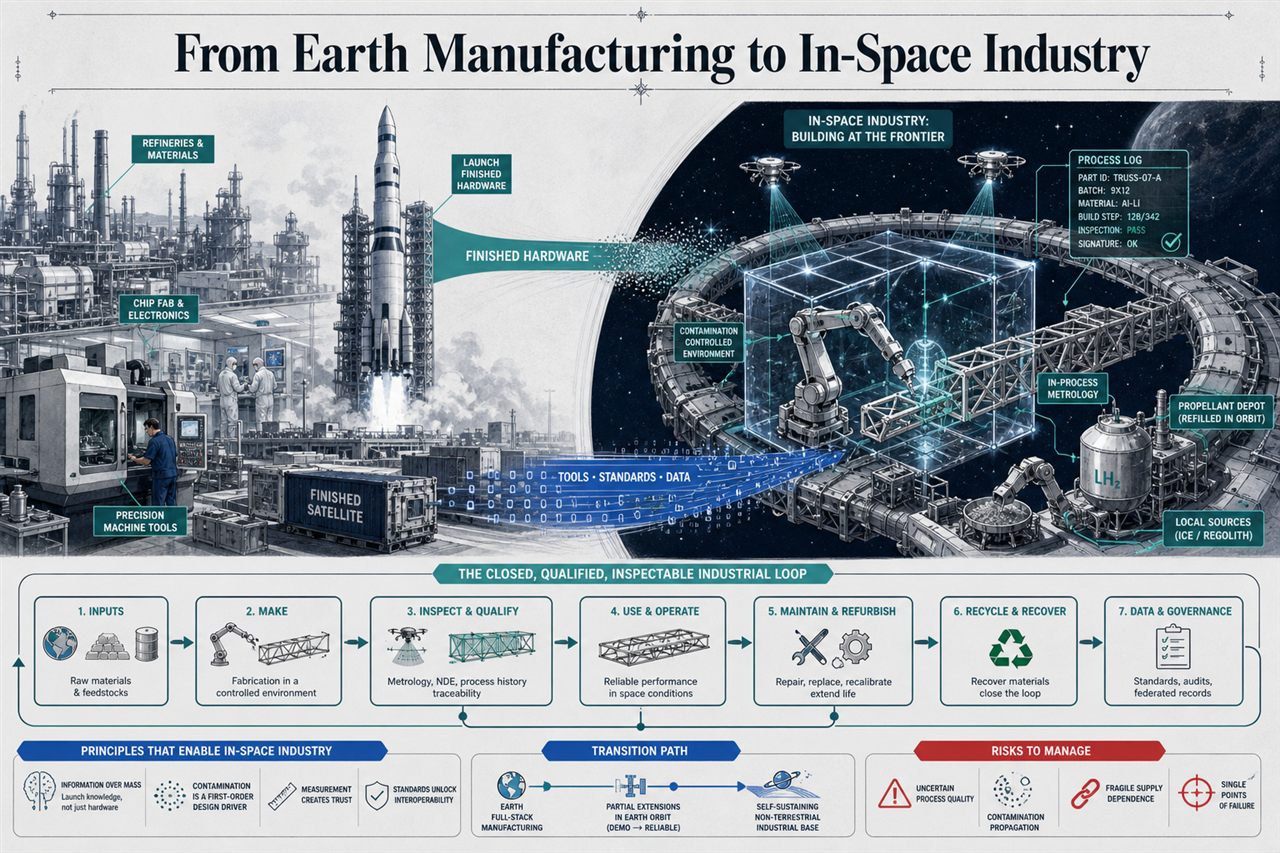
In-space industry shifts space operations from launching finished hardware to producing propellants, materials, parts, and large structures off Earth. As of 2026, Earth remains the only full-stack manufacturing base, so most spacecraft are built and integrated terrestrially and rarely repaired. The hardest constraint is not fabrication itself but qualification: traceable process history, inspection, defect detection, recycling, contamination control, and maintaining equipment without constant Earth support. Practical takeaways include prioritizing standards, metrology, and minimum-information reporting; leveraging computational materials modeling and automated clustering-based inspection; and building federated measurement networks and auditable, machine-checkable process records to enable scalable certification.
Chapter 45. Atmospheric, Climate, and Planetary Engineering Toolkits
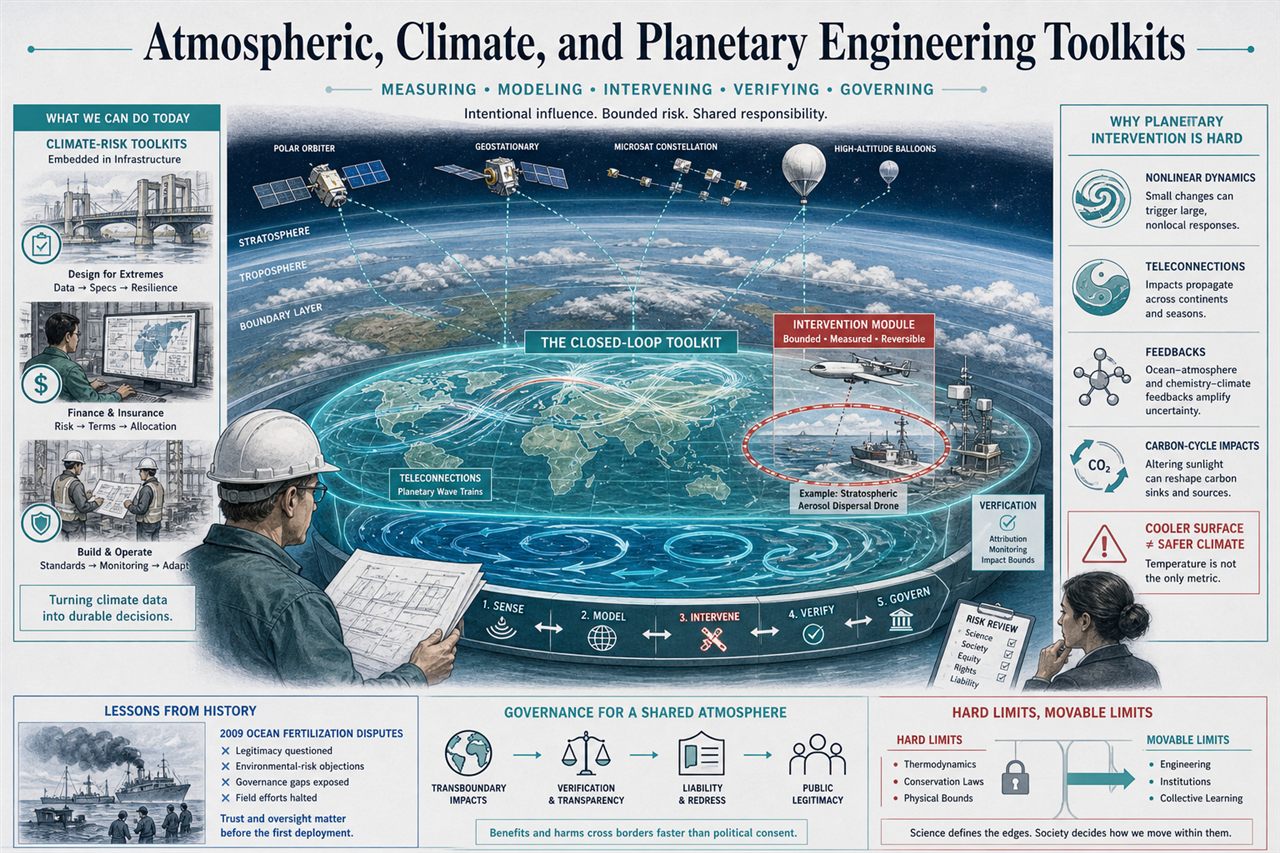
Atmospheric, climate, and planetary engineering toolkits combine measurement, modeling, intervention options, infrastructure, and governance to deliberately alter weather, regional exposure, or radiative balance while keeping effects attributable, bounded, and lawful. As of 2026, capabilities are strongest in observation, forecasting, climate-risk screening, adaptation engineering, and infrastructure planning, and weakest in intentional planetary-scale intervention because verification, liability, and transboundary governance are unresolved. Nonlinear dynamics, teleconnections, ocean–atmosphere coupling, and chemistry feedbacks limit “control.” Geoengineering forcing can also shift carbon-cycle trajectories, so temperature-only targets mislead. The 2009 ocean-fertilization controversy showed legitimacy can halt field interventions.
Chapter 46. Pressure-Adapted and Deep-Fluid Engineering
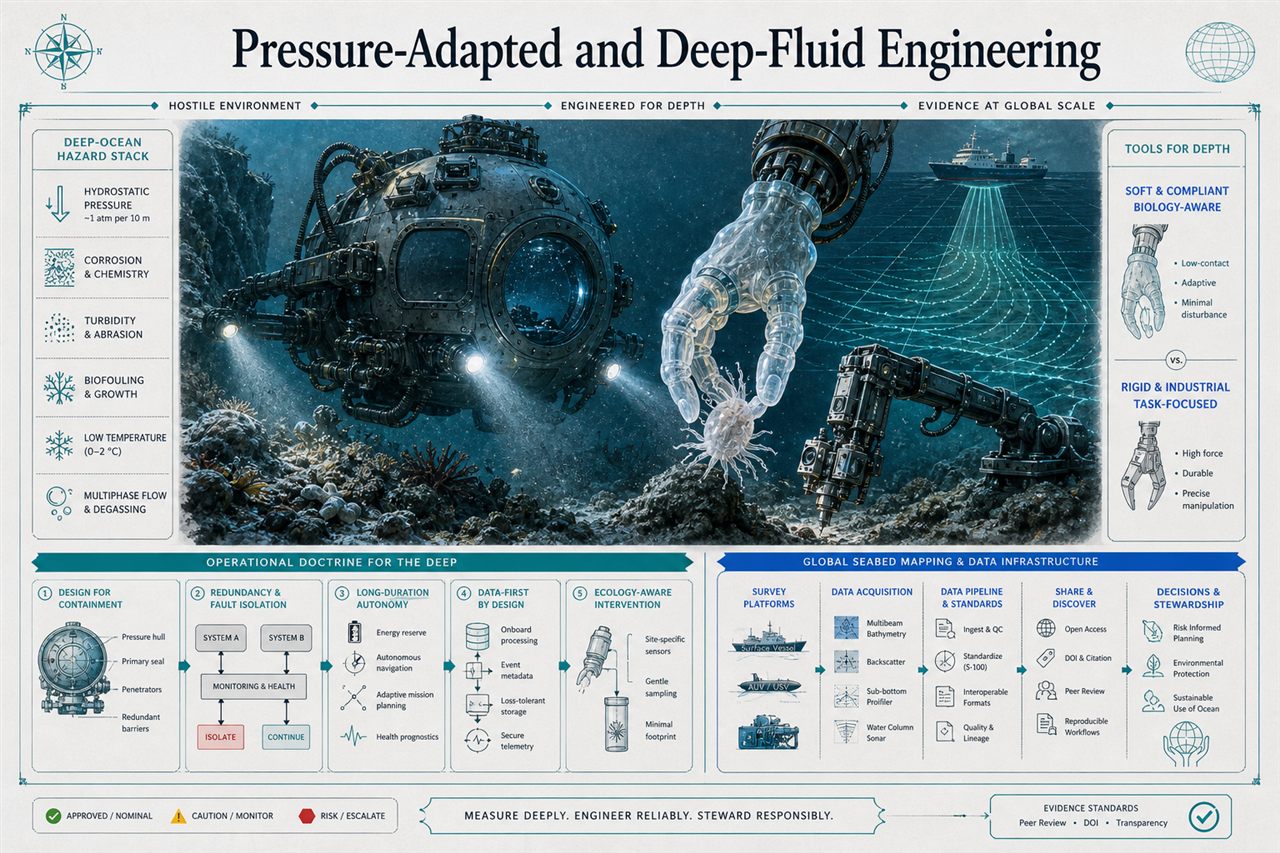
Pressure-adapted and deep-fluid engineering treats the deep ocean as a high-pressure, corrosive, low-visibility, low-temperature, biofouling environment where repair access is scarce and reliability must be designed in. Pressure increases about one atmosphere per 10 meters, pushing deep systems toward true pressure-vessel thinking rather than ordinary machinery. Capability is concentrated in ocean science, offshore energy, subsea robotics, mapping, monitoring, and defense-adjacent work, while routine human labor at depth remains limited by physiology, decompression, and rescue constraints. Seabed 2030 reframes ocean mapping as a global coordination and data-interoperability problem. Practical progress includes compliant soft-robotic manipulators for low-damage biological sampling, reflecting ecology-aware intervention needs.
Chapter 47. Sealed Habitats, Pressure Hulls, and Containment Architecture
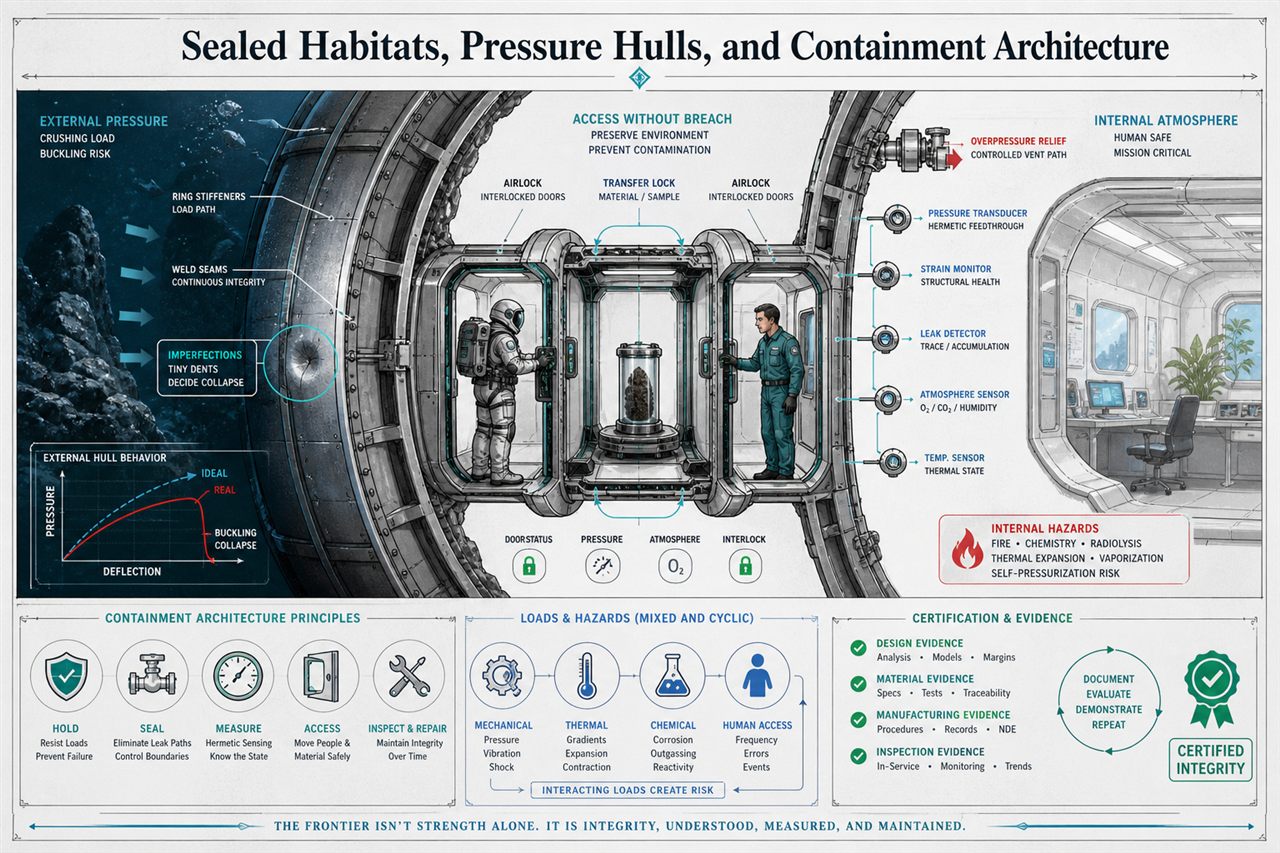
Sealed habitats and containment systems are feasible and widely deployed, but the hard edge is sustaining integrity for long durations while remaining inspectable, repairable, and certifiable under combined mechanical, thermal, chemical, and human-access loads. External-pressure hulls are dominated by buckling stability and sensitivity to imperfections, stiffeners, weld quality, fatigue, and corrosion. Internal-pressure volumes are dominated by stored-energy failure modes, leakage through penetrations and seals, and reliable relief behavior, including pressure generated internally by chemistry, radiolysis, heat, or fire. Practical priorities include hermetic sensing without opening volumes and robust access architectures (airlocks, pass-throughs) that prevent pressure loss and contamination.
Chapter 48. Personal Underwater Life Support, Rebreathers, and Liquid-Breathing Systems
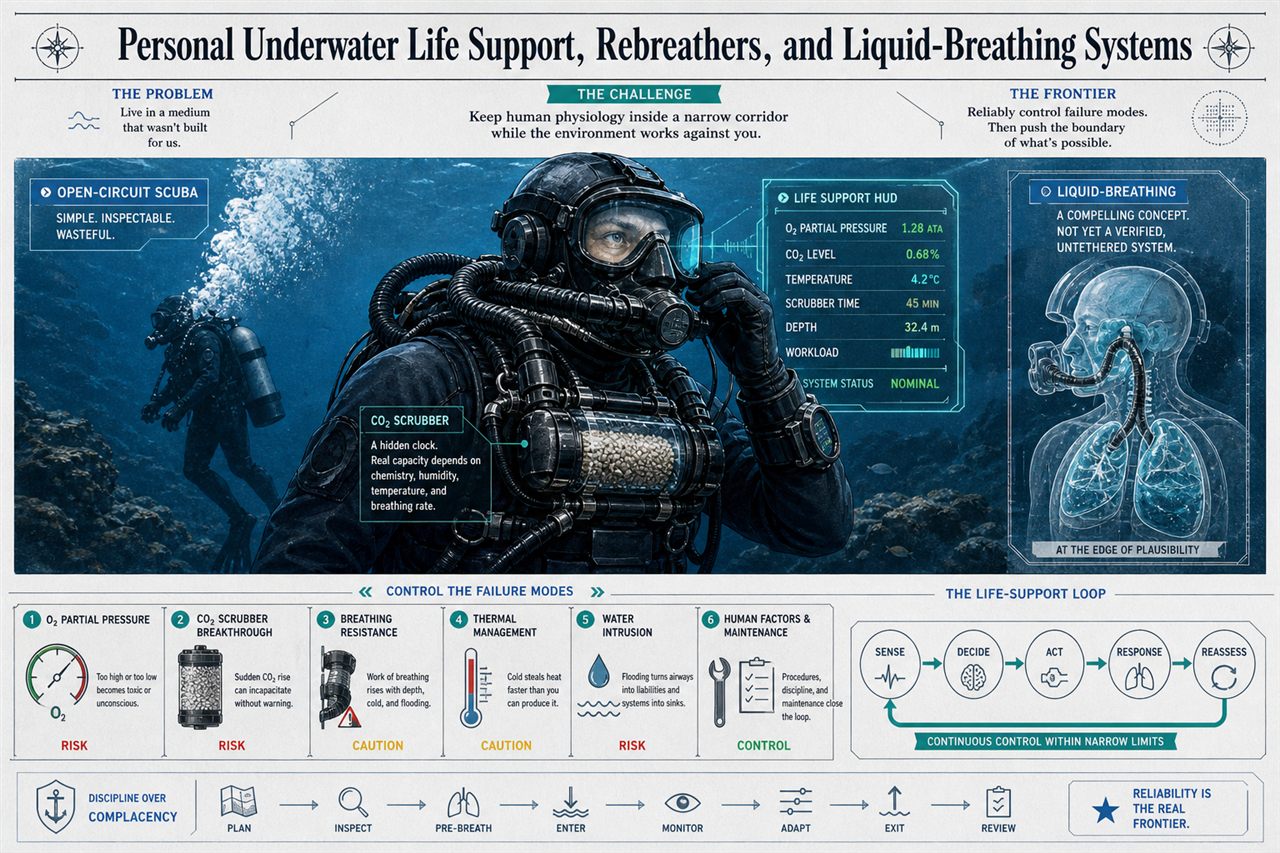
Personal underwater life support advances by integrating gas management, oxygen control, CO2 removal, thermal protection, monitoring, and emergency support into wearable systems that keep divers within strict physiological and safety limits. Open-circuit scuba dominates because it is simple and trainable, but wastes gas. Semi-closed and closed-circuit rebreathers are proven for longer endurance, lower gas logistics, reduced bubbles, and optimized mixtures, at the cost of higher procedural and maintenance burden. Key failure drivers include oxygen partial-pressure control, CO2 scrubber limits and breakthrough detection, breathing resistance under stressors, cold exposure, flooding, and operator error. Liquid breathing remains unverified for practical untethered human use.
Chapter 49. Personal and Powered Aquatic Mobility - Suits, Thrusters, and Dive Exo-Systems
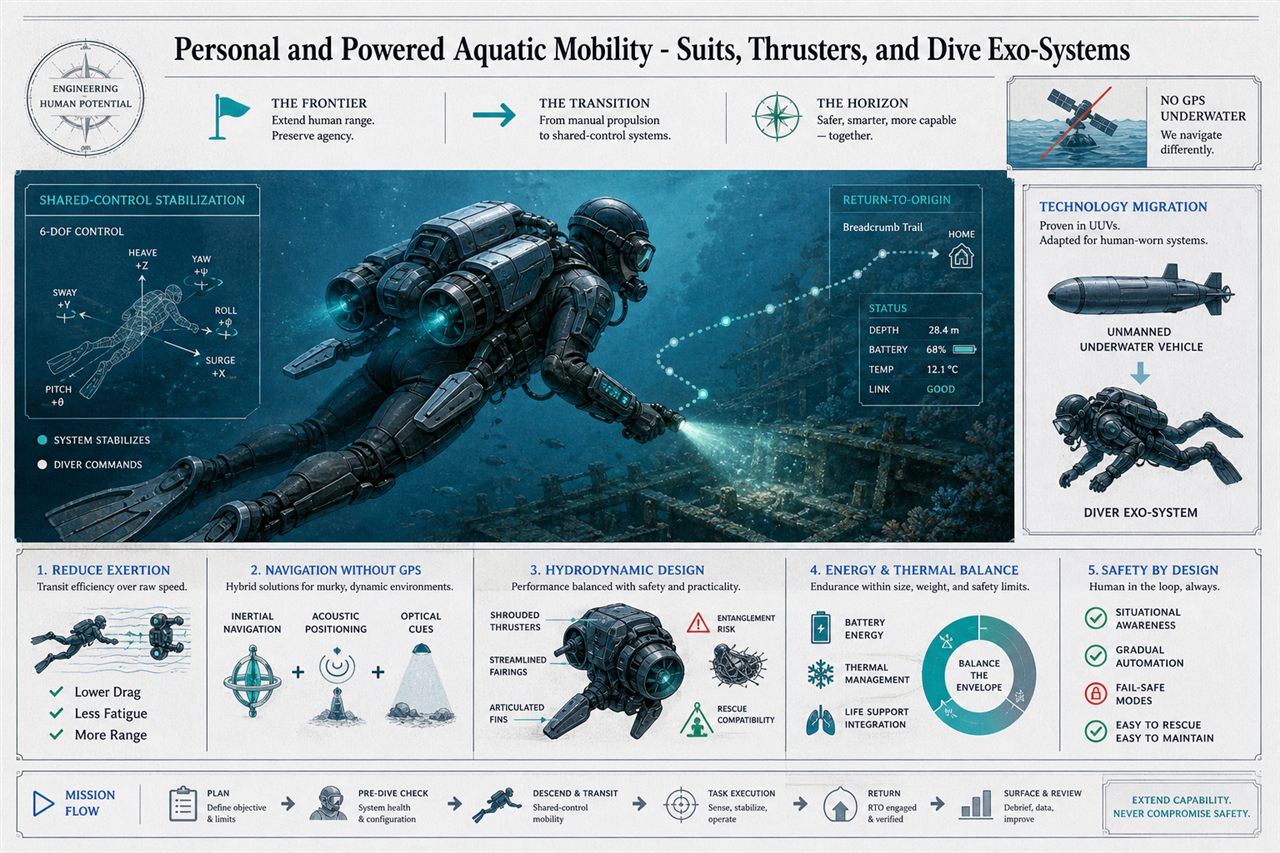
Personal underwater mobility is still mostly built around fins, buoyancy control, suits, breathing gear, and optional diver propulsion vehicles, with the biggest gains coming from reduced exertion during transit rather than integrated exo-suit autonomy. Most powered systems remain manually controlled; features like shared-control stabilization, obstacle avoidance, and automated return are more mature in unmanned underwater vehicles than in diver-worn gear. Proven six-degree-of-freedom hydrodynamic models from AUVs can translate into better thrust/drag prediction and safer mission envelopes for diver-attached systems. Practical design tradeoffs center on entanglement risk, energy density, maintainability, and navigation limits without underwater GPS.
Chapter 50. Submersibles, Submarine Habitats, and Crewed Deep-Vehicle Classes
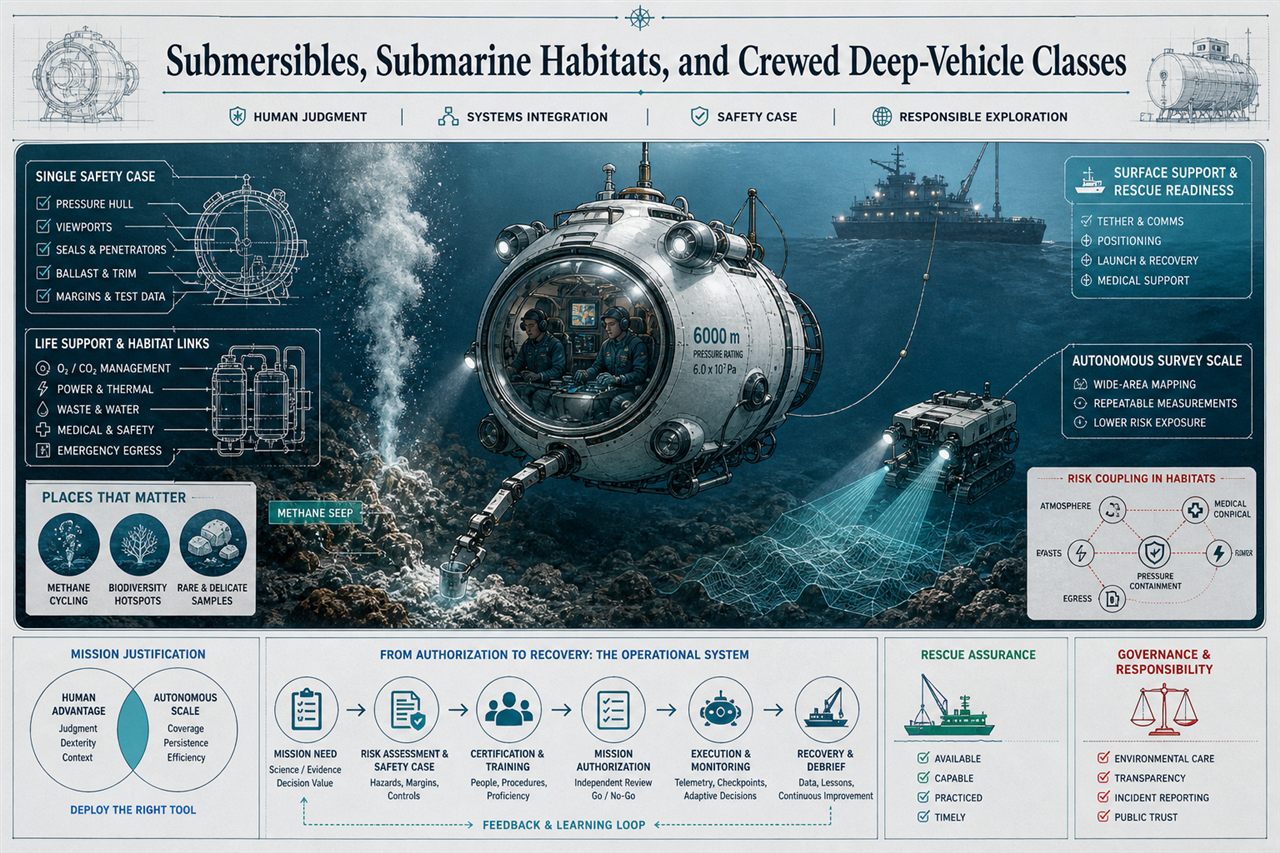
Sustained human-capable underwater operations hinge on pressure-rated vehicles and habitats that keep crews alive with auditable safety margins across hull integrity, life support, power, communications, environmental impact, and rescue. As of 2026, crewed deep-sea access is proven but remains specialized rather than routine infrastructure; uncrewed platforms handle most survey volume, while humans add value where real-time judgment, delicate sampling, repair, or trust-sensitive observation matters. Long-duration habitats are harder because occupancy ties containment, atmosphere, consumables, waste, medicine, egress, and surface support into one safety case. The main bottleneck is coordination: certification, rescue assurance, incident reporting, training, authorization, and environmental limits.
Chapter 51. Underwater Communication - Acoustic, Optical, Magnetic, and Through-Hull Channels
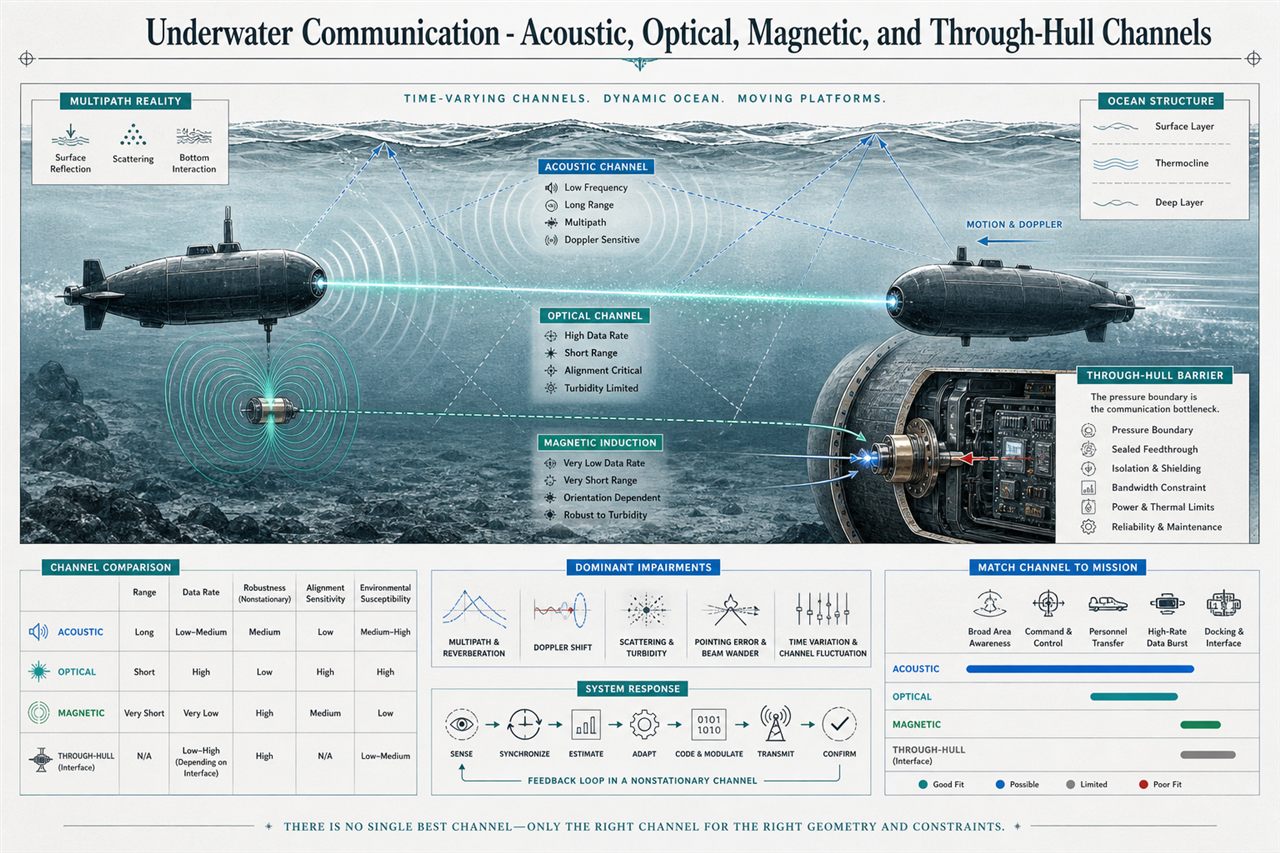
Underwater links are constrained by seawater’s strong radio attenuation plus multipath, nonstationary channels, motion-induced Doppler, optical scattering, alignment loss, and pressure-boundary interfaces. Acoustics remain the dominant non-tethered option in 2026, but performance depends heavily on depth, reflections, thermoclines, geometry, and noise, with Doppler shaping waveform and synchronization choices. Optical links can deliver short-range high-rate bursts when water clarity and line-of-sight allow, demanding fast reacquisition and buffering. Magnetic induction and through-hull/wired paths matter for sealed, docked, or deterministic transfer but lack solid quantitative baselines here. Practical takeaway: design mode-switching architectures prioritizing mission continuity over peak bitrate.
Chapter 52. Group, Swarm, and Formation Mobility in Liquid Environments
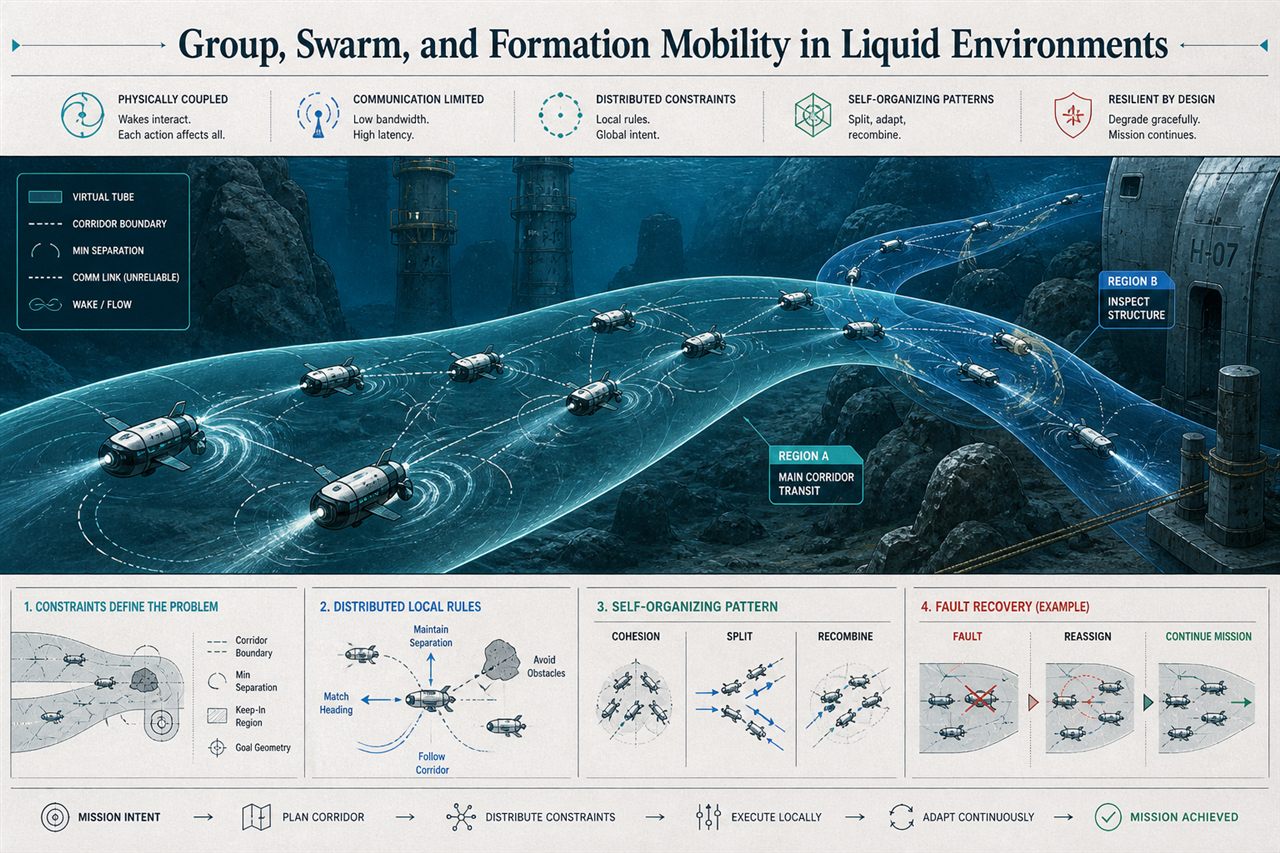
Coordinated mobility for multiple underwater or fluid-adapted vehicles depends on maintaining formation geometry, avoiding collisions, allocating tasks, and recovering from failures despite hydrodynamic coupling, degraded sensing, and low-bandwidth, high-latency links. As of 2026, strong evidence exists for key transferable swarm primitives—constraint-coordination and distributed optimization for dense formations, rapid self-organizing patterns for partitioned spaces, and virtual-tube planning for safe corridors in clutter. Direct peer-reviewed validation for true underwater multi-vehicle swarms remains limited, so near-term strategy should focus on adapting these proven methods and validating them in marine field operations, with governance and interoperability standards in mind.
Chapter 53. Mobility Through Non-Water Liquids - Hydrocarbons, Cryogenic Fluids, Slush, and Brine
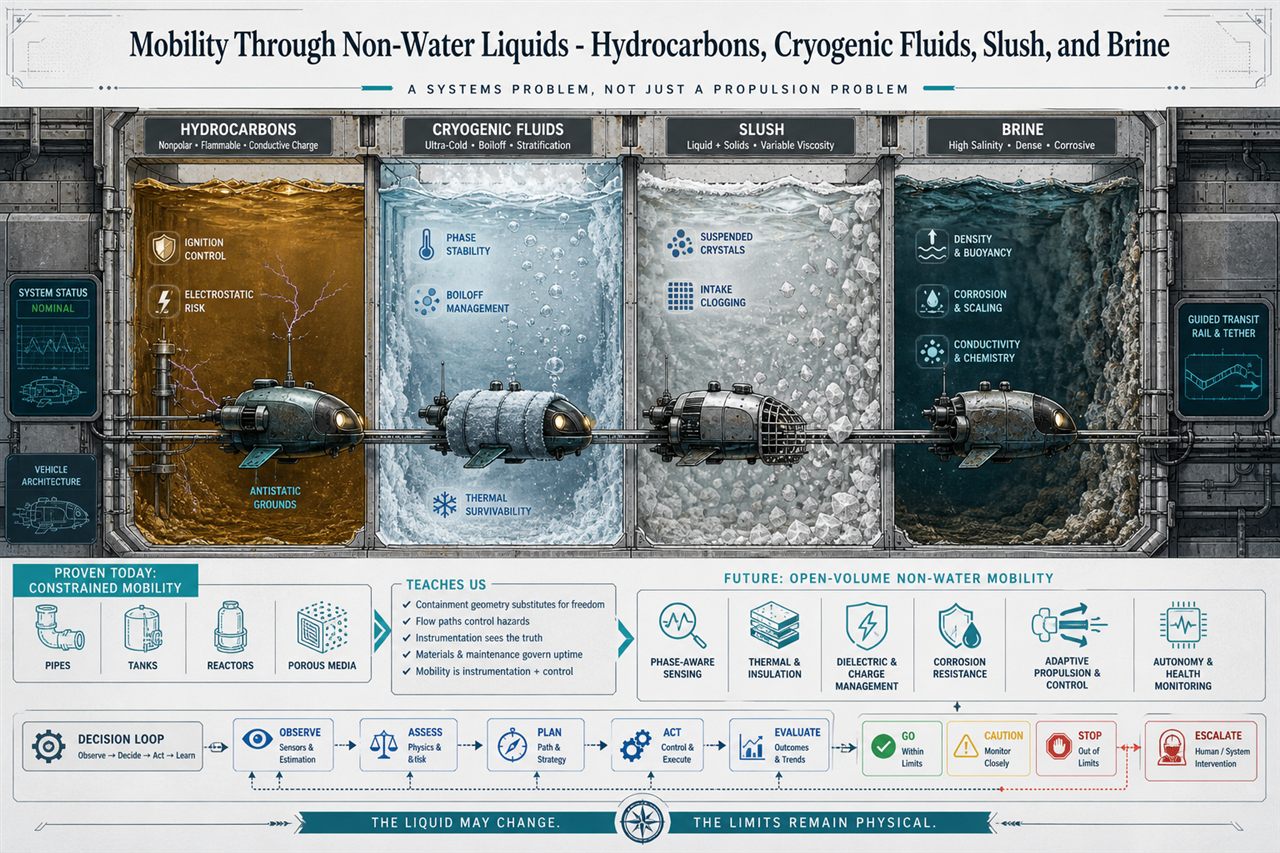
Mobility through hydrocarbons, cryogenic liquids, slushes, and brines means moving sensors, robots, or payloads while preserving phase stability, buoyancy, electromagnetic behavior, thermal survival, and chemical compatibility. By 2026, industry is highly capable at storage, pumping, metering, and flow assurance, but true free-swimming robotic or crewed traversal in bulk non-water liquids is not a verified field capability. Key constraints differ by medium: hydrocarbons add flammability and electrostatic charging; cryogens impose boiloff, bubbles, slosh, dielectric breakdown, and sensor survivability; slush introduces mixed-phase clogging and solid-fraction control; brines drive corrosion, scaling, contamination transport, and visibility loss.
Chapter 54. Environmental Sensor Networks and Distributed Telemetry
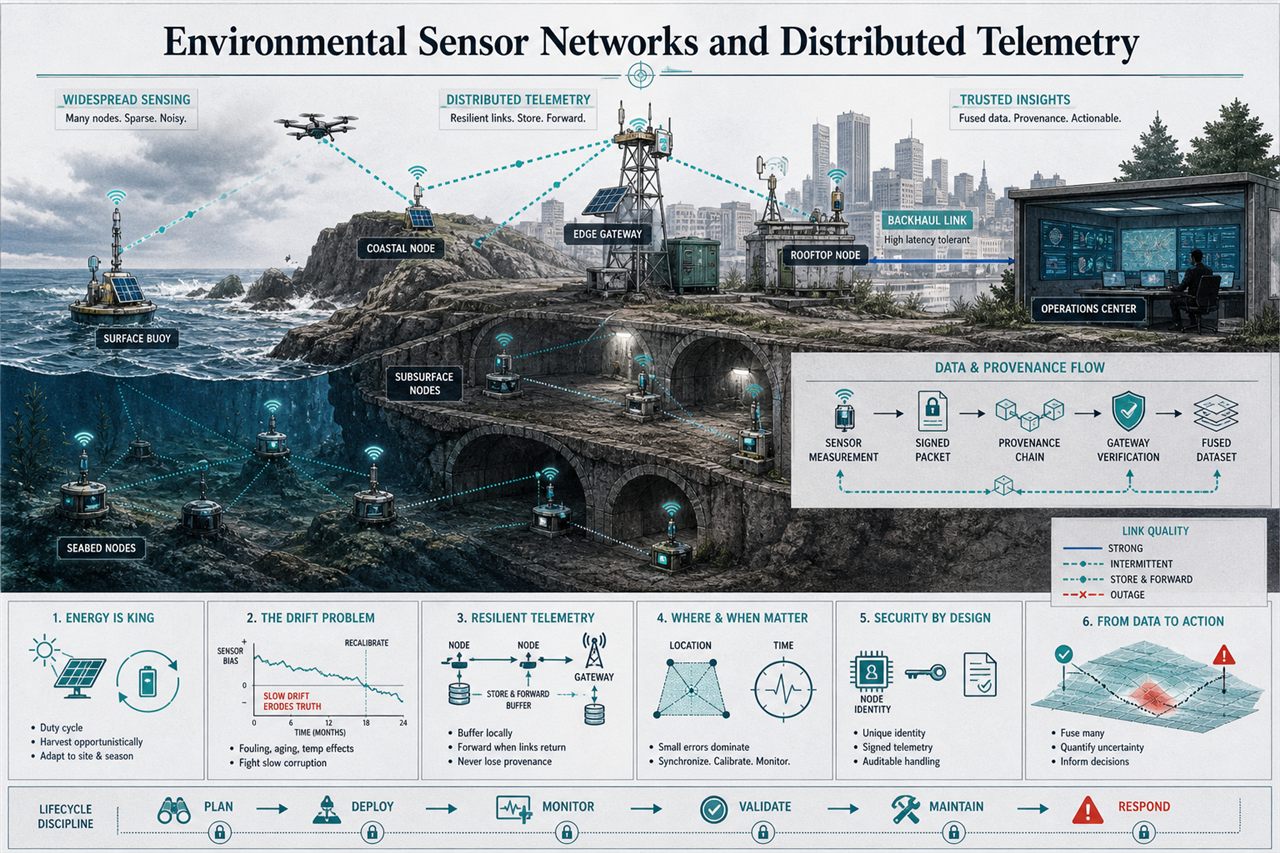
Environmental sensor networks and distributed telemetry deliver synchronized, localized, secure measurement across large or hostile domains using many low-power nodes. Deployments are mature but still bottlenecked by calibration drift, harsh exposure, inaccessible maintenance, node loss, and end-to-end data-quality assurance. Common architectures pair field nodes with gateways, intermittent wireless links, buffering, backhaul, monitoring software, and alert workflows. Lifetime is extended via duty cycling, adaptive synchronization, and energy harvesting, yet performance varies with weather, shading, fouling, and seasonal budgets. Data fusion turns sparse, noisy readings into estimates, but localization uncertainty remains limiting.
Chapter 55. Sensor Ethics and Measurement-Without-Extraction
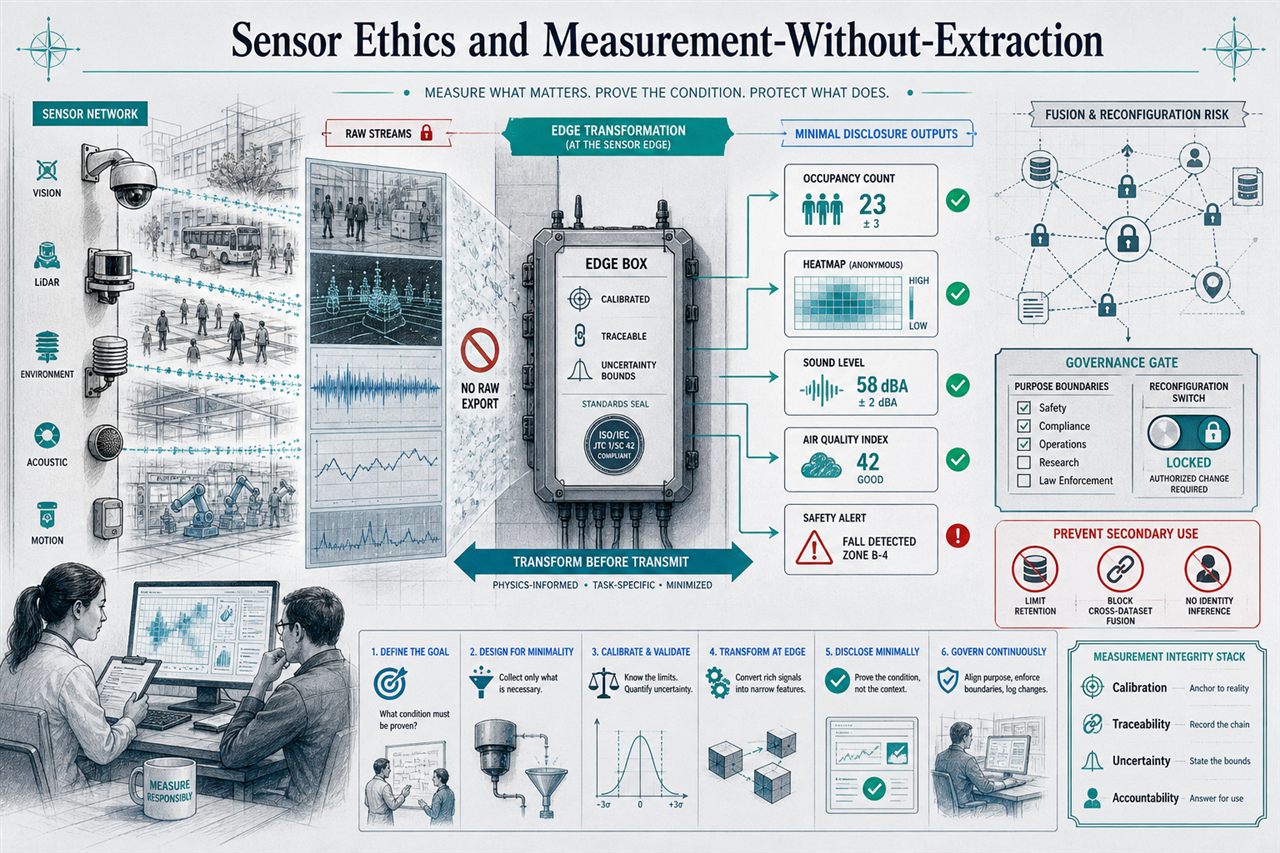
Sensor ethics aims to achieve needed observability while minimizing collection, retention, inferential reach, physical intrusion, reconfiguration abuse, and downstream coercive use. By 2026, cheap networked sensors and wireless sensor networks make dense monitoring routine across homes, industry, agriculture, vehicles, infrastructure, and the environment, expanding both value and misuse surface. Practical minimization approaches include minimal-disclosure verification (proving coverage without revealing node locations) and edge transformation that converts raw streams into task-specific, physics-informed features before export. Treat sensing as an auditable measurement chain with calibration, traceability, and error bounds. Biggest failures are organizational: procurement defaults, retention, dataset fusion, secondary use, and weak reconfiguration governance.
Chapter 56. Continental and Planetary-Scale Industrial Coordination
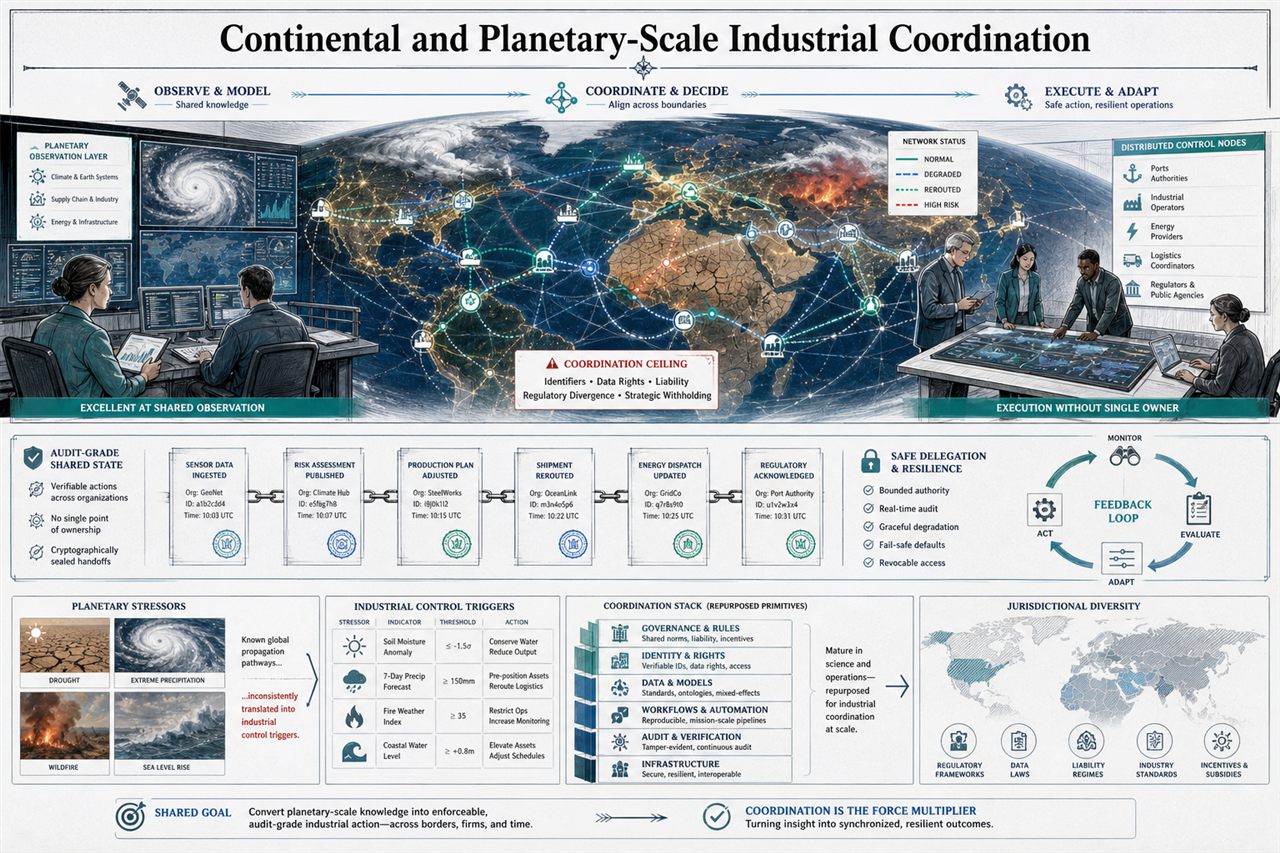
Continental and planetary-scale industrial coordination means synchronizing production, logistics, energy, materials, risk signals, compliance, and delegated control across many jurisdictions while keeping an auditable state and failing safely under shocks. By 2026, global-scale capability is strongest in observation, synthesis, modeling, and reporting (e.g., IPCC processes and the Gaia mission), not unified operational control. The main limit is a coordination ceiling: fragmented identifiers, data rights, liability, incentive conflicts, strategic withholding, regulatory divergence, and missing trusted cross-organization command protocols. Practical progress comes from standards, interoperable workflows, reproducible analytics, and translating planetary-boundary and hydrologic stress signals into shared industrial triggers.