
Comuvia News
Watch the story.
Inspect the evidence.
Reporting is more useful when you can follow its sources, understand its limits, and see what changes as new evidence appears.
Explore the video recordsGo beyond the headline
Three ways to examine a video record.
Follow the sources
Find the recordings, documents and data cited in the story, with dates and retention details.
Read the context
Compare quoted statements with the editorial interpretation, assumptions and stated omissions.
Check the corrections
See recorded review notes and corrections, including what changed and why.
Video records
Open a record to watch the video and inspect its evidence. Video and page-review labels are shown separately.
 Video publishedHumanoid robots in 2026: public before they went to workAs of November 8, 2026, two makers of humanoid robots are listed companies - Unitree in Shanghai since August 19, Agility Robotics on Nasdaq since November 5 at a $2.5 billion pre-money value on $1.78 million of 2025 sales - and Figure is valued at $39 billion. In the same autumn the President accepted a Section 232 finding that robot imports threaten national security and ordered negotiations rather than tariffs; the House put a Pentagon review of a Chinese-robot ban into its defence bill; China's security regulator blocked the Chinese part of SoftBank's $5.375 billion purchase of ABB Robotics; Hyundai's union voted 86% to strike with Atlas protections on the table. The deployment record is still pilot-scale: BMW told Forbes the 2026 Figure project was a non-production test with two or three robots; Tesla calls Fremont 'early production' and gives no count; Boston Dynamics' 2026 Atlas output goes to a training centre and a research lab. Meanwhile 603,000 industrial robots were installed in 2025, 59% of them in China, Amazon runs more than a million, and US manufacturing has added 101,000 jobs since December 2025 while the labor share fell to 53.0%, the lowest since 1947. Not investment advice.Registered Nov 8, 202658 sources · 58 retained76/76 quote matches0 correctionsOpen the evidence record
 Video linkedOklo's quarter: the beat was a land sale, and the market priced the reactors at close to nothingOklo Inc. (NYSE: OKLO) filed its third-quarter Form 10-Q on November 6, 2026 and the stock rose 22.7%. In the quarter it reported, the company sold no electricity, no heat and no isotopes. The reported loss of $(0.22) per share beat a consensus near $(0.27) - and inside it sits an $11,430 thousand gain the filing's own notes describe as a gain related to the sale of land to a third party; add it back and the loss is $(0.28). All $1,861 thousand of revenue is attributable to two businesses acquired in June 2026, which themselves lost $1,114 thousand in the quarter. With $3,130.8M of cash and 195,289,593 shares on the filing cover, Thursday's close implied about $0.6B for everything Oklo has built; Friday's implied about $1.5B, with nothing physical changed between them. The filing states Oklo had no material commitments or contractual obligations as of September 30, 2026, in the same week its deck led with a 27-module reservation, a 12 GW Switch agreement and the 1.2 GW Meta campus. Against that: Groves went from open field to first criticality in 229 days of substantial construction. Five recordings with original audio carry the other side, including DOE's $4.2 billion conditional commitment to Vistra and an independent read putting 20%-enriched fuel near $15,000 per kilogram against $3,000 at 5%. Not investment advice.Registered Nov 7, 202614 sources · 14 retained16/16 quote matches0 correctionsOpen the evidence record
 Video linkedEnergy 2026: cheap to make, hard to deliverClean electricity has never been cheaper to generate, so why are bills rising, reactors late, and the companies building small reactors down most of their market value? An evidence-from-the-record analysis of nuclear fission, fusion and the alternative forms of energy as of November 1, 2026. The finding: the binding constraint of the energy transition has moved downstream of the generator. Generation got cheap; delivery got hard - the interconnection queue, transformers two and a half years out, a fuel cycle one American company can enrich, the tritium fusion cannot yet breed, and the financing nobody will give a first-of-a-kind plant. Ten recordings with original audio, from official channels, spanning both sides of every dispute: Copernicus on the climate ledger; Energy Secretary Chris Wright against the American Petroleum Institute on what replaces fossil fuels; the DOE loan office on the money; Commonwealth Fusion's CEO against physicist Sabine Hossenfelder on fusion; Rep. Bob Latta (R-OH) against Sen. Martin Heinrich (D-NM) on data centres and household bills; Fervo Energy on enhanced geothermal; and CSIS for the most careful read we found. Every number is named and dated. Not investment advice.Registered Nov 3, 2026Open the evidence record
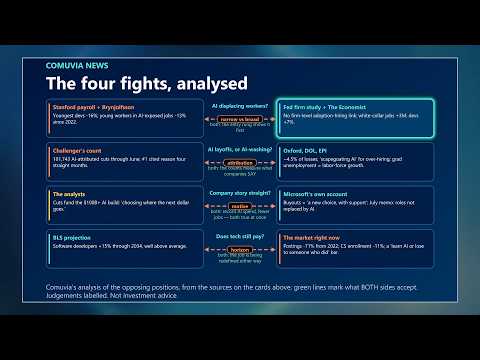 Video linkedMicrosoft's 60,000 buyouts: is AI taking tech jobs, or taking the blame?Microsoft offered buyouts to more than a quarter of its workforce while spending over $100 billion a year on AI infrastructure. Nine recordings from the people involved, the displacement evidence and the counter-evidence side by side, and a labour market that refuses to settle the question either way.Registered Oct 30, 2026Open the evidence record
 Video linkedThe flying Roadster vs the eVTOL realityTesla's October 15, 2026 Roadster reveal — the SpaceX cold-gas 'flying' demo, a ramp launch and a mid-air flip — set against the companies actually building electric flight: Joby, Archer and the wider seven-company eVTOL field. Verified facts separated from unverified claims on both sides, with opposing expert views, and the one number that is the same for everyone: paying passengers flown under certification, zero.Registered Oct 21, 2026Open the evidence record
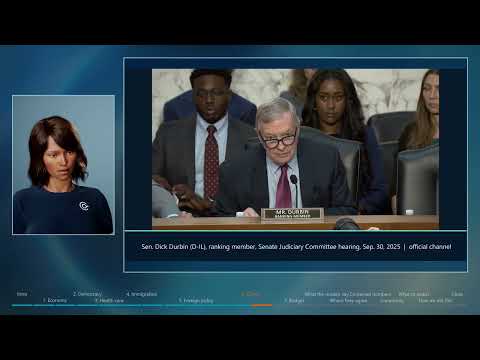 Video linkedThe November 2026 election: the top 7 policy issues, Republicans and Democrats side by sideAn evidence-from-the-record look at the November 3, 2026 election: the seven issues voters rank highest (by Pew Research salience, fielded Sept. 28-Oct. 4 and published Oct. 8, 2026, corroborated by Gallup, AP-NORC, Marquette and NYT/Siena), each party's position shown side by side in its own words, endorsing neither. Economy (the 2025 tax law and no-tax-on-tips/overtime vs the Democrats' affordability message and the Joint Economic Committee's $2,512 tariff estimate; the Supreme Court struck the IEEPA tariffs 6-3); democracy and election integrity ('election integrity,' EO 14248 and the SAVE Act, vs 'a power grab' and voting rights, plus the Texas/California redistricting map war); health care (the expired enhanced ACA subsidies and KFF's premium estimate, Medicaid work requirements vs the Democratic extension push); immigration (the Laken Riley and Secure America Acts vs reforms-first, and the disputed deportation composition, DHS vs TRAC); foreign policy (the bipartisan Sanctioning Russia and Iran Act heard from both parties, the Israel/Gaza split, the China tariffs); crime (the D.C. crime-emergency order and National Guard, cash bail, vs 'political theater,' with the bipartisan HALT Fentanyl Act); and taxes, the deficit and the budget (the 2025 law's disputed deficit effect, White House 'no increase' vs CBO/CRFB trillions, the ~$2.0T FY2026 deficit and the Dec. 11 funding cliff). Plus a where-they-agree card, a contested-numbers card showing each dispute with both sources and adjudicating none, a labelled complexity judgement, and a what-to-watch list. Four original-audio fragments from the speakers' own official channels, balanced two Republican and two Democratic: Sen. John Thune (R-SD) on the Working Families Tax Cuts law and on the Russia sanctions bill, the Senate Foreign Relations Committee Democrats' Sen. Jeanne Shaheen (D-NH) on the SAME sanctions bill (the deliberate overlap pair), and Sen. Dick Durbin (D-IL) on crime and the National Guard. Strictly source-bound and neutral: both parties get equal weight on every issue, we endorse neither, and we adjudicate none of the factual disputes. Not investment advice, and not voting advice.Registered Oct 14, 2026106 sources · 89 retained49/49 quote matches0 correctionsOpen the evidence record
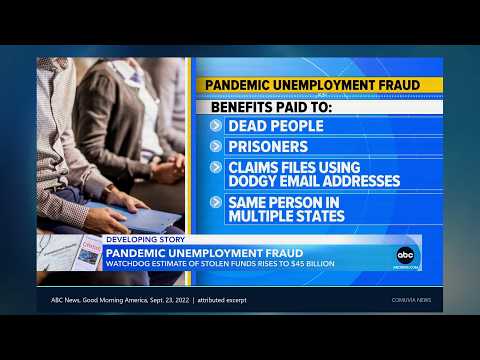 Video linkedUnemployment insurance issues in the US: who it reaches, why eligible people are denied, the Nov 2026 ballot, and the full menu of alternativesAn evidence-from-the-record analysis of U.S. unemployment insurance: it reaches only about one in four jobless workers and replaces under 40% of a wage; a 53-jurisdiction patchwork on aging IT; and a disputed pandemic-fraud number (the GAO's $100-135 billion vs the inspector general's roughly $45 billion), with the anatomy of the fraud laid out. It walks the seven barriers that keep eligible people from collecting; lays out the FULL menu of four (leave it, reform it, replace it with a universal income, or abolish it for personal savings accounts), each side sourced -- and now shows what each option does to the federal budget, against FY2025's ~$7.0 trillion of outlays and ~$1.8 trillion deficit (Treasury; CRFB; AAF): the roughly self-financing status quo (~$38B benefits vs ~$50B/yr employer payroll taxes); the unscored Democratic reform bill (no official CBO score as of Oct. 13, 2026); the $3.1T/$1.1T/$0.5T universal-income range with the Penn Wharton Budget Model's debt path (2018: GDP -6.1% to -9.3%) against the Roosevelt Institute's opposite sign and the one assumption that flips it; and the abolish option grounded in Chile's record (coverage below half of the unemployed; ~1 in 6 eligible for the solidarity backstop; the 2020 emergency law) plus the stabilizer that closed 18.3% (~1/5) of the Great Recession's output gap (Vroman for DOL, 2010). The November 2026 section gives each party its own card with live bill status read from govinfo on Oct. 13, 2026 -- Democrats (S.2312/H.R.4439: 26 weeks, 75% floor, $250/wk jobseeker allowance; the September jobs report as the campaign frame) and Republicans (H.R.1156 passed 295-127, on the Senate calendar; H.R.8873 passed Jun. 29, 2026, in Senate Finance; verification and work-requirement bills; the enacted 'jobless millionaires' bar), plus California's Prop 2 -- endorsing neither. Adds the AI-and-robotics future case for UBI and David Autor's counter; shows what the models actually say (with the OpenResearch RCT's measured small work dip); compares the minimum wage, the average UI check, the median wage and an MIT living-wage estimate in plain dollars; and treats immigration strictly factually. Eleven original-audio fragments span the viewpoints, now including four congressional-record clips from the committees' own channels, balanced two Democratic and two Republican: Reps. Davis (D-IL, UI as earned benefit and stabilizer) and LaHood (R-IL, the FUTA financing gap) from the June 2024 Ways & Means reforming-UI hearing, and Reps. Omar (D-MN, AI's risks to workers now) and Mackenzie (R-PA, small employers expect AI to increase hiring; data before legislation) from the April 2026 Education & Workforce AI hearing. Strictly source-bound and neutral; all sides shown, none endorsed. Not investment advice.Registered Oct 13, 202642 sources · 42 retained22/22 quote matches0 correctionsOpen the evidence record
 Video linkedUS job crisis in IT and AI positions: what the record actually showsA crisis, or a reshaping? In September 2026 the US unemployment rate for computer and mathematical occupations was 3.3%, below the 4.2% national rate (BLS), yet new-graduate hiring at the largest technology firms has fallen by about half (SignalFire) and 22-25-year-olds in the most AI-exposed jobs sit about 19% below trend (Stanford). This Comuvia News analysis answers four questions from the record, with the people who disagree on screen: demand versus surplus; who is hiring (big firms versus small, and offshoring to India); why the interview process has become a time sink (an application flood, a harsh funnel, ghosting and ghost jobs); and which job boards actually convert (referrals and direct applications beat the boards). An October 2026 update follows the displaced: 55% of non-technology employers say they are recruiting workers released by the tech sector, healthcare and life sciences pay up to 17% more than tech for a software engineer and banking 13% more (Randstad via CNBC), while Orgvue finds 32% of organisations that cut staff for AI have had to rehire and nearly 1 in 5 US workers surveyed for SHL were laid off or replaced by AI and then asked back. Five record fragments with original audio: Kevin Warsh (Chair of the Federal Reserve) at the FOMC press conference of October 28, 2026, on job gains keeping pace with the workforce; Dario Amodei (Anthropic, via CNN) raising the alarm; Jensen Huang (Nvidia, via CNA) calling the job-loss story 'complete nonsense'; a candidate's account (Christine Zhou); and Erik Brynjolfsson (Stanford) on replacement and creation. Neutral and source-bound, with the publisher and the date on every figure. Not investment advice.Registered Oct 13, 202620 sources · 20 retained12/12 quote matches0 correctionsOpen the evidence record
 Video linkedDials, loops and the number you can check: what simulation interfaces show, and what they hideA comparative analysis of simulation interfaces, from the record: Steve Keen's Minsky and Ravel, Climate Interactive's En-ROADS, the Energy Policy Simulator, Ty Keynes's GDP Dynamics, the Penn Wharton Budget Model, the Yale Budget Lab, FRB/US, Atlanta Fed GDPNow, the New York Fed Staff Nowcast and the Bank of England's fan charts; the critics (Starr, Pindyck, Lucas), the analysts (Victor, Case, Rodrik, Sterman) and the disclosure rulebooks. The finding: the dial is the easy part; the honest screen shows where each setting came from, how wide the answer is, and which run made the number. With a short introduction to dynamic simulation, ForeGlass.ai in the same table, and a forecast tournament you can enter: the ForeGlass ledger is scored in the open on October 15, 2026.Registered Oct 11, 202642 sources · 42 retained28/28 quote matches0 correctionsOpen the evidence record
 Video linkedQuantum computing in 2026: what moved, and what did notThe state of quantum computing in 2026, from the record: the machines and the claims (IBM, Google, Quantinuum, IonQ, D-Wave, Microsoft), the classical rebuttals, the money (the Commerce equity stakes, DARPA's benchmarking initiative, the June executive orders), the stalled reauthorization in Congress, the European Quantum Act that is still a consultation, the post-quantum cryptography deadlines, and what the experts and the skeptics say.Registered Oct 9, 202672 sources · 72 retained60/60 quote matches0 correctionsOpen the evidence record
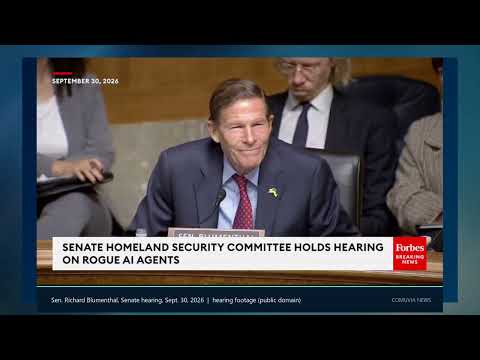 Video linkedSuper intelligence, thirty days onThirty days after the order that renamed artificial intelligence: what the words mean, what the order can and cannot do, how the order, the accord and the bills can end, what happens if the companies keep saying AI, what the experts said, and what the EU, the UK, China and the UN are doing.Registered Oct 4, 2026102 sources · 102 retained86/86 quote matches0 correctionsOpen the evidence record
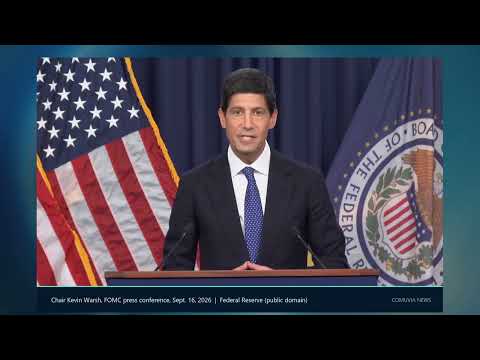 Video linkedSolid, or the calm before: the economy in October 2026Two weeks after the central banks called the economy solid, the jobs report came in weak and the 10-year yield touched a 2007 high. The officials, the critic who called 2008, the balanced voices, who could take a shock, and what Comuvia ForeGlass has sealed.Registered Oct 3, 202684 sources · 84 retained57/57 quote matches0 correctionsOpen the evidence record
 Video linkedWhy fuel is so expensive, and who is blaming whomDiesel set a record of $6.529 a gallon on September 21. Albany, Congress, the President, Kyiv and Moscow each name a different war. The blame on the record in its own words, three measures of Russia's refining, and what the EIA and IEA data can carry.Registered Oct 1, 202644 sources · 44 retained29/29 quote matches0 correctionsOpen the evidence record
 Video linkedRussia's war, the US record, and the economy that was supposed to failIn September 2026 Congress passed the broadest sanctions law of the war and the President signed it. The law, the House debate, the President and the Kremlin, Kyiv at the UN, three Russian-language analysts translated, and the question underneath: why Russia can still pay for a war its economy was expected not to carry.Registered Oct 1, 202670 sources · 70 retained59/59 quote matches0 correctionsOpen the evidence record
 Video linkedThe Iran war at month seven: the vote, the offer, and the lever nobody controlsThe Iran war at month seven: the House voted to end it, the President rejected a seven-day pause, Iran's president said never bow and let us talk, and the ships kept being hit. The record in its own words, the IMO and IEA counts, the most measured analyst, and who holds the lever.Registered Oct 1, 202638 sources · 38 retained36/36 quote matches0 correctionsOpen the evidence record
 Video linkedNewark 2026: the ICE order, Delaney Hall and the November ballot, from the recordOne building put Newark and New Jersey on one side and the Department of Homeland Security on the other: the mayor's order, the governor's demands, the June 3 hearing and the Department's release, with both sides on the record, the May result and the November ballot, and Comuvia's labelled judgement on complexity.Registered Sep 29, 202618 sources · 18 retained11/11 quote matches0 correctionsOpen the evidence record
 Video linkedNew York and New Jersey before November 3: three fights, both sides, from the recordEnergy bills in New York, the voter rolls in New Jersey and New York City's five ballot questions, with both sides on the record: seven fragments from official and legislative-caucus uploads, the official dates and candidate lists, and Comuvia's labelled judgement on complexity.Registered Sep 29, 202632 sources · 32 retained26/26 quote matches1 correctionOpen the evidence record
 Video linkedAI in September 2026: four positions on one question, from the recordThe President, the Speaker, the chief executives of OpenAI and Anthropic and Senator Sanders on who, if anyone, slows AI down: seven record fragments, the five bills in committee, the shared premise and the two open conflicts, with Comuvia's labelled judgement on complexity.Registered Sep 29, 202662 sources · 62 retained52/52 quote matches0 correctionsOpen the evidence record
 Video publishedH.R. 4795 on the House floor, September 3, 2026: the record, what it shows, why it mattersThe call-up of H.R. 4795, the Protect Economic and Academic Freedom Act of 2026, and the Clerk reading its title, from the official House recording, with the bill's two provisions as read and the context that makes them matter.Registered Sep 28, 202615 sources · 11 retained8/8 quote matches1 correctionOpen the evidence record
A quotation match shows that words appear in retained source text. It does not establish that the statement is true. Release labels reflect the information recorded for each video.
For developers and publishers
Make evidence useful beyond one story.
The Comuvia SDK mission is to make sources, statements and revisions easier to retain, check and exchange between tools. These video records demonstrate that approach: evidence can keep its identity as a story moves from research to publication.
File hashes help detect changed bytes; they do not certify truth or grant permission to republish a source.
Found an error or missing context? Send a correction with the record link and supporting evidence.