
Part 4. The Energy Frontier
From 'The Long Horizon: A Vision of Frontier Technology from 2026 to 2400' - an AI-authored book produced on Comuvia's BookWriter system. Each chapter below is shown as its Business Editorial poster with a one-paragraph synopsis.
Chapter 57. Advanced Nuclear Fission - SMRs, Fast Reactors, and Closed Fuel Cycles
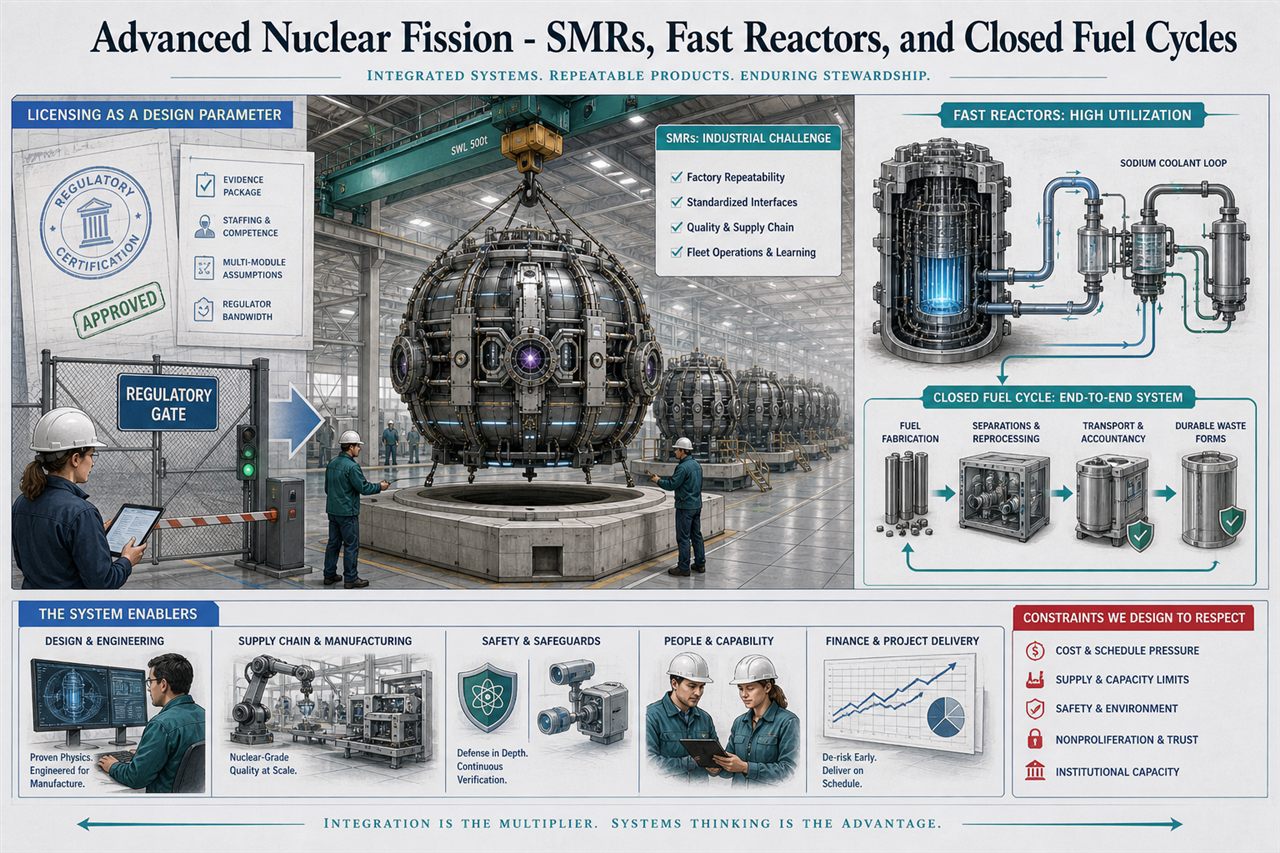
Advanced nuclear fission progress hinges less on new physics than on industrialization: turning reactor designs into repeatable, factory-fabricated products with reliable quality assurance, predictable site integration, and fleet-style operations. Licensing becomes a primary determinant of cost, schedule, and deployment speed, since design certification, construction approvals, staffing models, multi‑module assumptions, and regulator throughput shape risk as much as engineering does. Fast-spectrum reactors are technically established, with sodium fast reactors a reference approach but still constrained by coolant behavior, materials, operational complexity, and the difficulty of building a persuasive safety case. Closed fuel cycles promise far better fuel utilization but require an end-to-end institutional and infrastructure stack—fabrication, separations, transport, safeguards, waste forms, and long-duration governance. Practical focus areas are licensing harmonization, nuclear-grade supply chains, safeguards capacity, and financing structures that can absorb first-of-a-kind uncertainty.
Chapter 58. Fusion Energy - From First Plasma to Industrial Power
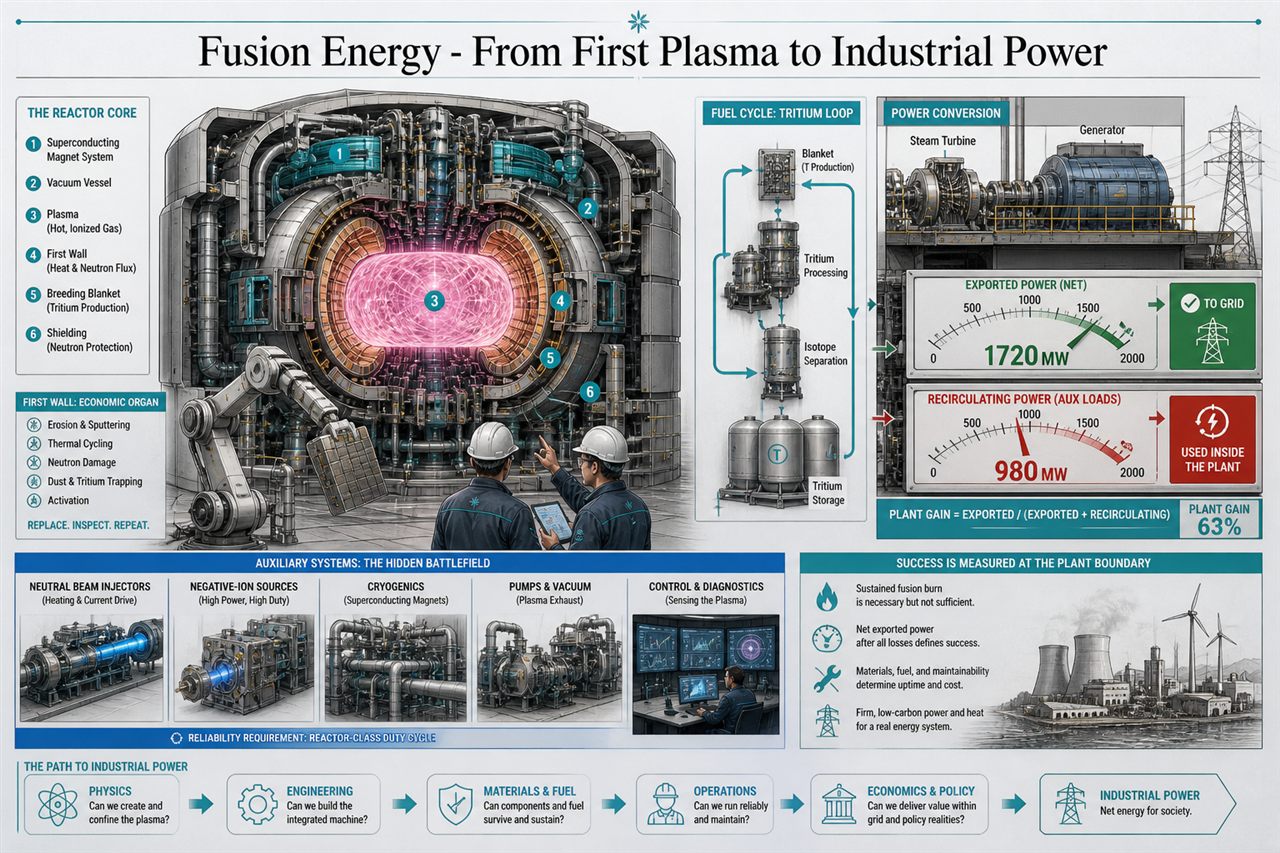
Fusion is a full reactor-system challenge: sustaining a controlled burn is not enough unless the plant exports net power after accounting for auxiliaries, conversion losses, recirculating power, and downtime. Distinguishing plasma gain from plant gain is essential for investment and program evaluation. The hardest practical constraints sit at the first wall and plasma-facing components, where alpha-particle reflection, erosion, neutron damage, thermal cycling, activation, dust, and replacement cadence drive availability and economics. Key enabling subsystems include neutral-beam injection, negative-ion sources, diagnostics, and injector reliability; SPIDER beam-emission spectroscopy is cited as a documented milestone.
Chapter 59. Aneutronic Fusion and Beyond-Tokamak Architectures

Aneutronic fusion and non-tokamak designs aim to cut neutron damage and simplify energy capture by favoring fuels like proton–boron-11, but they face far tougher ignition and burn conditions than deuterium–tritium and are constrained by radiation losses and whole-plant power balance. “Aneutronic” still entails side reactions, bremsstrahlung, activation, and materials degradation, so first-wall lifetime and particle-range modeling remain central. Field-reversed configurations, stellarators/helical devices, magnetized target fusion, pulsed systems, and inertial/laser concepts broaden options, yet none has demonstrated net-electric aneutronic power as of 2026. Propulsion remains conceptual; evaluate all claims with full-system accounting, not plasma-only metrics.
Chapter 60. Solar at Scale and the Storage Revolution
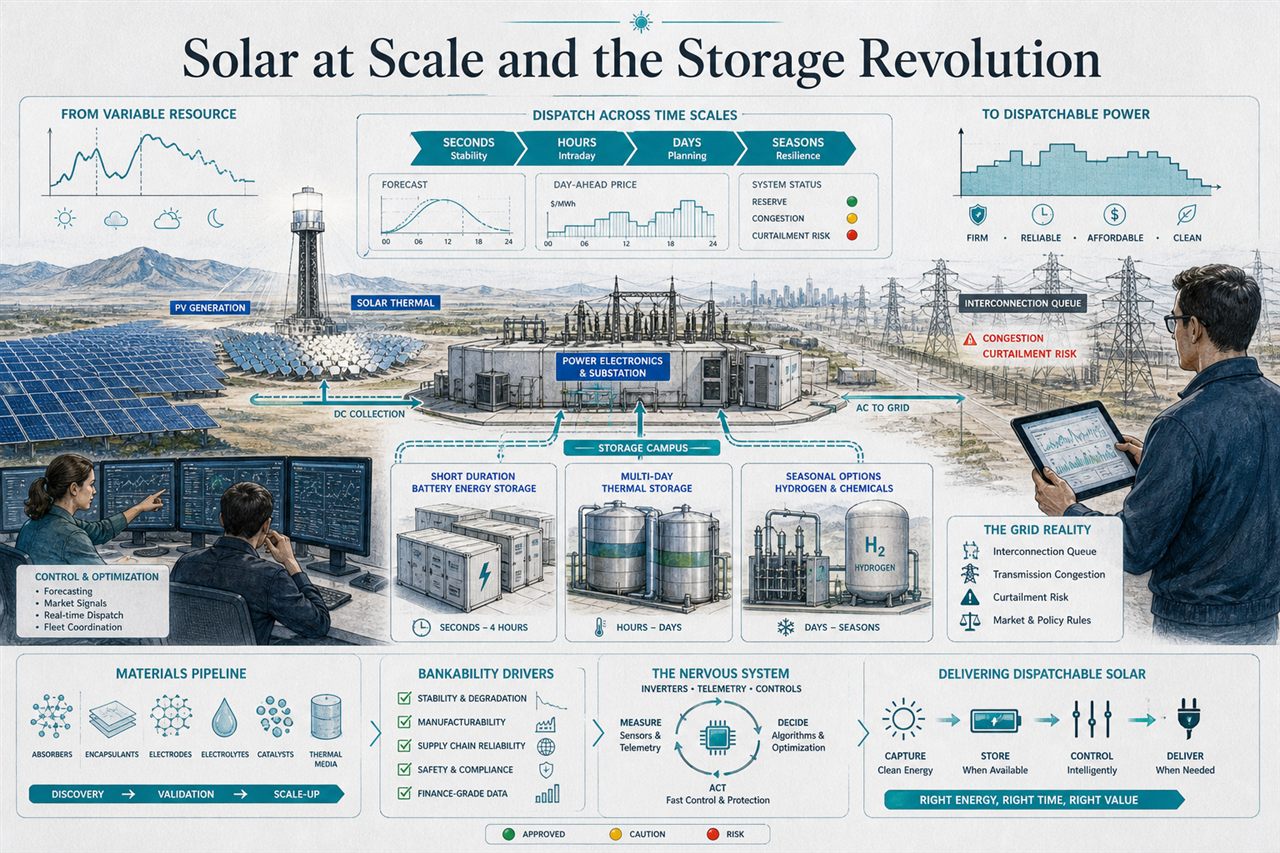
Solar becomes an infrastructure asset when designs optimize stability, reproducibility, manufacturability, degradation, and supply-chain bankability, not just lab efficiency. Grid storage today is dominated operationally by short-duration electrochemical systems, while multi-day, seasonal, thermal, hydrogen-derived, mechanical, and chemical options remain location- and duty-cycle dependent. Solar-plus-storage is increasingly valued as a dispatchable portfolio, with real constraints shifting to interconnection queues, congestion, curtailment, inverter behavior, telemetry, safety cases, and credible revenue stacks. Materials-informatics and discovery pipelines accelerate next-generation PV and storage components, while forecasting, dispatch, degradation modeling, anomaly detection, and fleet clustering turn deployment into a data-and-controls problem.
Chapter 61. Grid Flexibility, Long-Duration Storage, and the Compute-Energy Stack
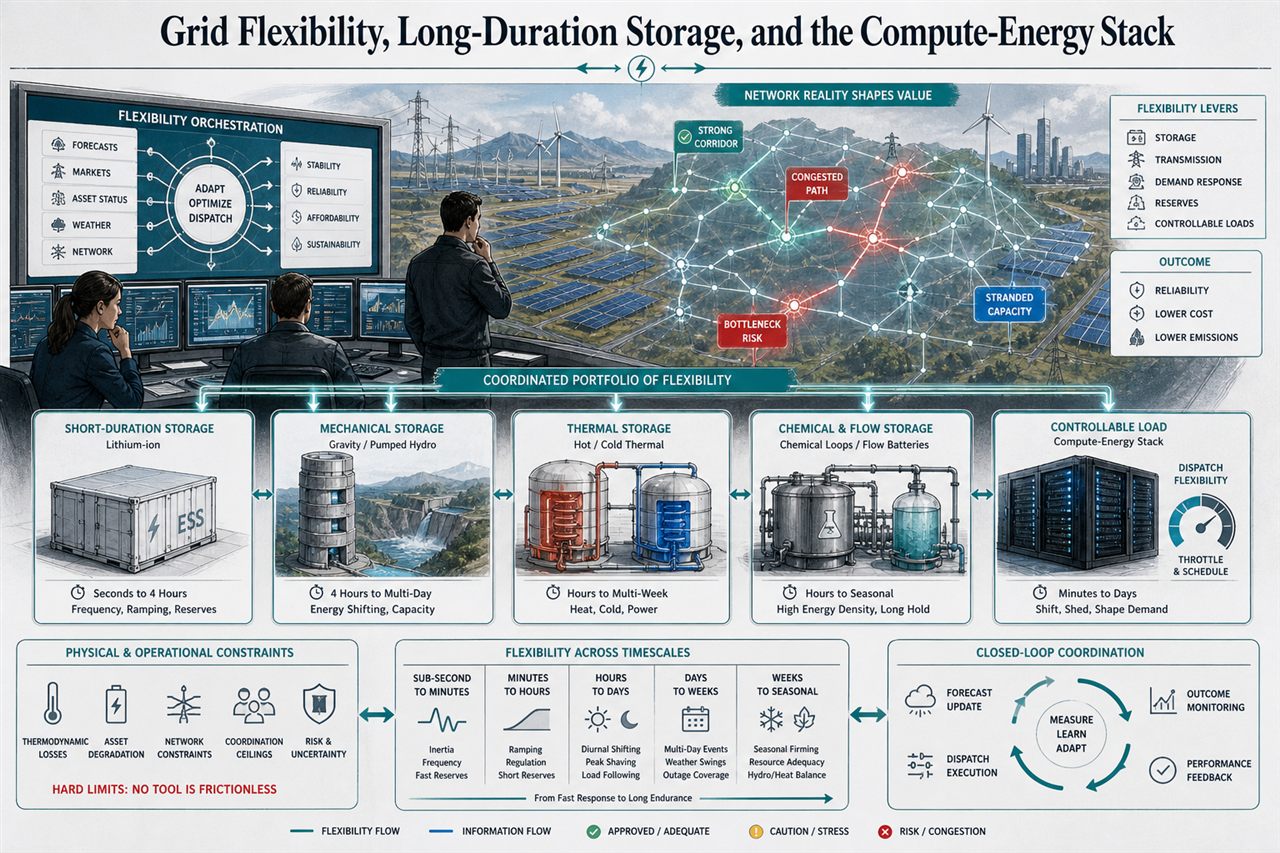
Treat flexibility as a system property built from storage, transmission, dispatchable generation, demand response, reserves, curtailment management, and control systems, coordinated across sub-hour to seasonal timescales under constraints like thermodynamic losses, degradation, topology, and market design. Lithium-ion dominates short-duration needs, while long-duration storage remains a diverse set spanning mechanical, thermal, thermochemical, electrochemical, and sector-coupled options. Planning is shifting from static capacity adequacy to metrics for ramping, reserves, congestion relief, and curtailment reduction. Integrated market–grid simulation is essential because storage value depends on network constraints, rules, dispatch assumptions, and renewable buildout geometry.
Chapter 62. The Terawatt Civilization
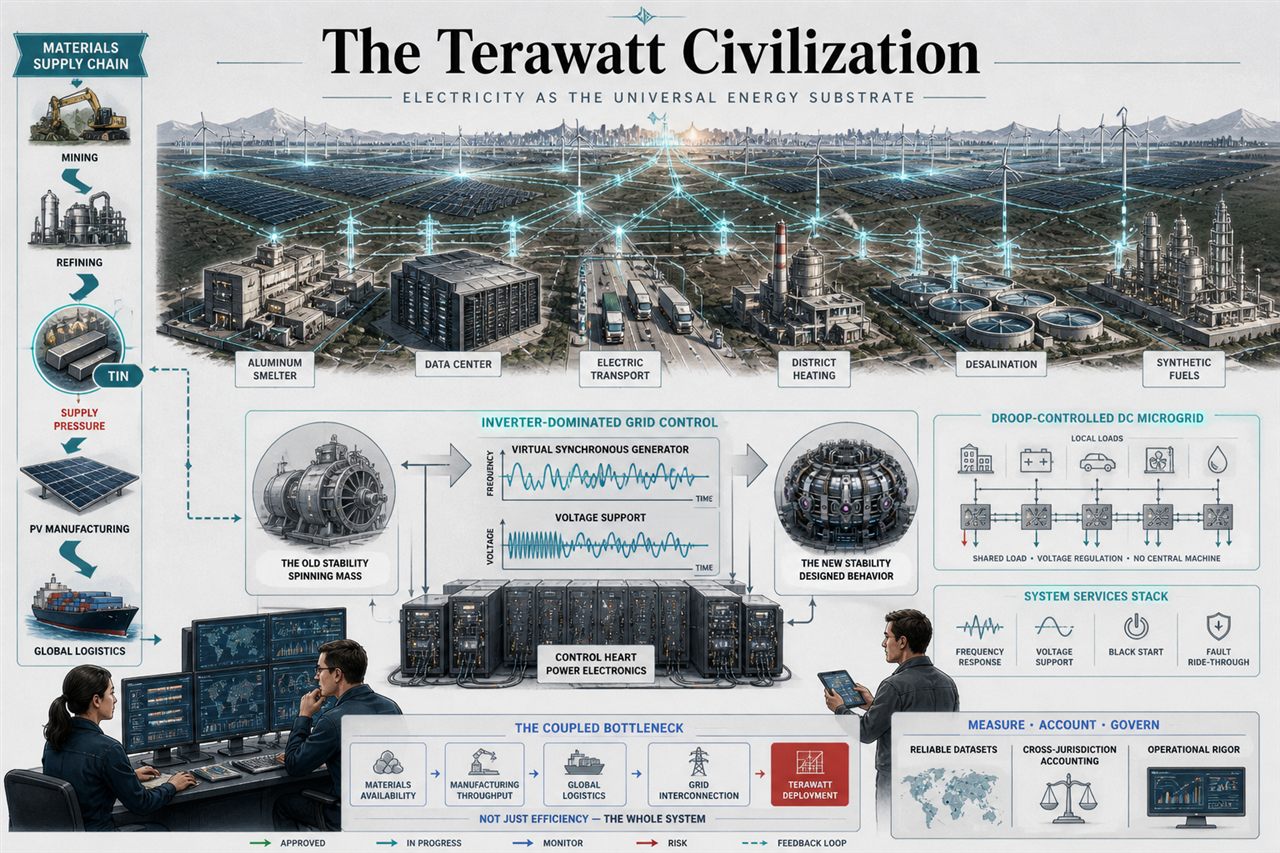
Reaching a terawatt civilization means making electricity the primary, controllable energy backbone for industry, computing, transport, heating, desalination, synthetic fuels, and materials, while keeping grids stable as inverter-based generation dominates and supply chains scale to multi-terawatt levels. Progress hinges less on single-component efficiency and more on coupled constraints: materials availability, manufacturing throughput, deployment logistics, and grid integration. Practical priorities include using OECD/IEA electricity accounting to benchmark electrification and mix shifts; deploying grid-forming controls such as distributed droop control for DC microgrids and virtual synchronous generator behavior for weak or island grids; and treating materials bottlenecks (for example, tin) as first-order planning inputs.
Chapter 63. Orbital Solar Power and Energy from Space
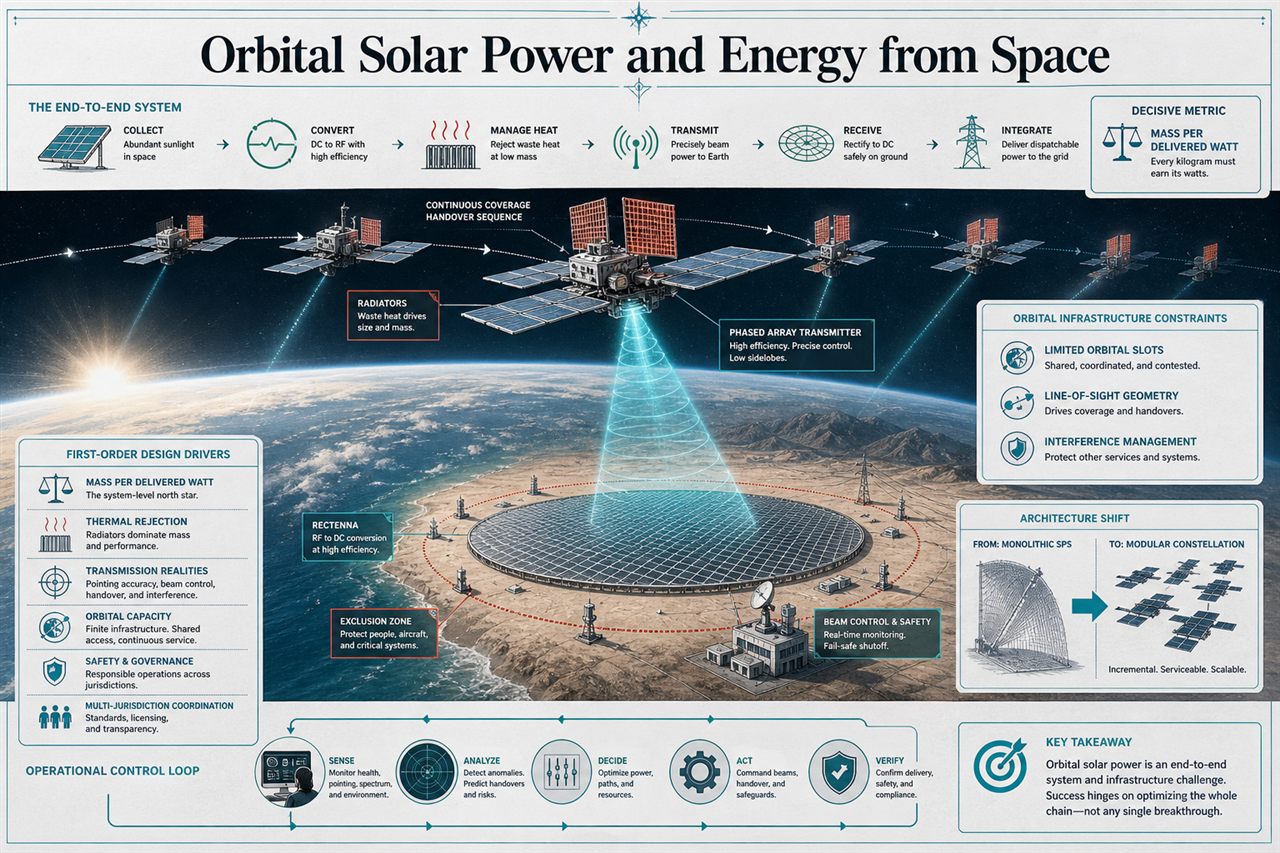
Orbital solar power aims to collect solar energy in space and deliver usable power to Earth or in-space users, with feasibility dominated by mass per delivered watt, waste-heat rejection, transmission control, orbital capacity, and multi-jurisdiction coordination. As of 2026, no system provides sustained, grid-scale commercial electricity from orbit; progress is limited to studies and subsystem demonstrations. The central insight is architectural coupling: collection, conversion, thermal management, transmission, reception, operations, and grid integration must be optimized together. Thermal radiation constraints remain first-order. Practical focus should be on delivered, dispatchable, safe, governable power under pointing, loss, interference, maintenance, and handover realities.
Chapter 64. Beamed Power and Wireless Energy Transmission
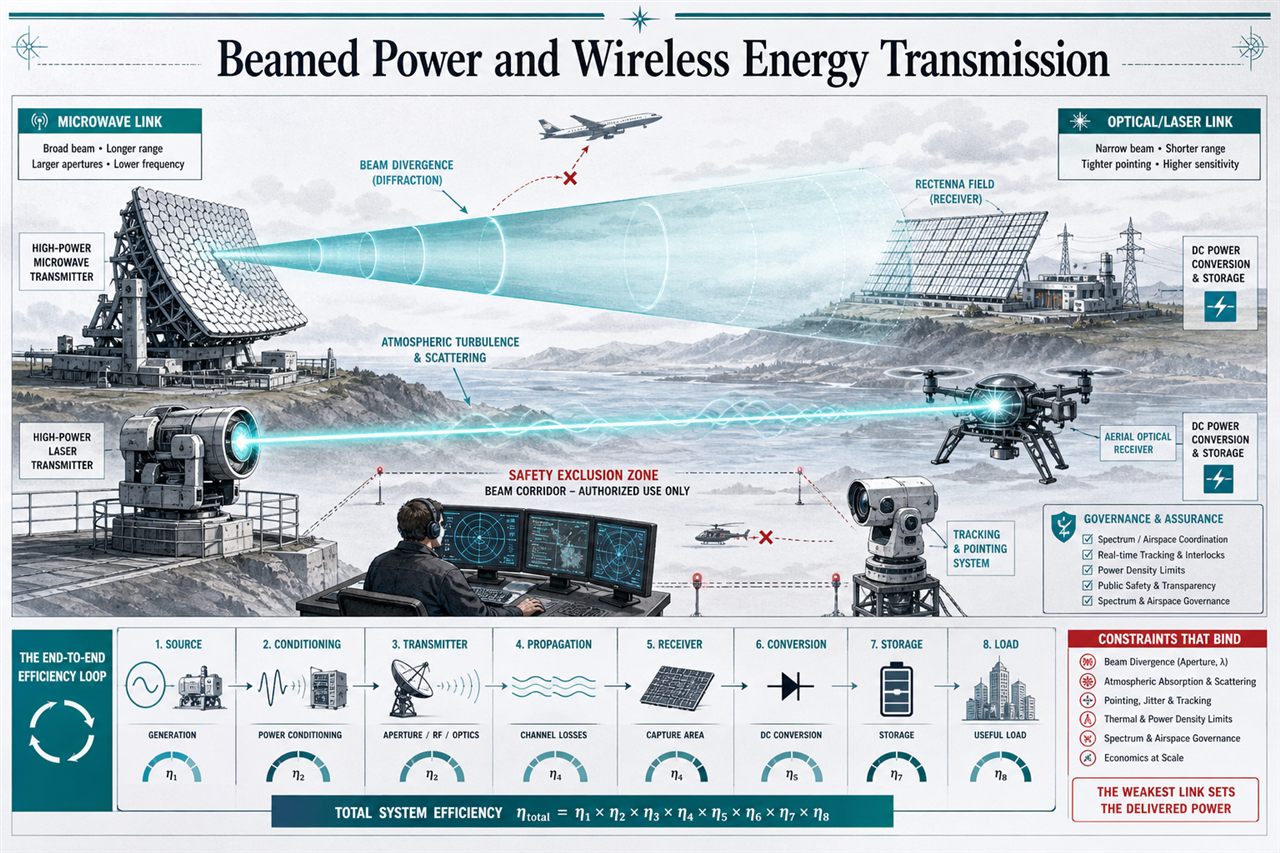
Beamed power aims to deliver usable electricity over distance without wires, but performance is dominated by beam divergence, propagation losses, beam–medium interactions, conversion efficiency, and reliable pointing, plus safety assurance and spectrum/airspace governance. As of 2026, near-field inductive and resonant transfer is commercially mature for short-range charging, while far-field microwave and optical approaches remain pre-commercial and application-specific, with no verified grid-scale deployment figures. Microwaves paired with rectennas anchor high-efficiency conversion and space-power concepts; optical methods trade tighter diffraction limits for tougher atmospheric and eye-safety constraints. Treat the system end-to-end: source, channel, receiver, storage, and economics.
Chapter 65. Antimatter, Exotic Fuels, and High Specific-Energy Systems
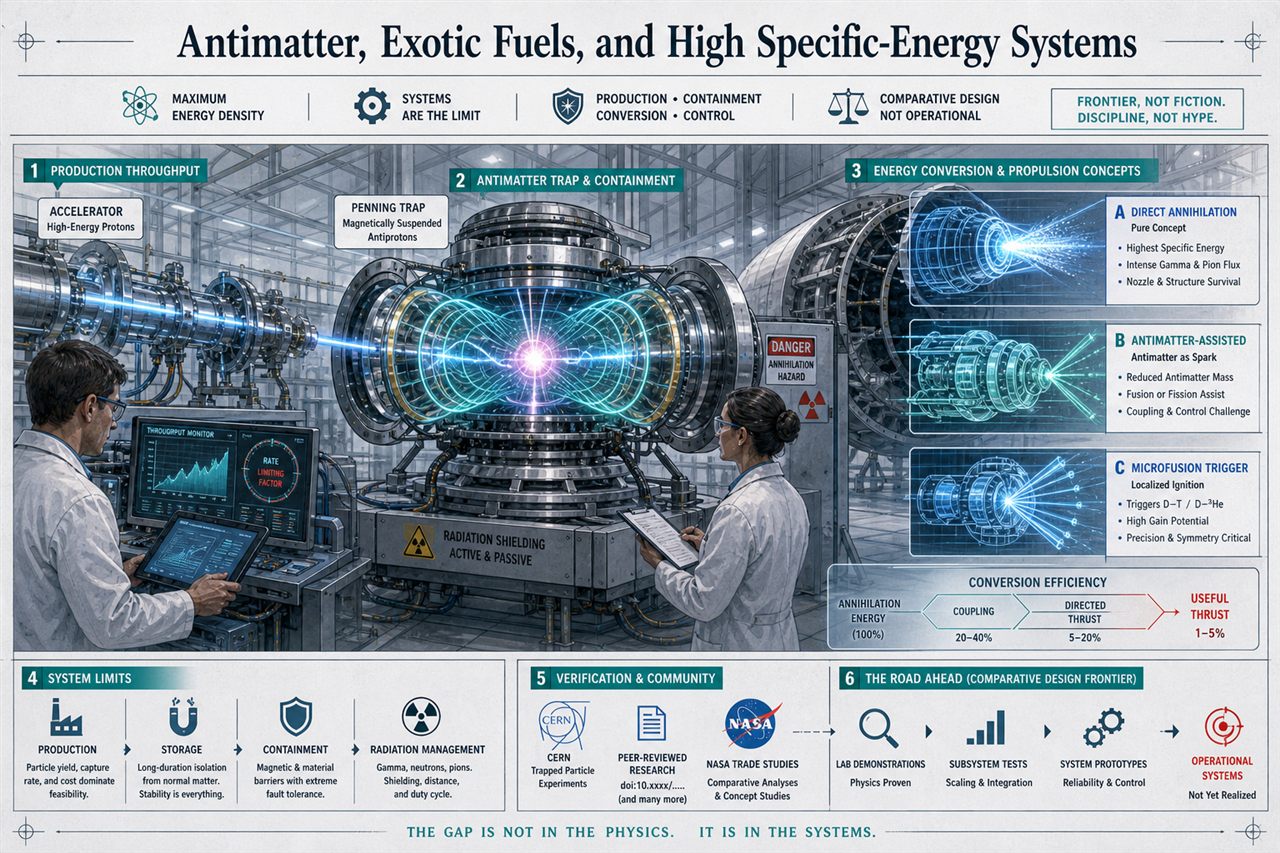
Antimatter and other exotic high specific-energy concepts target energy densities far beyond chemical and conventional nuclear systems, but remain analysis-driven rather than operational as of 2026. The most developed architectures in the open literature include direct annihilation rockets, antimatter-assisted propulsion, and antimatter-triggered microfusion, typically evaluated through vehicle trade studies. Feasibility is dominated by accelerator-based production economics and capture throughput, while storage and containment add separate, severe bottlenecks requiring stable isolation from normal matter, low losses, and fault-tolerant control. Fundamental physics progress, including evidence for exotic antimatter nuclear states, should not be conflated with deployable power or propulsion readiness.
Chapter 66. Field Energetics and Boundary Interface Power
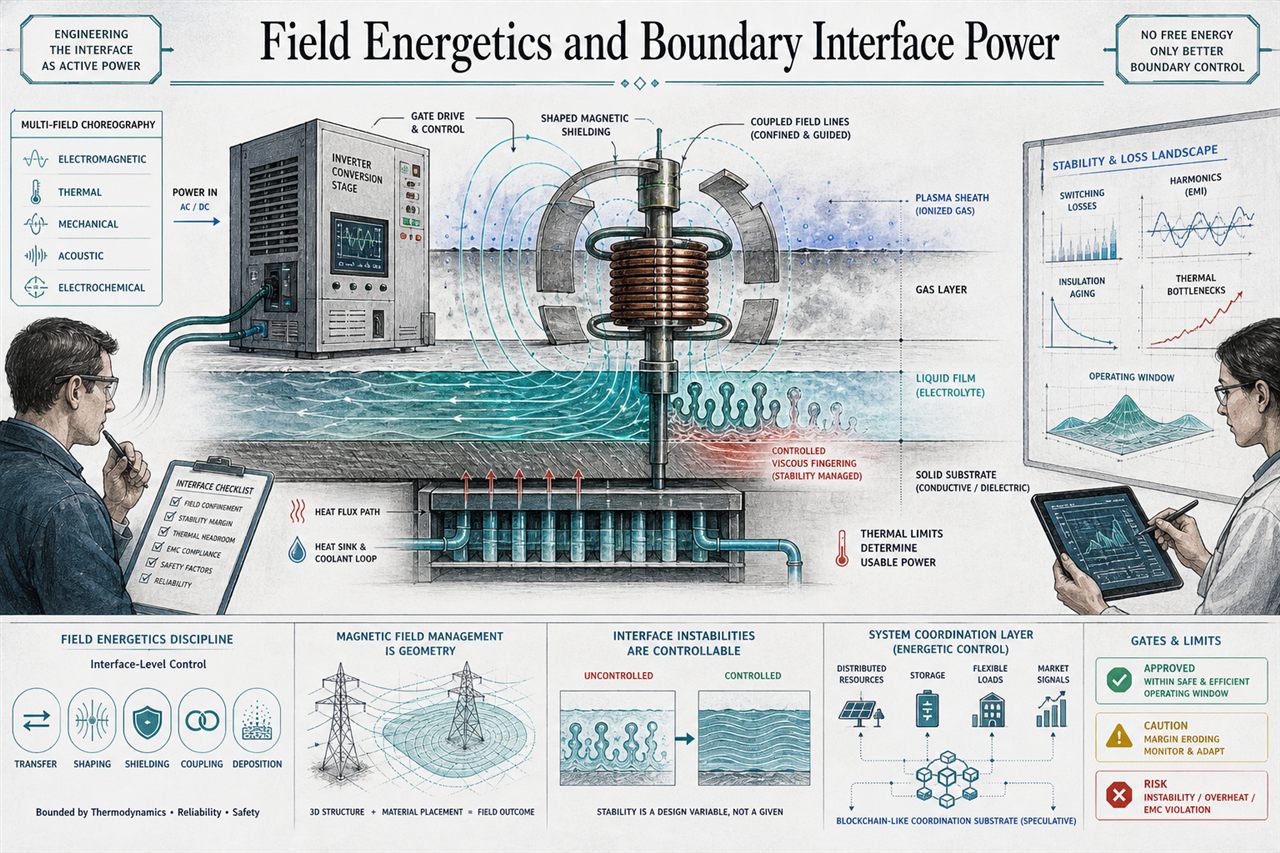
Field energetics treats power transfer as controllable fields at interfaces—electromagnetic, mechanical, thermal, acoustic, and electrochemical—engineered to shape, shield, couple, and deposit energy across solid/liquid/gas/plasma boundaries within thermodynamic, stability, loss, reliability, and safety limits. Industrial reality is anchored in mature inverter-mediated drives, where constraints come from switching losses, heat rejection, insulation aging, harmonics, and EMC. Geometry-sensitive magnetic-field mitigation around overhead lines remains unresolved. Fluid-boundary instabilities, exemplified by modeled radial fingering (1994), must be managed as dynamic state variables. Distributed energy performance depends on coordination layers; blockchain is noted only as a proposed market substrate, not validated infrastructure.
Chapter 67. Energy at the Petawatt and Exawatt Scale
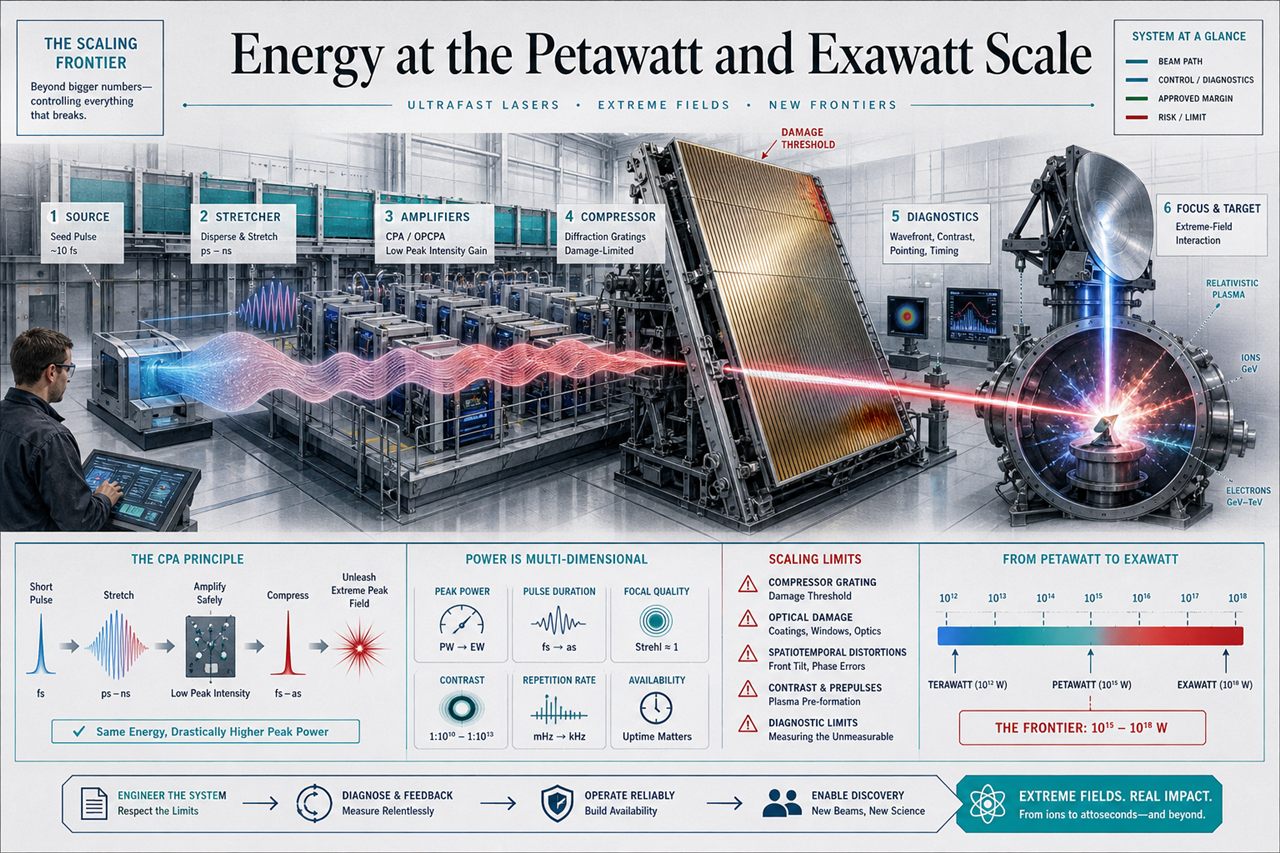
Petawatt–exawatt ultrashort lasers are defined less by raw peak power than by the ability to generate, compress, deliver, and couple extreme-intensity pulses without optical damage, spatiotemporal distortion, or loss of pulse contrast, while still being diagnosable. Petawatt systems are already operating at multiple facilities as of 2026, while “exawatt class” remains an engineering scaling frontier rather than routine infrastructure. Chirped-pulse amplification and optical-parametric variants underpin scaling, but high-damage-threshold grating compressors are a recurring bottleneck. Practical evaluation should track pulse duration, focal quality, contrast, repetition rate, and uptime, not headline watts, and prioritize applications like laser–plasma ion acceleration and attosecond science.
Chapter 68. Black Hole Energy, Stellar Engineering, and Civilizational Power
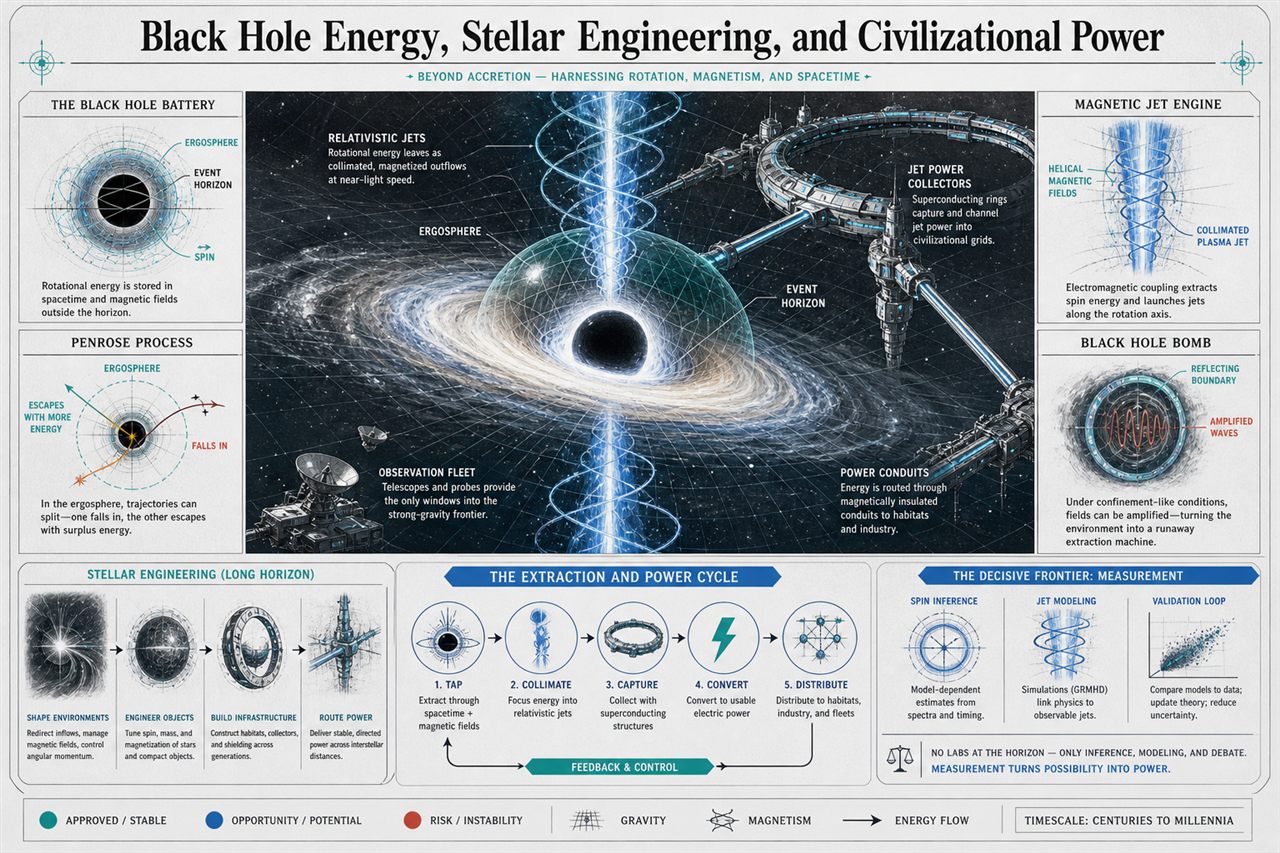
Black-hole power extraction remains theoretical in 2026: no engineered system has produced net usable energy, and evidence for rotational-energy extraction in nature is indirect, model-dependent, and contested. Proposed mechanisms center on Penrose-type particle processes, electromagnetic coupling that torques spinning holes via fields and plasma, and confinement-driven instabilities akin to “black-hole bomb” regimes. Stellar engineering is even more speculative, with current work focused on understanding stellar evolution and star–black-hole environments rather than deliberate modification. Practical takeaways are to treat the frontier as diagnostic: clarify which mechanisms are physically allowed, what boundary conditions enable them, and which observables can separate extraction from ordinary accretion power.
Chapter 69. Vacuum Energy, Casimir Effects, and Speculative Energy Sources
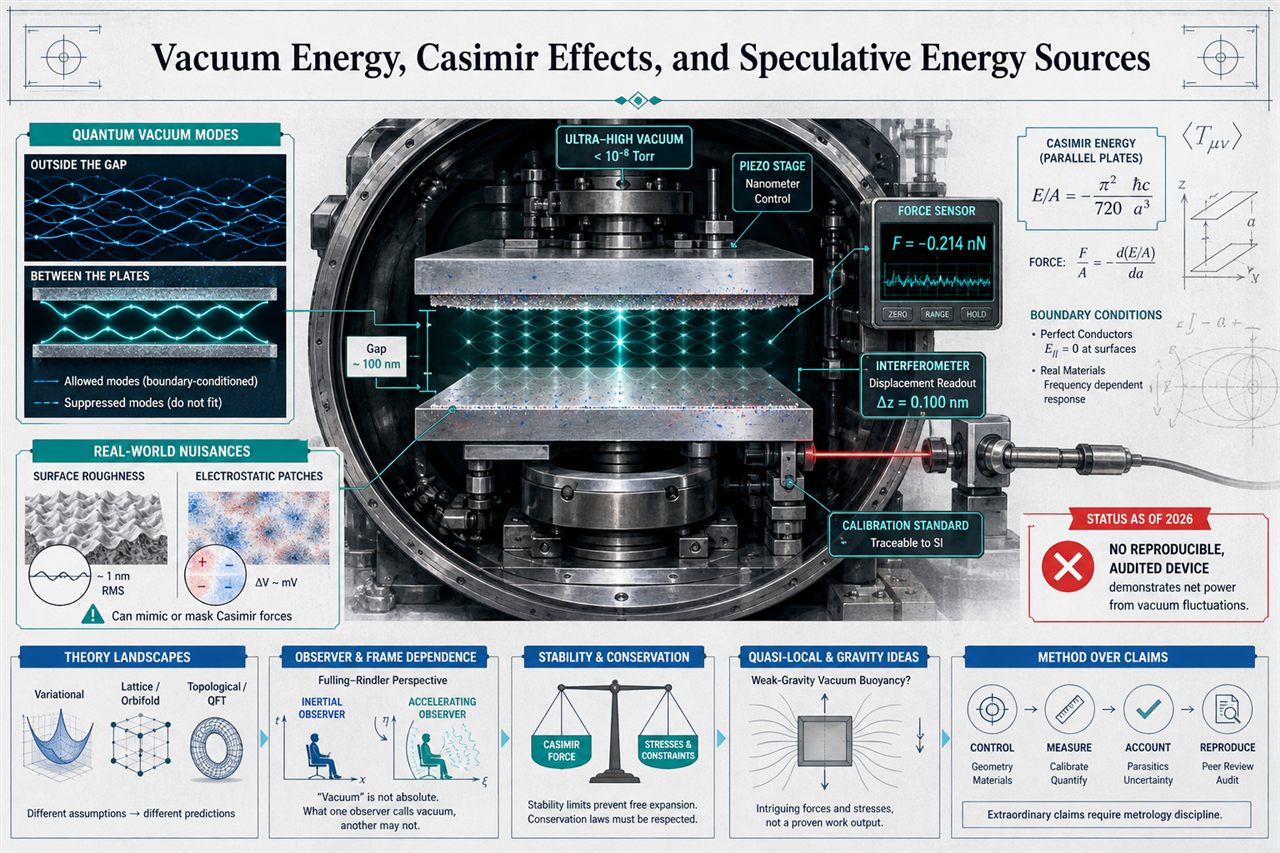
Vacuum energy and Casimir effects are well-established quantum boundary phenomena, but turning them into repeatable closed-cycle work remains unproven and easily confounded by mundane losses. By 2026, Casimir experiments are mature: outcomes hinge on geometry, materials, and ruthless calibration, with dominant risks from electrostatic patch potentials, contamination, drift, and thermal gradients. Theory spans variational methods, accelerated-frame vacua, topological and lattice models, and links to the cosmological constant, including analyses of stability and weak-gravity “vacuum buoyancy.” No peer-reviewed, reproducible, audited device has demonstrated net mechanical or electrical power from vacuum fluctuations; a visible 2025 metamaterial paper claims enhanced effects and levitation pathways.
Chapter 70. The Kardashev Climb Through 2400

Kardashev progress is less about “more energy exists” than about thermodynamic limits, self-reinforcing infrastructure buildout, and coordination capacity to control and deploy usable power at scale. The classic Type I/II/III shorthand still guides thinking, but scholarship increasingly treats energy-only ranking as incomplete, favoring multi-dimensional metrics that add detectability, information/coordination, and substrate-agnostic indicators. Empirical and ML forecasts extend to 2060, yet they don’t justify multi-century extrapolation without explicit assumptions. Practical takeaways: treat policy and institutions as trajectory drivers, stress-test forecast horizons, and prioritize metrics that connect deployability, governance alignment, resilience, and observability.
Chapter 71. Thermodynamic Limits and the End of Cheap Power
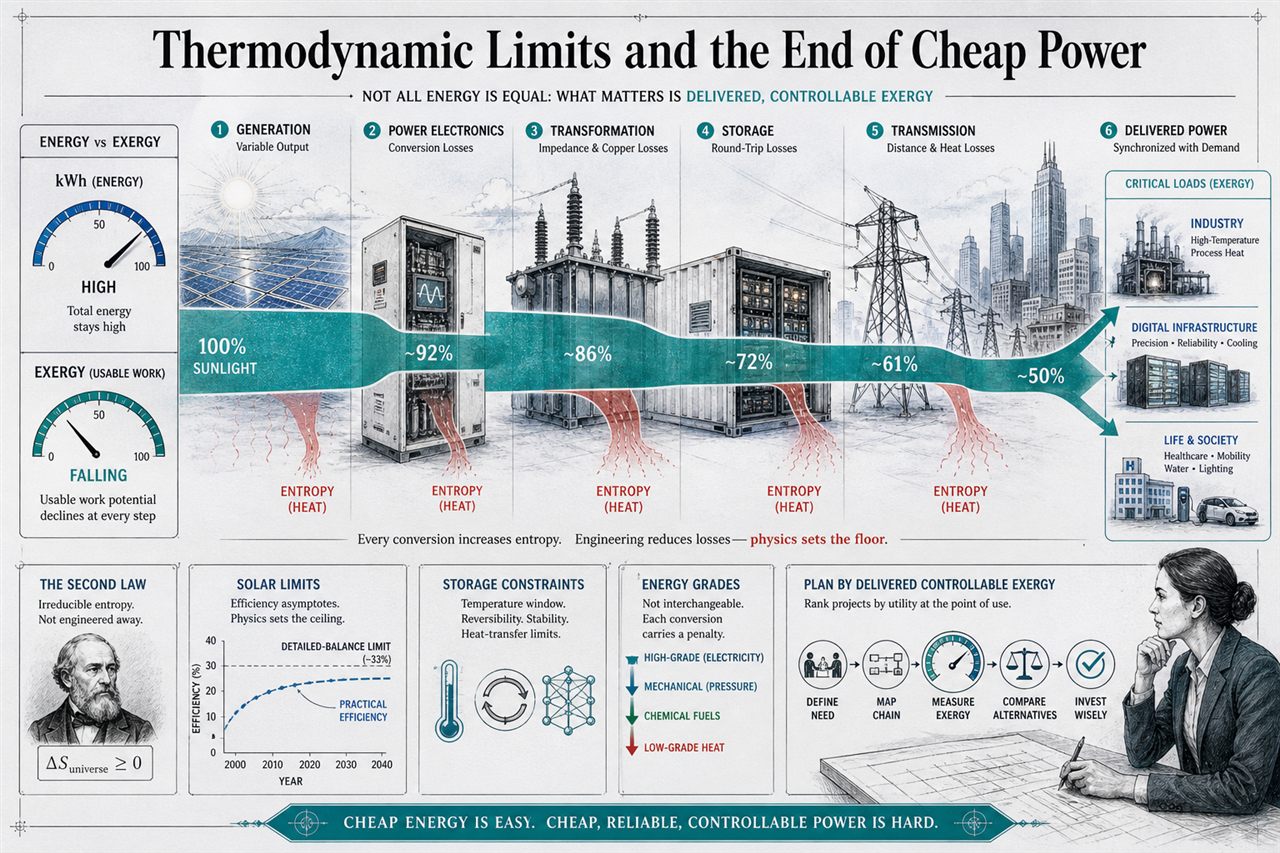
Thermodynamics imposes non-negotiable ceilings on how efficiently energy can be captured, converted, stored, and delivered because usable work always requires entropy generation and finite gradients. As generation hardware gets cheaper, especially for variable renewables, the binding costs increasingly migrate to the system layer: firming and storage, transmission and interconnection, power electronics, grid services, reliability, and synchronizing demand with supply. Device gains such as improved solar architectures still face detailed-balance and loss mechanisms, while storage options are constrained by temperature windows, cycling stability, heat-transfer rates, reversibility, and limited power density. A central planning takeaway is to rank investments by delivered, controllable exergy rather than raw kilowatt-hours, since electricity, fuels, low-grade heat, and high-temperature industrial heat are not interchangeable without conversion penalties and losses.