
Part 5. Building Your Own Identity
From 'Visual Identity in Modern Music' - an AI-authored book produced on Comuvia's BookWriter system. Each chapter below is shown as its Comuvia Classification poster with a one-paragraph synopsis.
Chapter 21. Choosing an Archetype

Start by deciding the role you want to occupy in the audience’s imagination, not what to wear. An archetype is the organizing logic that makes every outfit, palette, pose, and set read consistently across thumbnails, stage clips, fan edits, and viral loops. It’s structure, not a prison: shallow archetypes copy surfaces, while strong ones translate your own history, body, genre, and emotional truth into repeatable signals. Clear archetypes speed recognition in compressed attention environments, letting images accumulate meaning instead of competing. Core families include the Chameleon, which earns power through transformation while protecting a recognizable constant.
Chapter 22. Creating a Cohesive Visual System
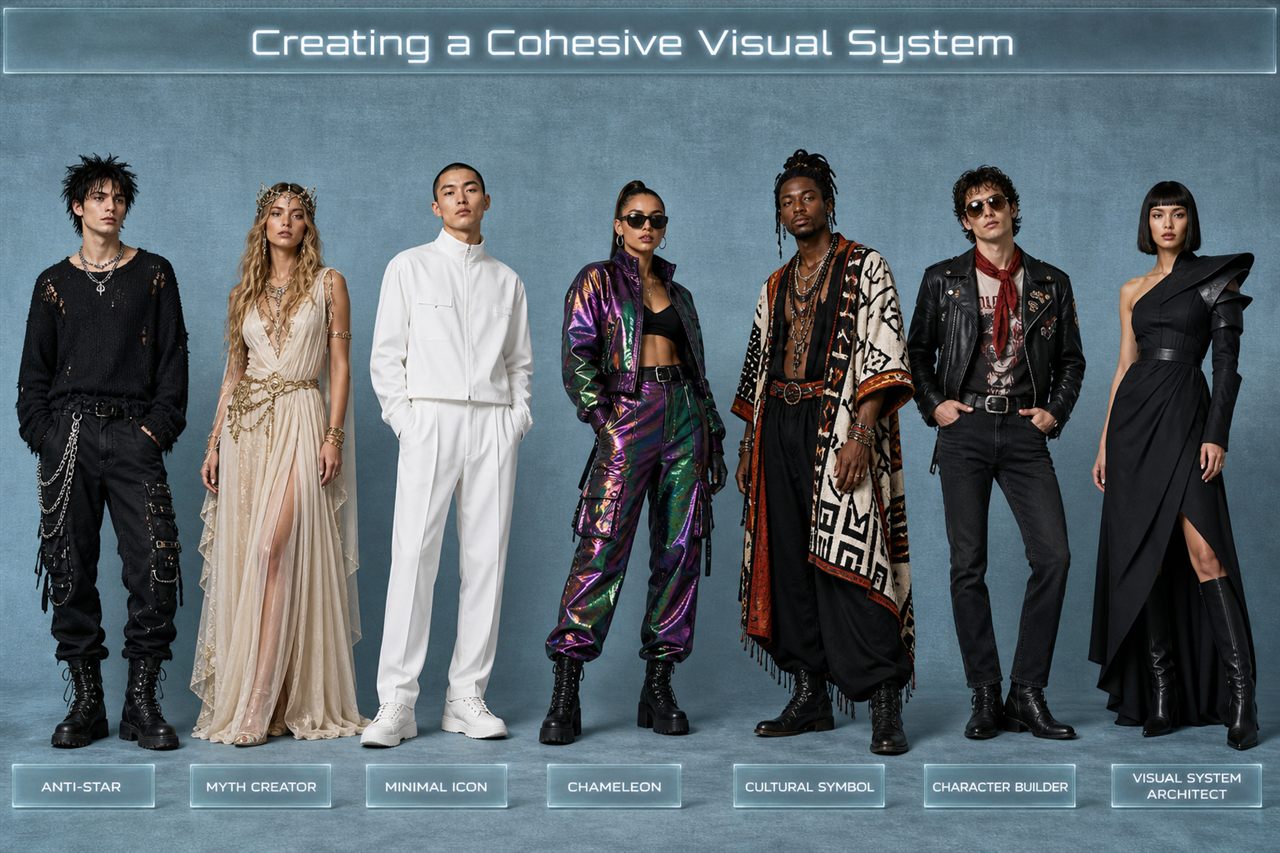
An archetype provides strategic direction, but recognizability comes from a cohesive visual system that repeats core signals across clothing, color, imagery, video, stage design, typography, movement, and behavior. A single “look” can impress once yet vanish when conditions change; a system uses rules that generate many looks while still feeling like one world. Build five to seven non-negotiable identity codes—visual, behavioral, environmental, and symbolic—kept simple enough to describe in ordinary language. Test them with a one-sentence recognition prompt, then let everything else flex without breaking coherence across today’s fragmented media touchpoints.
Chapter 23. Scaling Identity Across Platforms
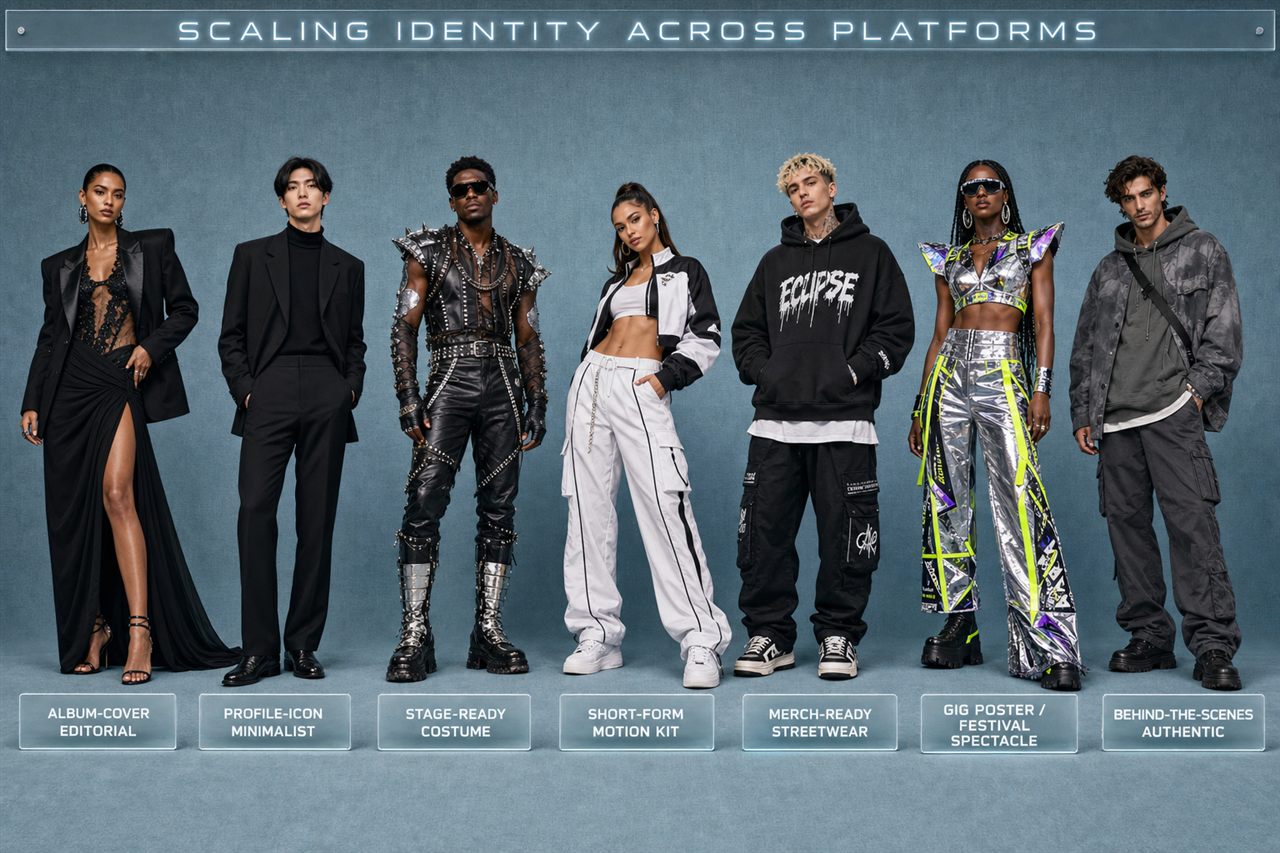
Modern music demands a visual ecosystem that stays recognizable across thumbnails, short-form clips, live shows, merch, editorial, and fan remixes. Scaling works when you separate what must remain stable—archetype, emotional territory, recurring codes, silhouette logic, color and movement behavior, persona rules—from what should adapt: framing, pacing, captions, lighting, graphic treatment, and polish. Treat everything as core and you become stiff; treat everything as flexible and your identity dissolves into contradictory modes. Translate with rules so the identity can expand into spectacle and contract into symbols. Design for each platform’s “personality” and how audiences consume it.
Chapter 24. Common Mistakes (Overdesign, Inconsistency)
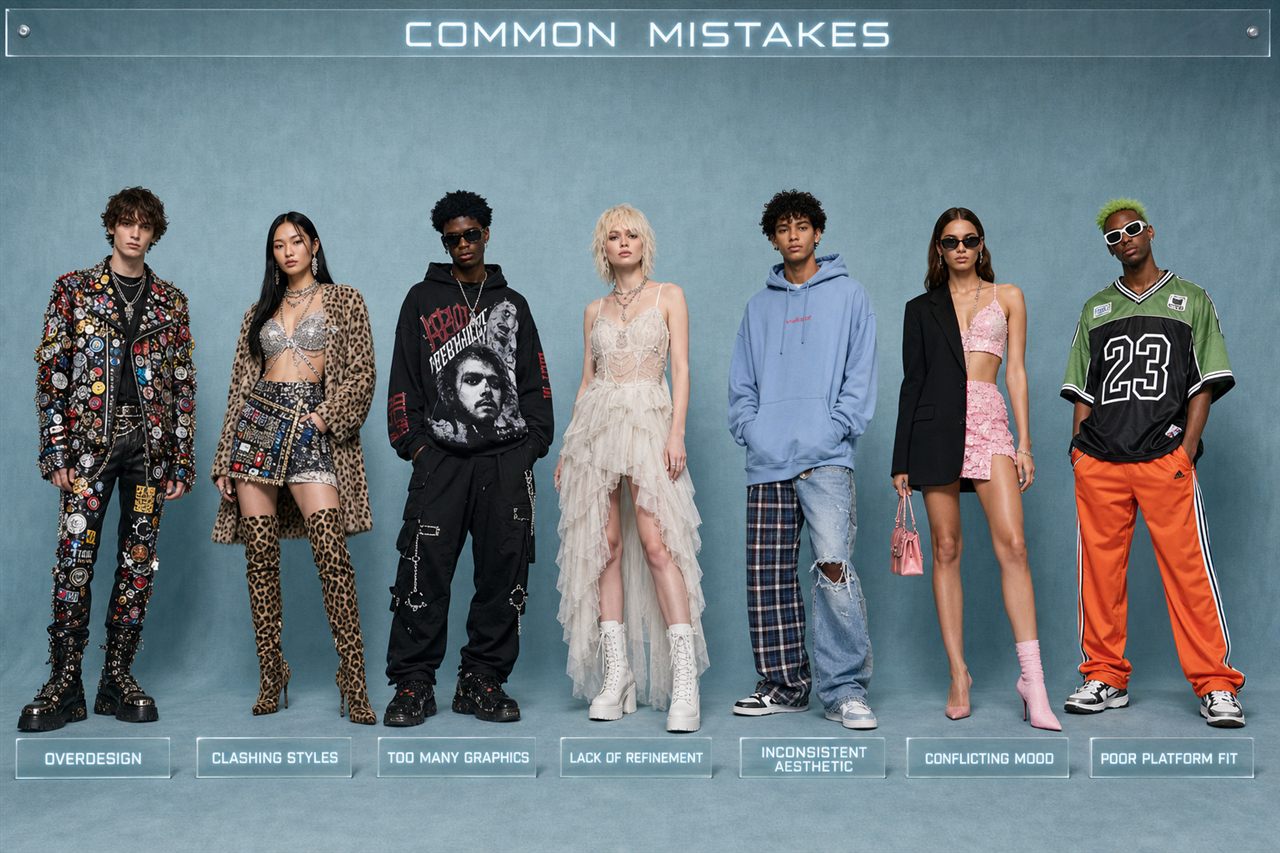
Visual identity works when an archetype becomes a coherent system that repeats across platforms so recognition accumulates. It fails when creativity lacks hierarchy, producing either overdesign or inconsistency—both rooted in insecurity about the core idea and both killing memory. Complexity isn’t depth: richness has a clear primary silhouette, color world, mood, and behavioral code, while clutter gives every element equal volume and can make styling more memorable than the performer. Symbols only gain power through meaning, repetition, and connection to music and persona; collecting random motifs creates decorative “depth.” Don’t change direction before recognition forms.
Chapter 25. Future Trends: AI, Virtual Artists, Post-Human Identity
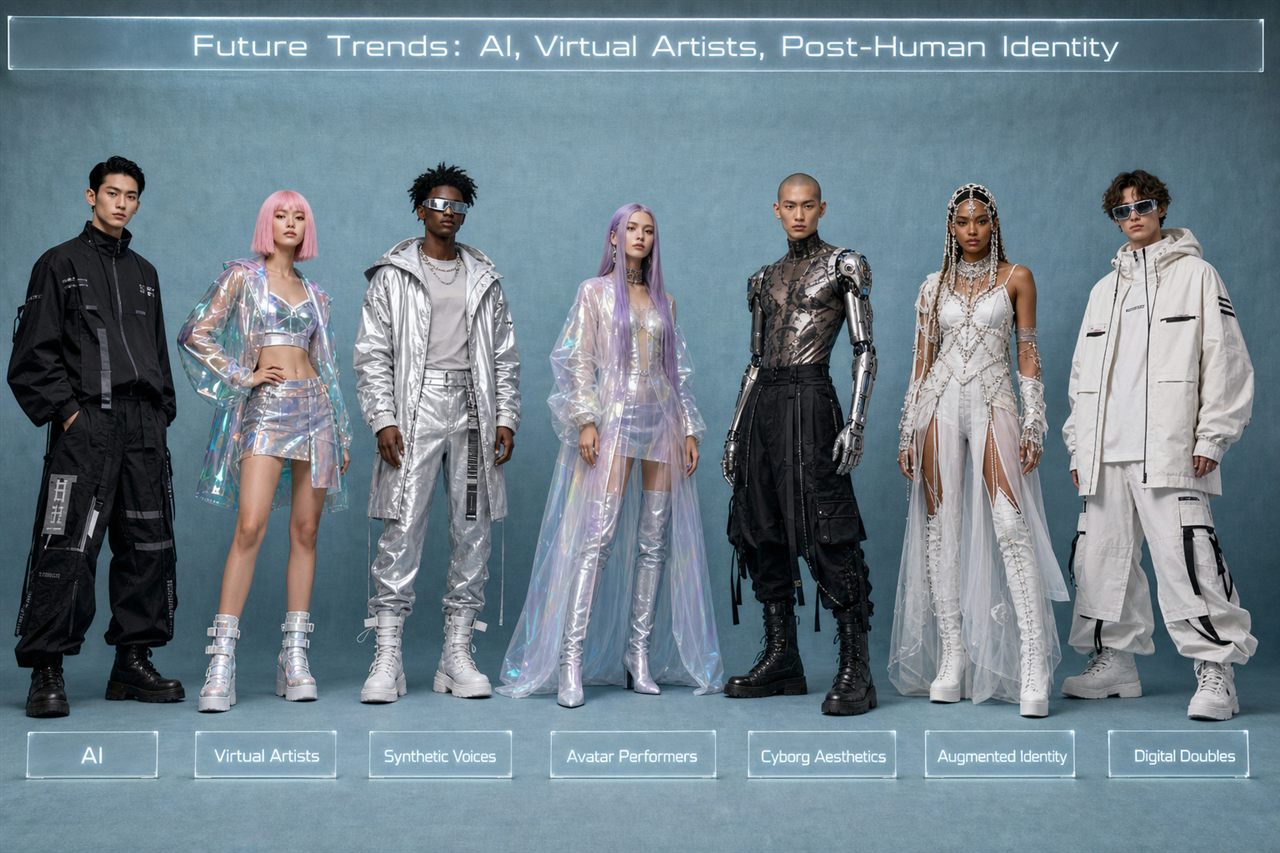
Music identity is being “compressed” into ever-smaller, faster formats, and the next shift breaks the link between artist and a single human body, face, stage, or biography. Identity will travel through AI imagery, avatars, virtual performances, digital doubles, AR filters, and fan-generated skins, making the artist something that gets rendered and recombined. This creates scale and freedom but also weaker ownership and harder recall as spectacle becomes cheap. The practical response is to build an “identity engine”: clear rules that keep the world recognizable across formats.