
Part 3. Visual Archetypes (Derived from the Table)
From 'Visual Identity in Modern Music' - an AI-authored book produced on Comuvia's BookWriter system. Each chapter below is shown as its Comuvia Classification poster with a one-paragraph synopsis.
Chapter 13. The Minimal Icon (Drake, The Weeknd, Frank Ocean)
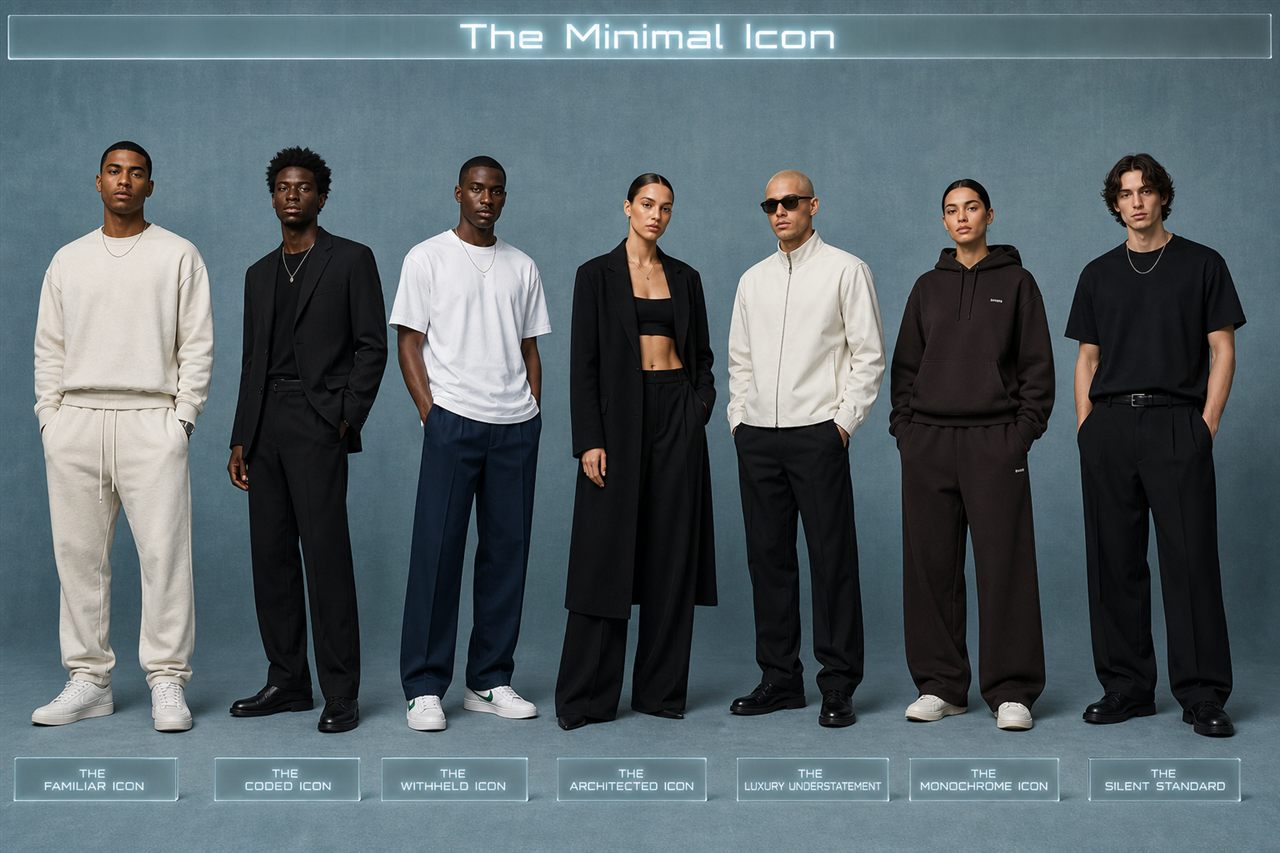
Minimal iconography builds recognition through restraint, not absence: a tightly edited set of repeatable cues becomes symbolic in a thumbnail-driven, overexposed era. The approach relies on a stable silhouette, controlled palette, limited expressiveness, environments that carry meaning, and deliberate scarcity so each appearance feels valuable. Three models illustrate different “engines”: Drake’s familiarity, where consistent grooming, muted street-luxury basics, and calm posture create broad relatability and status; The Weeknd’s code, where a few concentrated motifs (color, hairstyle, sunglasses, night-cinematic framing) can define entire eras without visual clutter; and Frank Ocean’s scarcity, where infrequent, understated artifacts heighten interpretation. Practical takeaway: choose your engine, lock three anchors (grooming, silhouette, palette), manage exposure rhythm, and save loud moments for maximum impact.
Chapter 14. The Character Builder (BTS, K-pop systems)
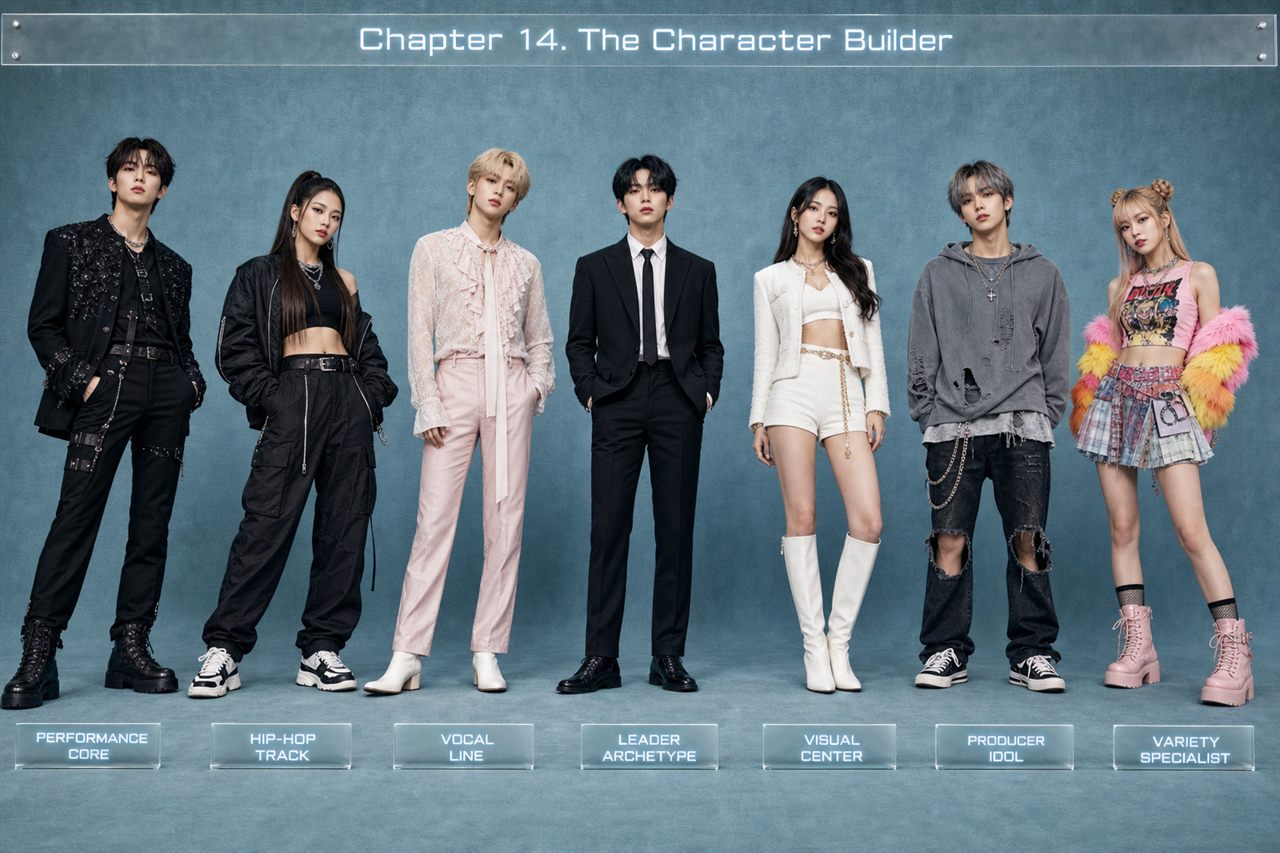
Identity is built as a structured universe of shifting roles rather than a single signature look. Multiple moods, costumes, symbols, palettes, and narrative positions let an artist remain legible through evolution, especially when every touchpoint—styling, choreography, video concepts, packaging, sets, teasers, and fan communication—is designed as one connected system. The key is continuity beneath variation: dramatic visual changes still express consistent emotional codes such as youth, sincerity, transformation, and openness. Group systems add a crucial layer: each member needs a distinct visual lane so audiences can recognize them instantly while still reading a cohesive collective. Design this differentiation through silhouette, color, hair and beauty as rapid “era” and recognition signals, accessories as repeatable identifiers, and performance choices—gesture, posture, and camera-aware movement—that turn styling into character.
Chapter 15. The Anti-Star (Billie Eilish, indie wave)
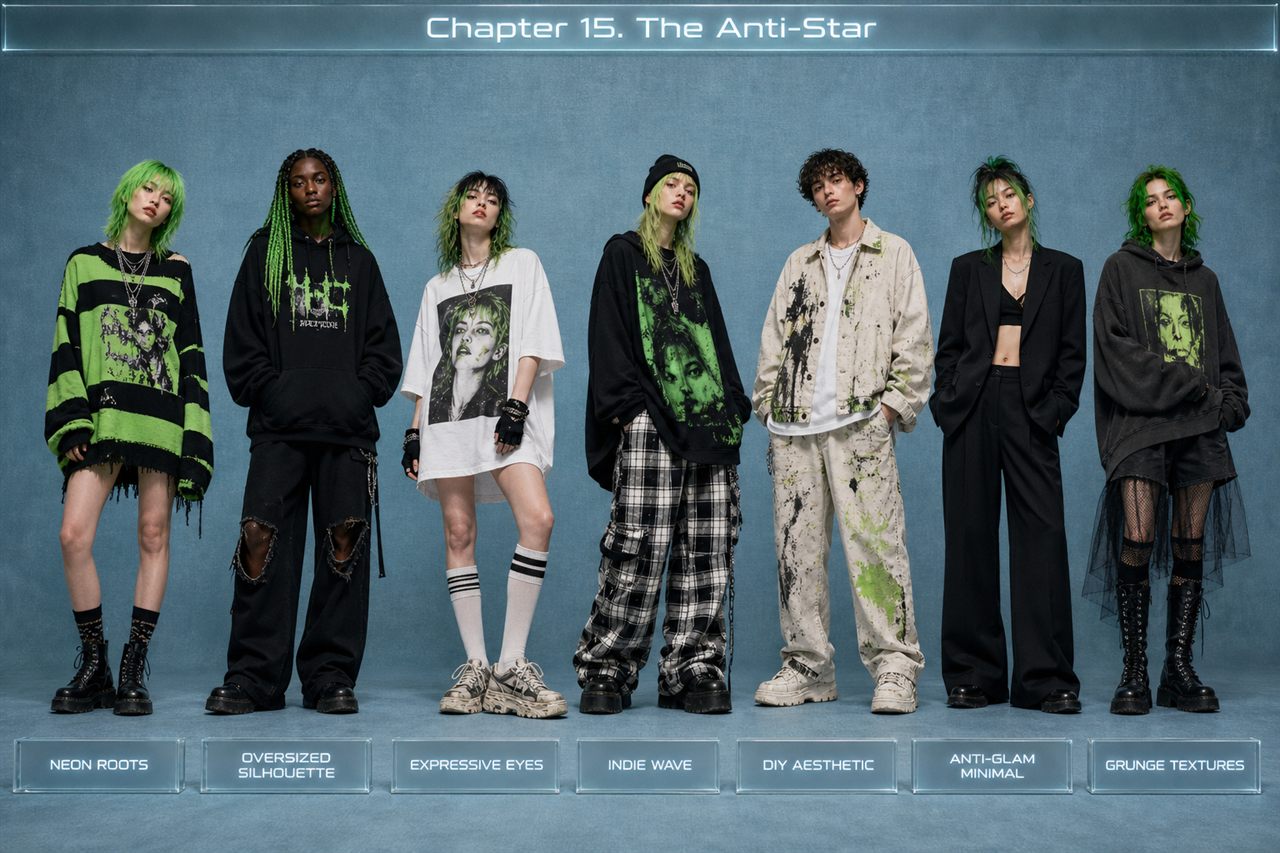
Anti-Star branding isn’t a lack of image but a rigorously designed system that runs counter to polished, aspirational pop. It trades glamour and openness for privacy, awkwardness, darkness, oversized forms, strange color, and emotional opacity, creating distance while remaining instantly recognizable. Billie Eilish’s early identity used repeatable codes—baggy streetwear that erased the body, neon-toxic hair against black, horror-leaning imagery, deadpan posture, and eerie teenage references—to communicate “I’m not performing desirability on your terms.” Oversized silhouette works as armor, redirects attention to mood and voice, reads clearly in thumbnails, and invites fan participation because it’s accessible across bodies and budgets. Disruptive color functions like a logo and an emotional shortcut, letting audiences feel the music’s contradictions before hearing a note.
Chapter 16. The Myth Creator (Travis Scott, Lil Nas X)
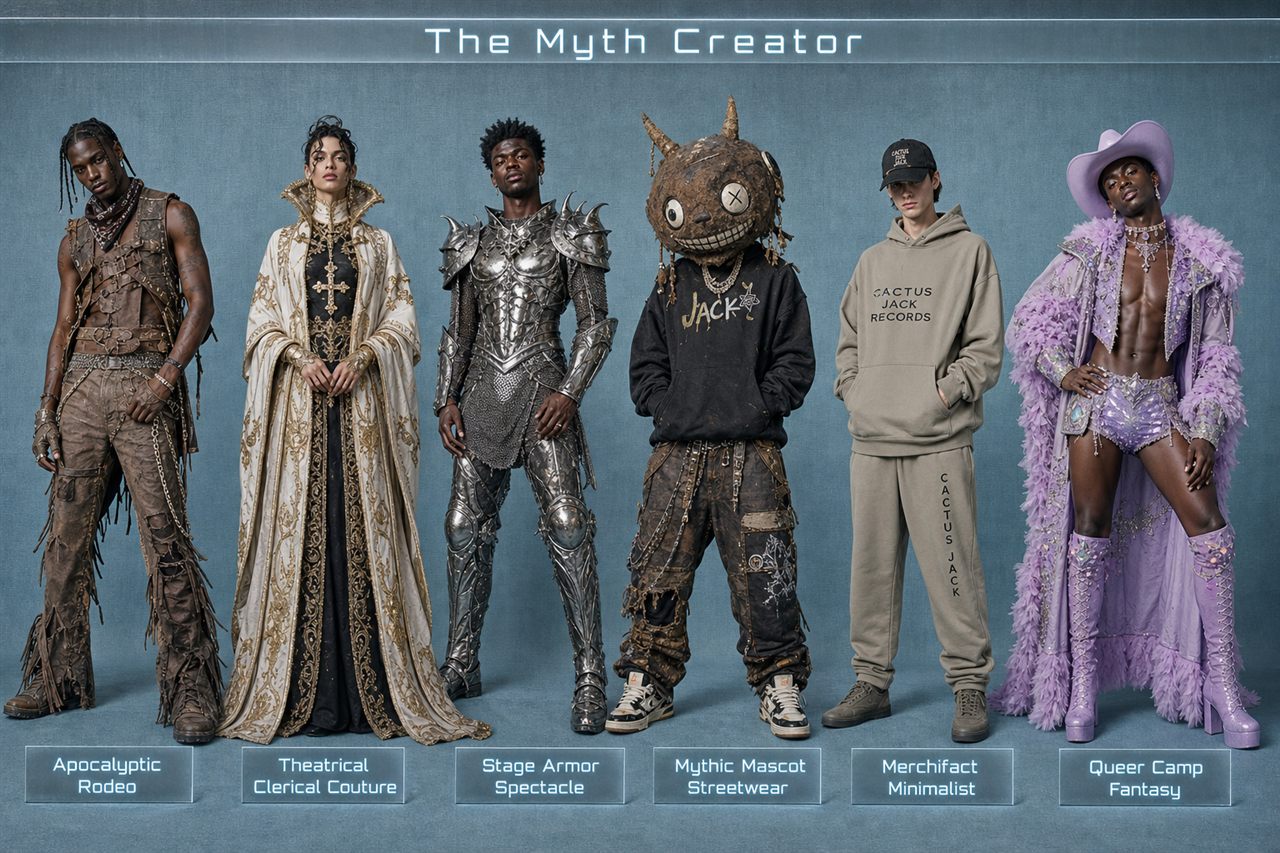
Myth creators don’t just craft a look; they build a symbolic universe that fans can enter, remix, and inhabit across platforms where immersion is rewarded. Visual identity comes from narrative scale: recurring worlds, exaggerated personas, mythic references, cinematic staging, merch as “artifacts,” and eras that transform while expanding a central legend. Unlike a chameleon who changes to show range, a myth creator changes to move the story forward. Travis Scott demonstrates atmosphere-as-identity: nocturnal, dusty, industrial chaos built from palette, texture, lighting, fire, and scale, with simple, strange, flexible myth-objects like the Astroworld head that travel from covers to stages to collaborations. Lil Nas X builds myth through theatrical transformation—cowboy imagery turned cultural device, then fantasy, humor, queerness, religious symbolism, and provocation that makes each reinvention feel like a new episode in an ongoing saga.
Chapter 17. The Cultural Symbol (Bad Bunny, Burna Boy)
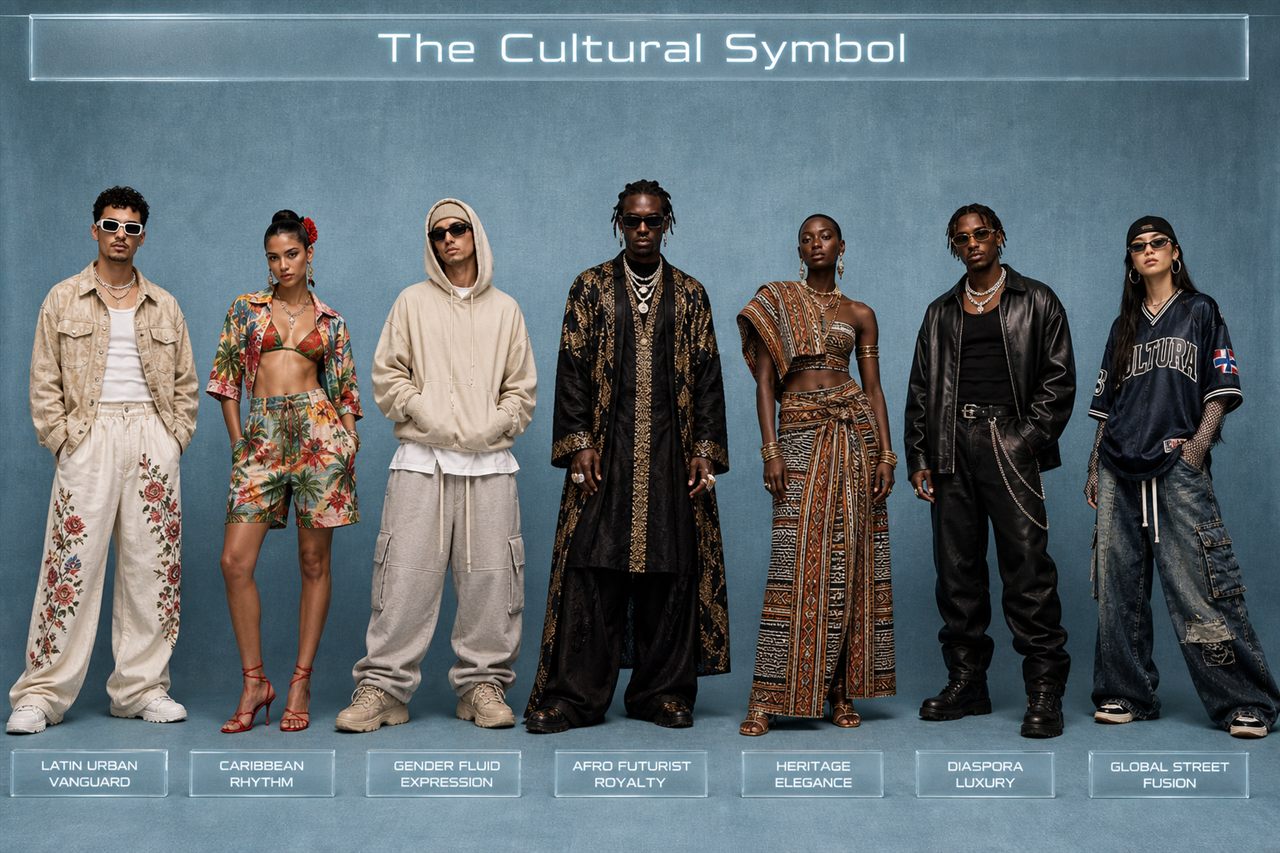
Cultural Symbol artists turn origin into a scalable visual language that stays rooted yet reads instantly worldwide. They build from inherited codes—colors, textiles, gestures, hair, jewelry, street style, and historical memory—so audiences feel geography before hearing a note, communities see themselves represented at scale, and global taste is reshaped to absorb their aesthetics rather than the other way around. The practical challenge is avoiding flattening into a single “local” stereotype by treating culture as living, not museum-like. Bad Bunny models this through contradiction and permission: relaxed volume, face-as-logo disruption, gender-fluid provocations, tropical palettes, and humor that travels across street scenes, red carpets, and campaigns without breaking identity. Burna Boy shows the monumental route: disciplined silhouettes, anchored locs, kingly jewelry, modernized African pattern and fabric, and a clear mission of Pan-African pride that projects authority in any context.