
Part 1. Foundations of Visual Identity in Music
From 'Visual Identity in Modern Music' - an AI-authored book produced on Comuvia's BookWriter system. Each chapter below is shown as its Comuvia Classification poster with a one-paragraph synopsis.
Chapter 1. Why Visual Identity Now Dominates Music
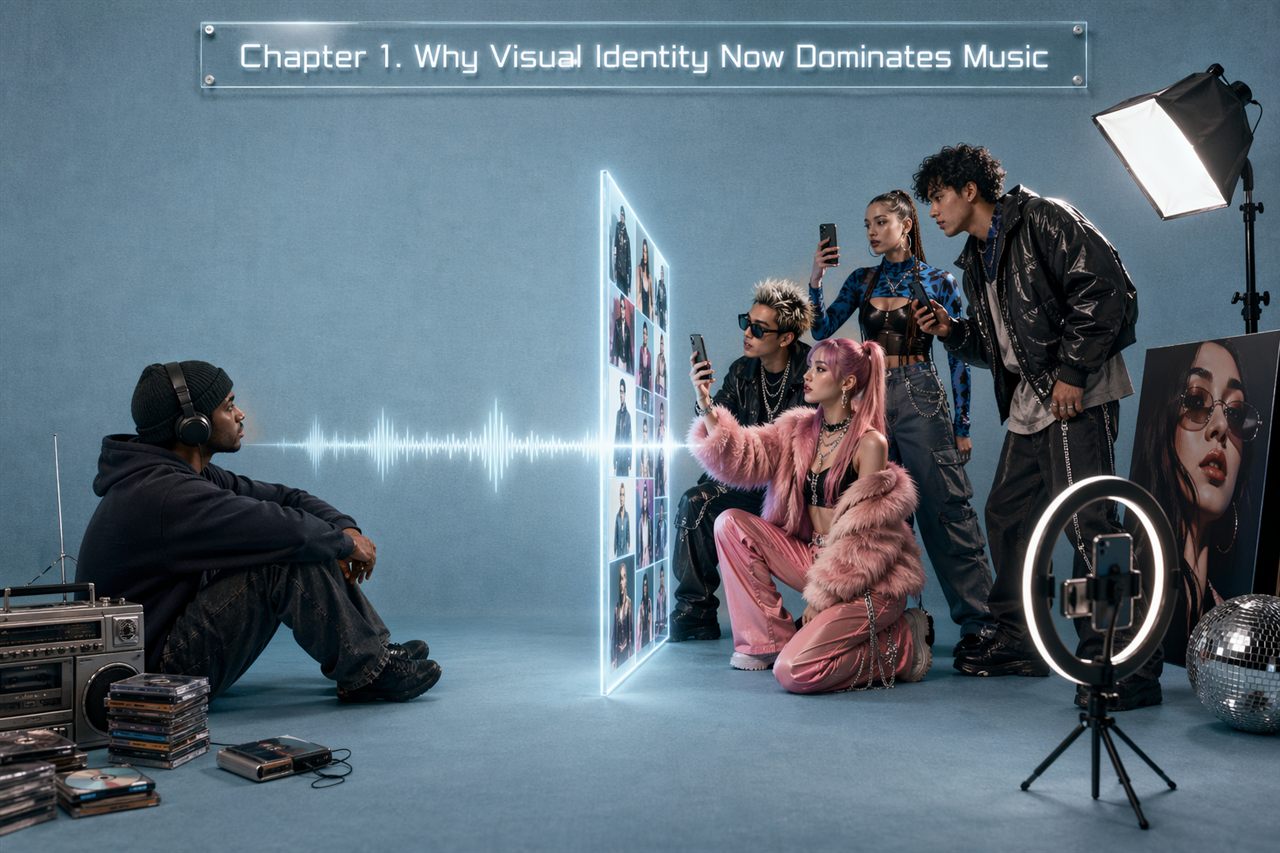
Music discovery has flipped from audio-first to feed-first: audiences meet an artist as a thumbnail, clip, meme, or fit-check before they ever commit to listening. Platforms package songs inside visual content units, so the image must “win permission” for the audio to land amid endless competing posts. Streaming abundance makes any track replaceable, shifting scarcity to attention and making differentiation the central challenge; visual identity differentiates faster than sound and becomes an indexing layer that helps people revisit the person, then explore the catalog. The practical takeaway is to build a visual identity system, not just isolated outfits: repeatable rules that stay recognizable while generating variation. Focus on four fast cues—silhouette, color, persona, and movement—so the artist reads instantly, scales across formats, and holds up under constant repetition.
Chapter 2. From MTV to TikTok: Evolution of Artist Image
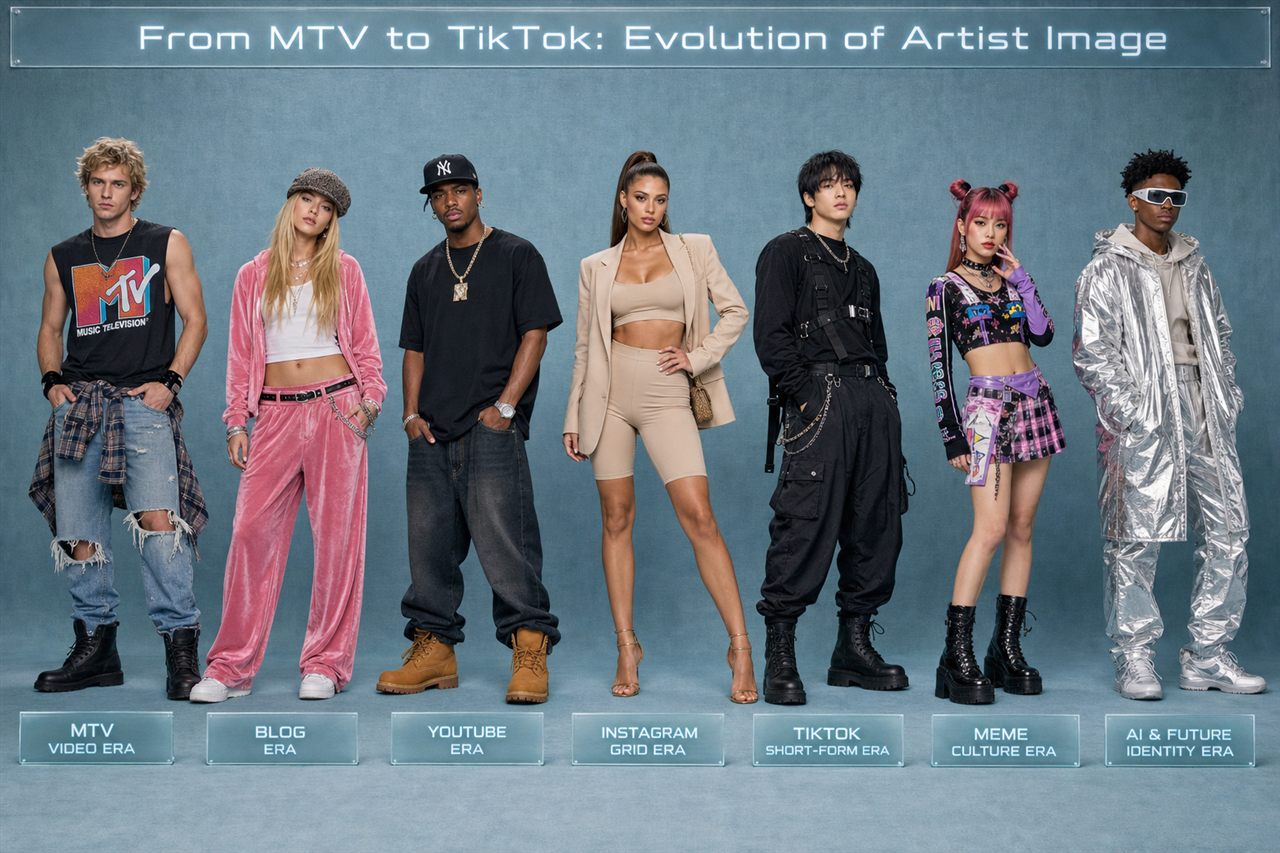
Modern music platforms compress artists into ever-smaller visual units, and whatever remains legible becomes identity. As the dominant frame shifts from widescreen video to thumbnails, square grids, and vertical loops, identity resolution drops and visual recall latency must approach zero; feeds reward looks that read instantly, not those that need context. MTV’s video era favored cinematic world-building, archetypes, choreography, and scarcity-driven reinvention over time. The blog and early YouTube period shifted value toward credibility and subculture codes, where a single press image, DIY clip, and searchable distinctiveness signaled authenticity and scene belonging, reinforced by how people described you. Instagram demanded a coherent, repeatable aesthetic system that holds up through daily posting and adjacency, training artists to treat every touchpoint as part of one visual language. TikTok pushes the need for memeable, repeatable hooks built from bold, portable signals like silhouette, palette, hair, props, and movement.
Chapter 4. Identity Systems: Silhouette, Color, Movement
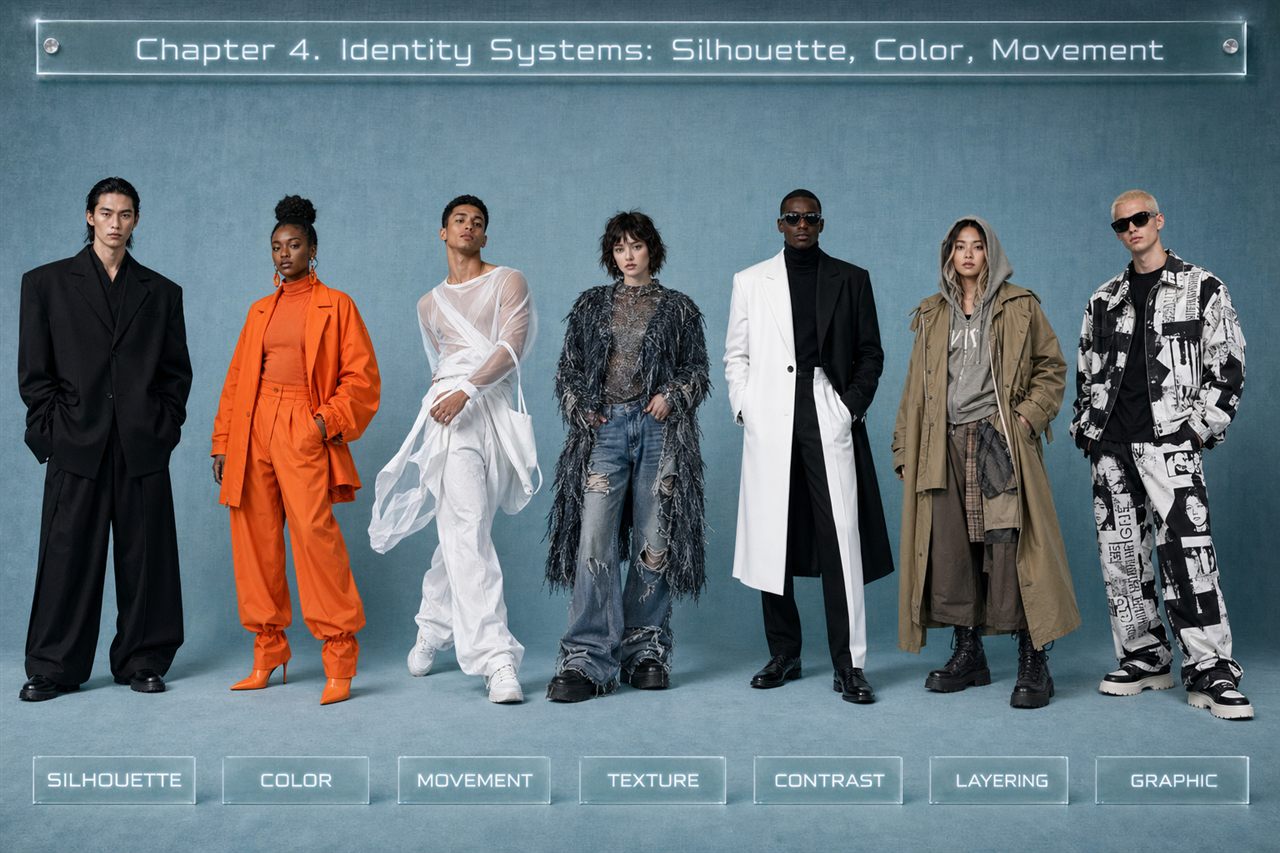
A modern music visual identity works best as a repeatable system that can be recognized instantly across thumbnails, short-form video, live clips, paparazzi shots, and brand campaigns. Three levers make that system durable even as budgets, collaborators, genres, or styling details change: silhouette, color, and movement. Silhouette delivers recognition before detail, so build a shape language that survives compression and bad lighting—through a uniform template, exaggerated proportions, a recurring anchor item, consistent head-and-foot “bookends,” layered architecture, or precise tailoring. A useful test is whether someone can sketch the outline from memory in a few strokes. Color sets emotional context and creates “era memory,” acting as a coordination protocol across wardrobe, makeup, lighting, typography, and cover art via structures like monochrome, project palettes, a signature accent, high saturation, muted cinematic tones, or cultural color coding.