
Part 6. Performance: Directing People on Screen in Film and Music Video
From 'The Decision Layer: What Actually Matters to Make Movies and Music Videos in the AI Era' - an AI-authored book produced on Comuvia's BookWriter system. Each chapter below is shown as its Business Editorial poster with a one-paragraph synopsis.
Chapter 17. Directing Performance for Film and Music Video
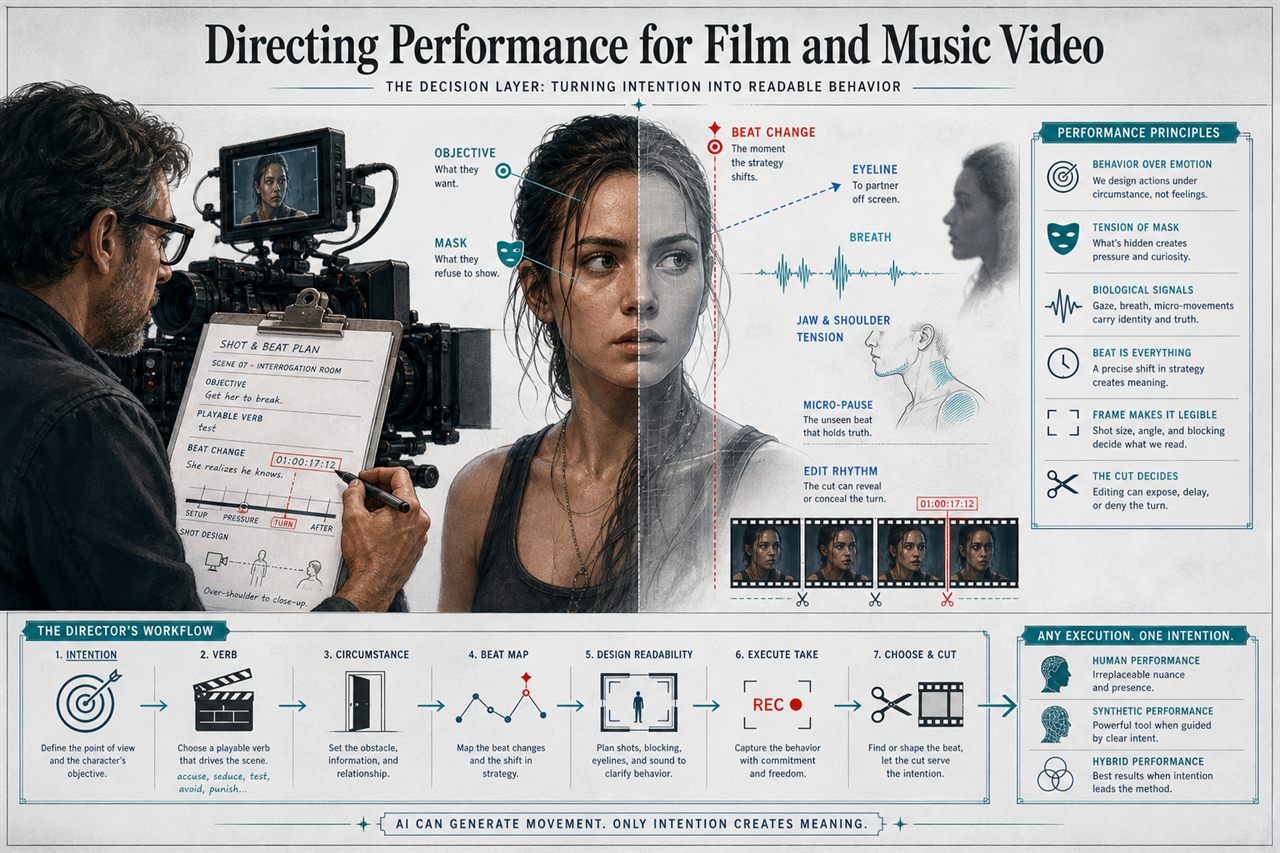
Decide playable behavior before rolling: what the performer wants, what they’re hiding, when the behavior shifts, and how camera and edit will make it legible. AI can generate faces, bodies, voices, and continuity fixes, but it can’t supply intention, listening, inner turns, or the pressure that makes stillness, timing, and gaze feel alive. Direct actions with specific verbs, define the mask, and break scenes or lyrics into beat changes you can cut on or hold through. Use shot size, eyelines, and “body jobs” to shape meaning, and capture multiple takes by intention, not “more intensity.”
Chapter 18. Blocking and the Frame: Staging Actors and Artists for Camera
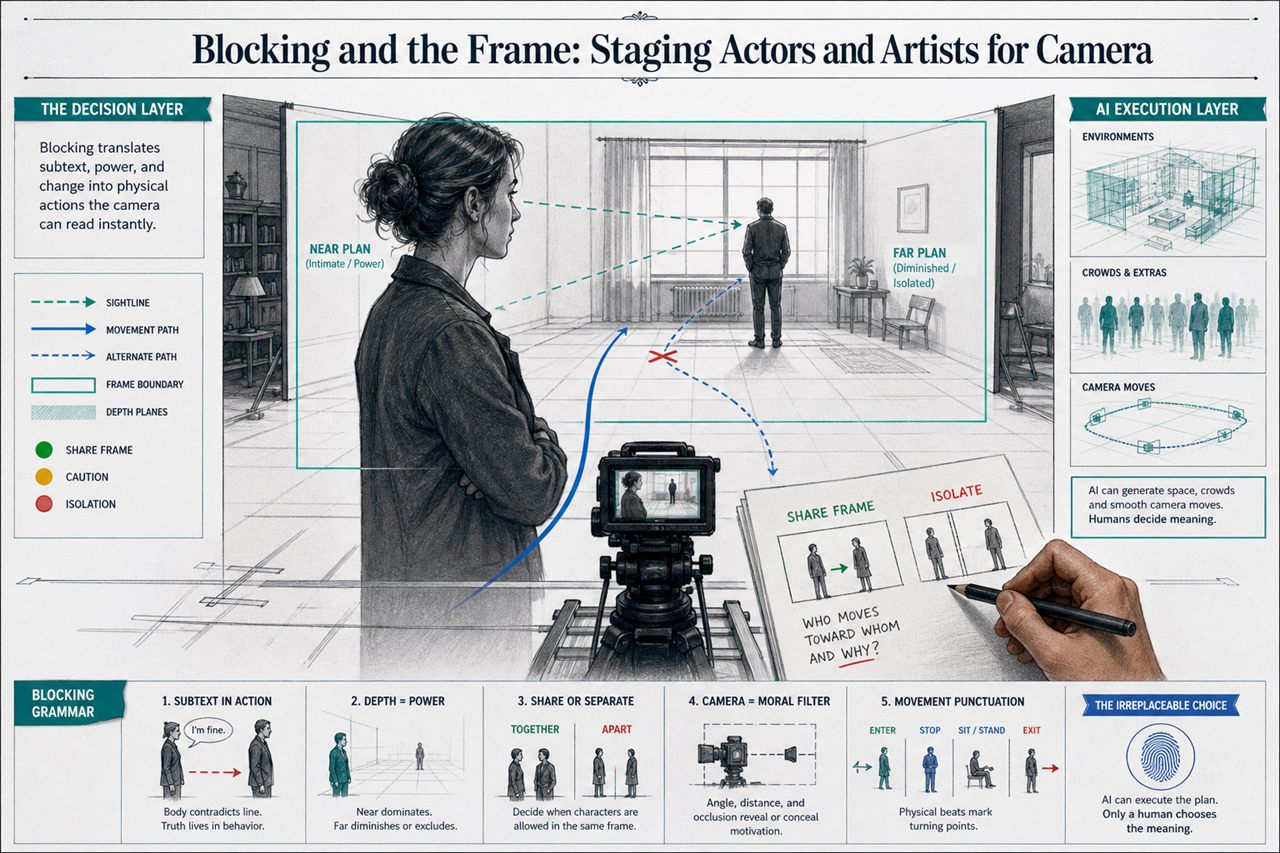
Decide where bodies go, how they move, and what the camera sees so power, emotion, and story read before dialogue. AI can generate spaces, populate crowds, and interpolate camera moves, but it can’t judge subtext, when characters should share or avoid a frame, or how an artist should relate to the lens. Block behavior, not lines; use depth and height for dominance and isolation; lock sightlines before choosing camera position; motivate movement with beat changes; and treat entrances/exits as punctuation. Stage for editing with distinct geography in every setup, and choreograph camera and performer as one unit.