
Part 5. Sound and the Audio-Image Relationship in Film and Music Video
From 'The Decision Layer: What Actually Matters to Make Movies and Music Videos in the AI Era' - an AI-authored book produced on Comuvia's BookWriter system. Each chapter below is shown as its Business Editorial poster with a one-paragraph synopsis.
Chapter 14. Bad Sound Kills It First: Audio Fundamentals for Screen
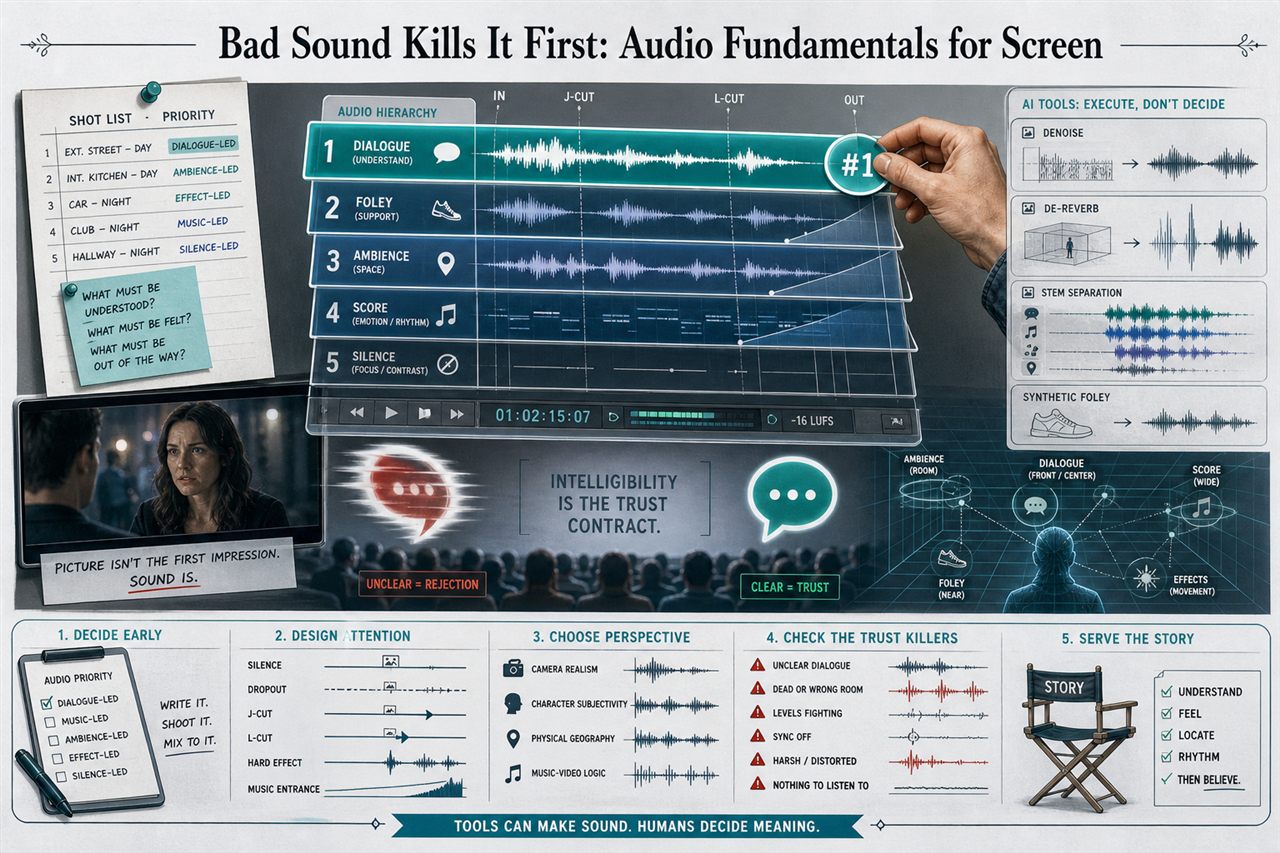
Decide the audio hierarchy early: what must be understood, felt, and spatially located, and what should stay out of the way. AI can clean, generate, and place sound cheaply, but it can’t replace judgment about clarity, sync, levels, and when realism versus stylization serves the piece. Bake sound intent into planning by labeling scenes as dialogue-, music-, ambience-, effect-, or silence-led, then protect intelligibility on set with close miking, wild lines, and room tone.
Chapter 15. Sound Design as Authorship in Film Scenes
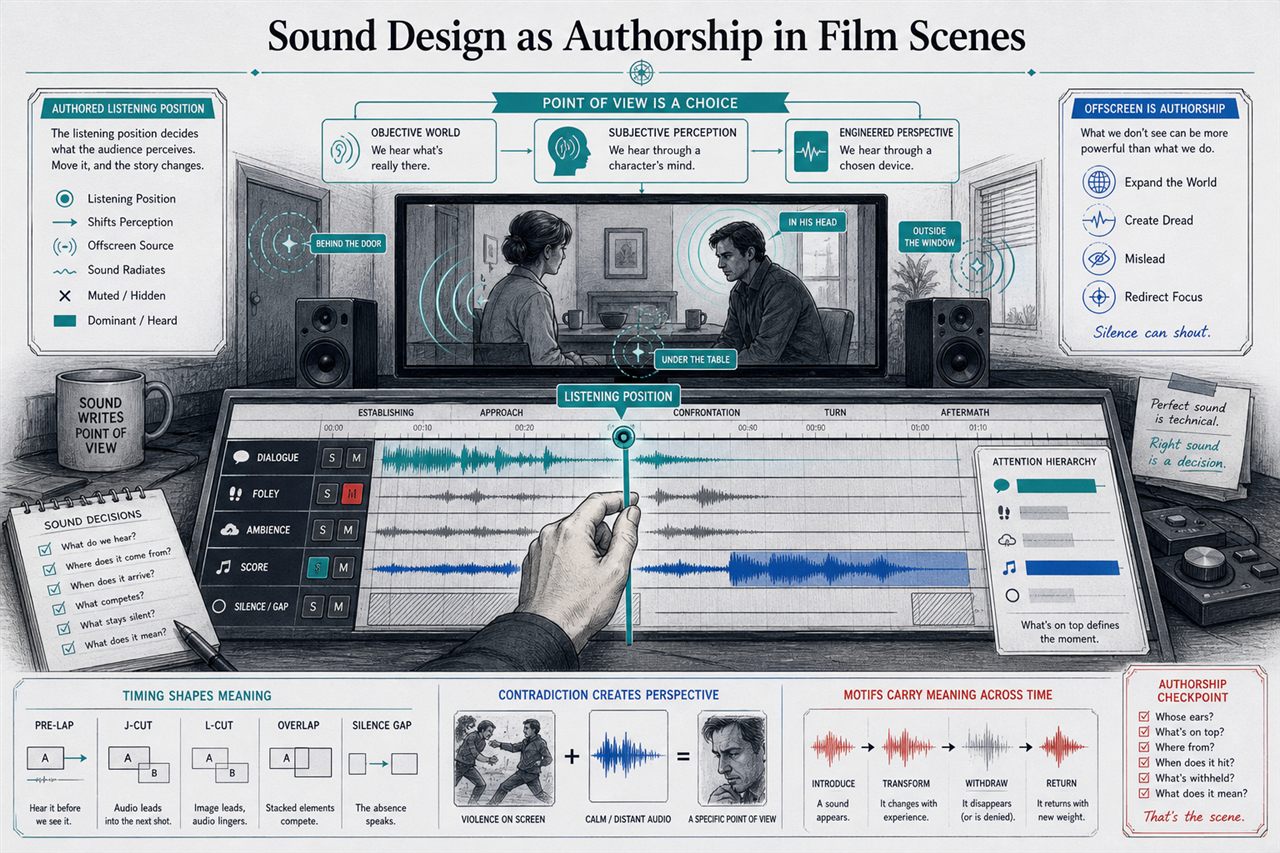
Decide not just what sounds exist, but whose hearing controls the scene, what’s withheld, and when audio contradicts the image so the moment has point of view. AI now makes cleanup, Foley, ambiences, voice work, and spatial simulation cheap, but it can’t choose the narrative hierarchy: what leads (dialogue, threat, rhythm, silence), when elements enter or exit, and how offscreen sound can replace shots or redirect attention. Start by labeling the listening position, then design timing with J-cuts/L-cuts, use silence and intensity without relying on volume, control depth and reverb for psychology, and build motifs that mutate or disappear.
Chapter 16. Score and Mix: Why the Track Is the Spine of a Music Video
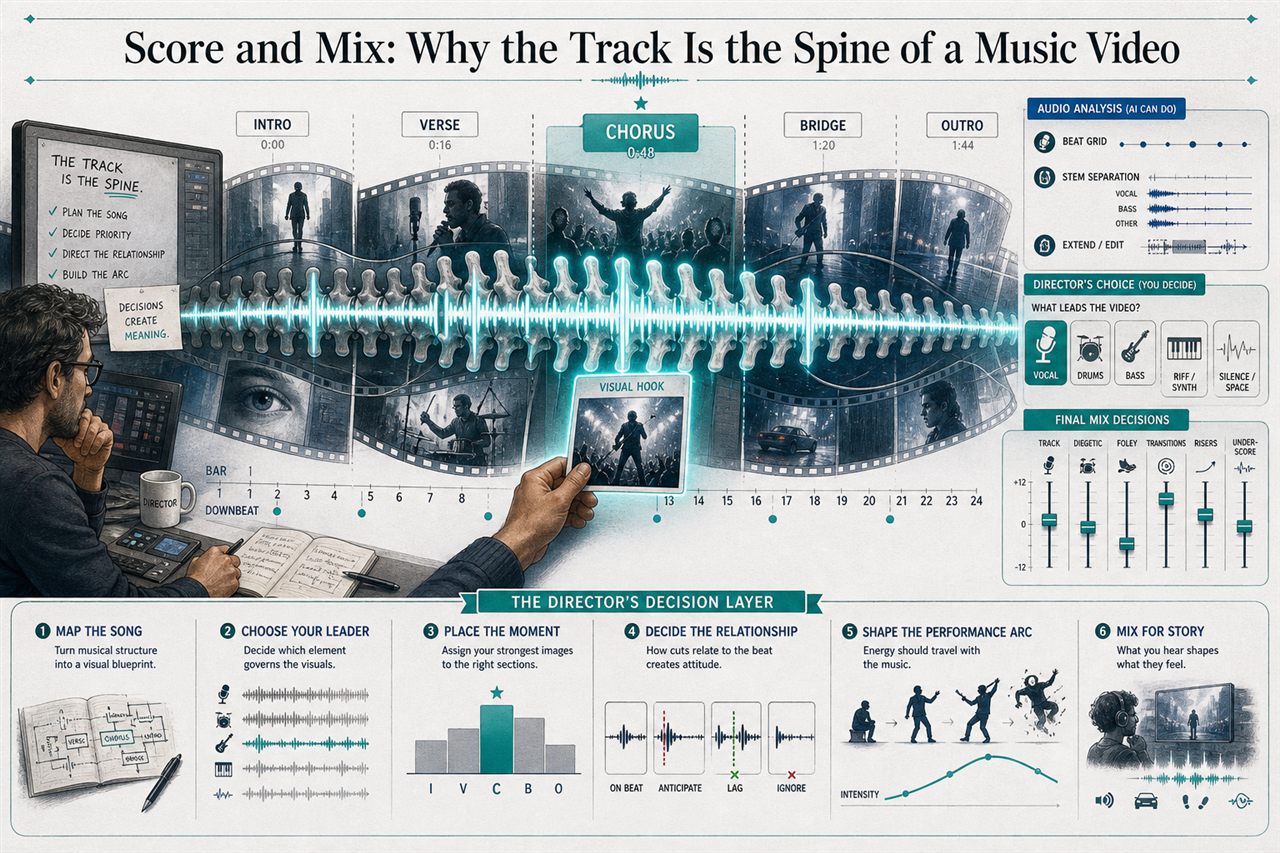
Decide the audio–image relationship before generating or shooting: the song is the edit grid, emotional arc, pacing engine, and brand carrier, while visuals move around it. AI can map beats, separate stems, extend tracks, clean vocals, and assist lip-sync, but it can’t choose which musical events deserve the strongest images or when to cut with, ahead of, behind, or against the beat. Build a detailed song map with timecode and section functions, then assign each section a visual behavior and cut types that match musical purpose.