
Part 2. Story and Concept: The Spine of Films and Music Videos
From 'The Decision Layer: What Actually Matters to Make Movies and Music Videos in the AI Era' - an AI-authored book produced on Comuvia's BookWriter system. Each chapter below is shown as its Business Editorial poster with a one-paragraph synopsis.
Chapter 4. The One Sentence: Loglines for Film, Concepts for Music Videos
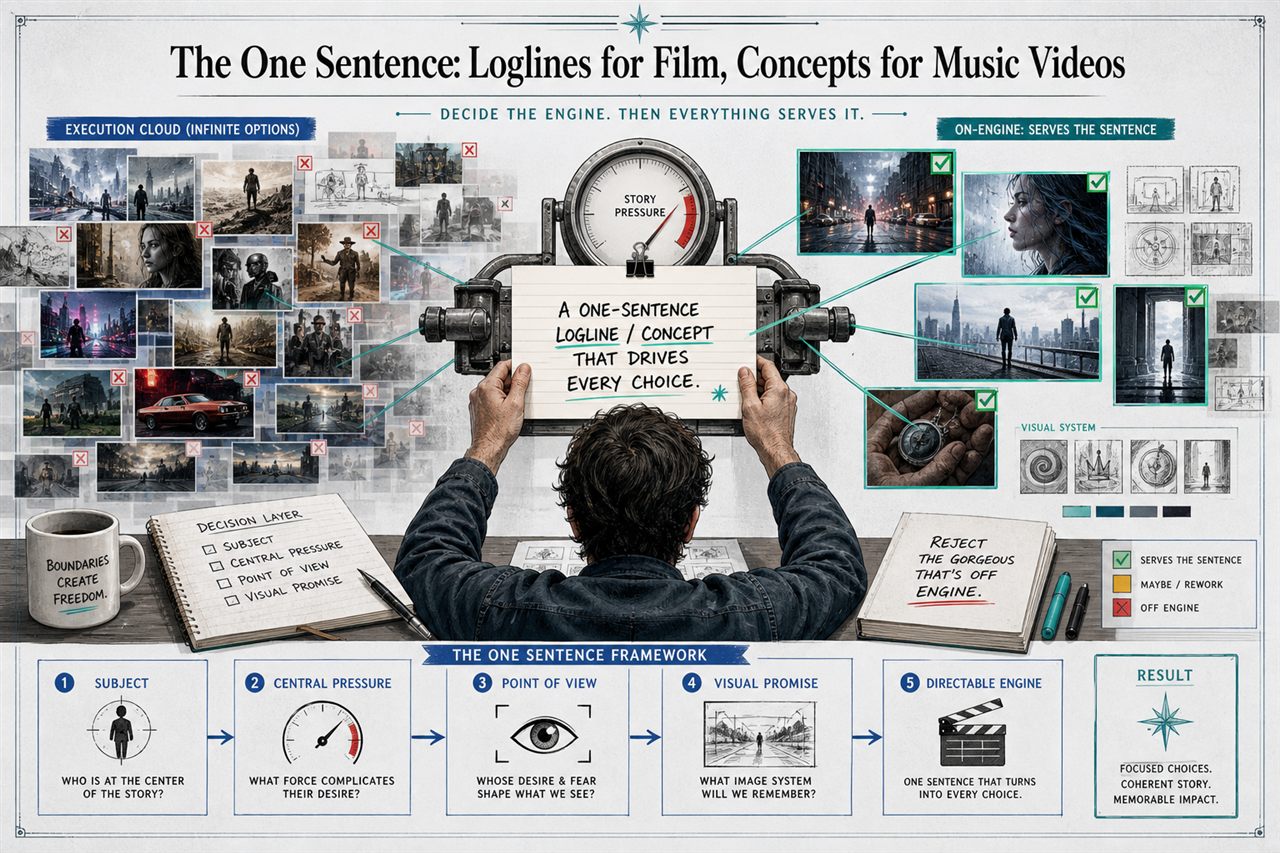
Decide one sentence before generating anything: it must name the subject, central pressure, point of view, and visual promise so every shot, cut, sound choice, performance note, and AI prompt serves the same engine. AI makes premises and images cheap, but not dramatic pressure or directable specificity; the human job is choosing what’s worth making and what doesn’t belong. For films, write a logline with a functional protagonist, filmable objective, obstacle system, clear stakes, and time pressure, with tone implied. For music videos, define the artist persona, one dominant world, and a repeatable hook that maps energy across the track.
Chapter 5. Emotional Arc: Structuring How a Film or Video Makes You Feel
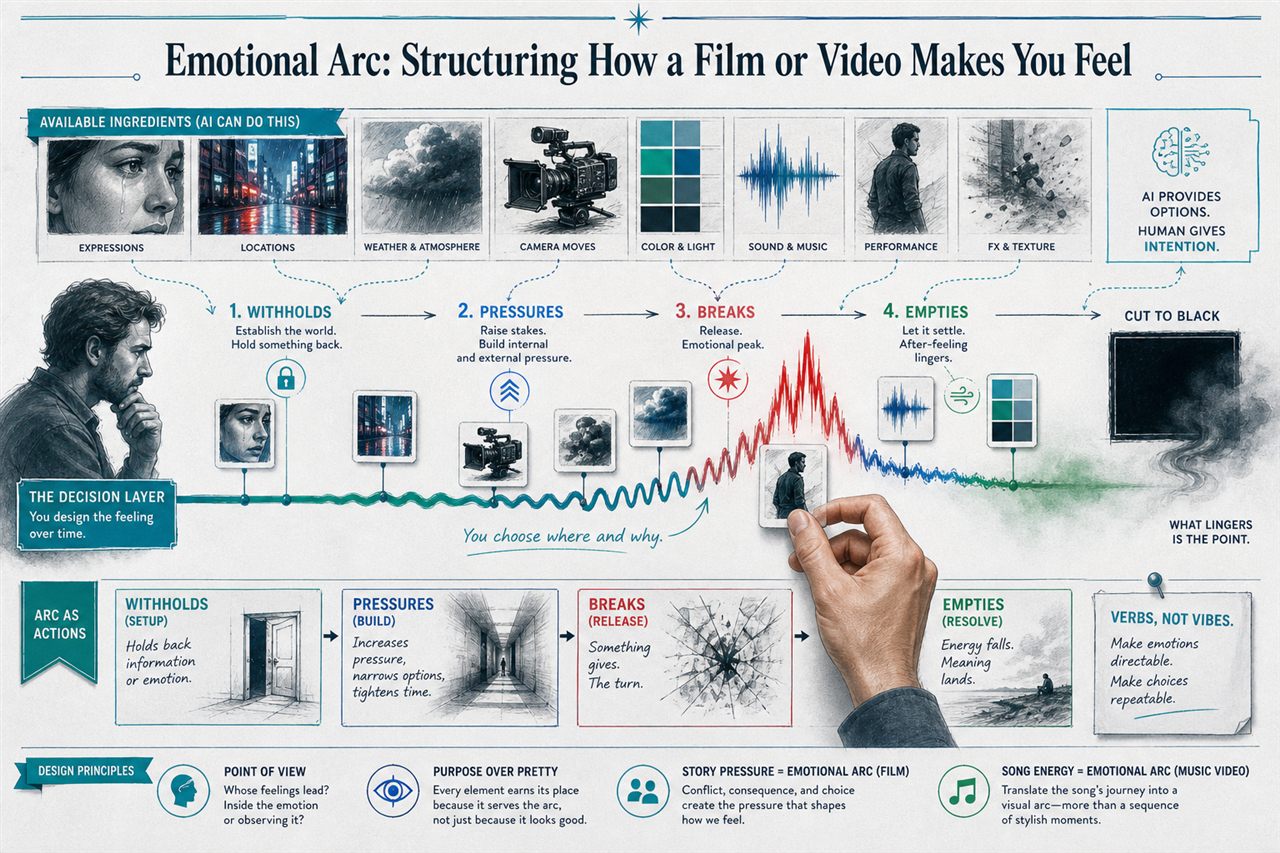
Decide the emotional progression before generating anything: where the viewer starts, what changes the feeling, where intensity peaks, and what emotional residue remains. AI can render faces, lighting, camera moves, palettes, and variations cheaply, but it can’t order feelings or choose what must arrive first. Write the arc as verbs, give each section a single emotional job, and control distance with shot size, lensing, movement, blocking, edit rhythm, sound, and color progression. Build peaks by converging multiple craft shifts, then end on the after-feeling, not a merely “cool” image.
Chapter 6. The Music-Video Concept: Turning a Song into a Visual Idea
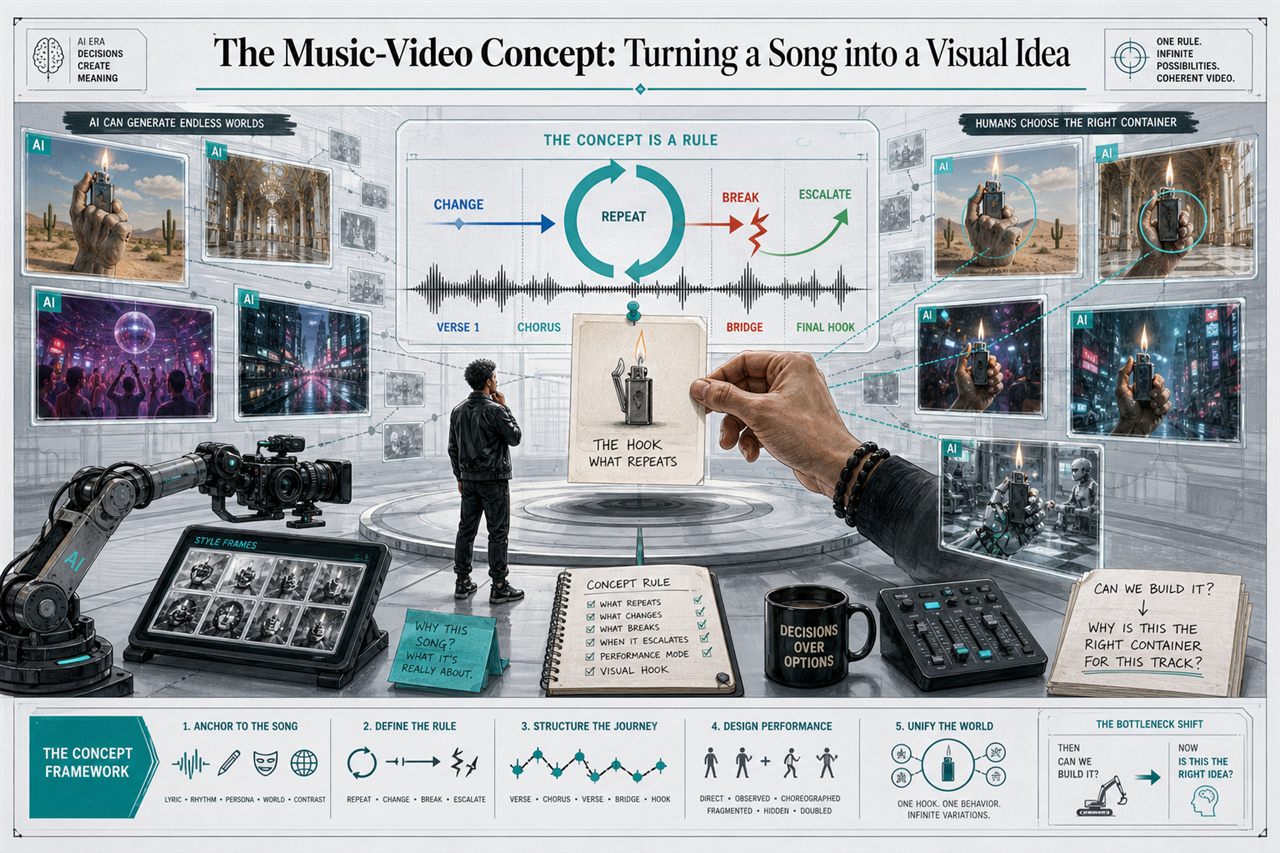
A music-video concept is a single visual rule that translates a song’s core force into repeatable on-screen behavior. AI can generate looks and coverage cheaply, but it can’t choose the right container, decide what should repeat, or shape escalation, so weak concepts read as expensive but disconnected images. Start by identifying what drives the track—lyric, rhythm, persona, world, or contrast—then state the idea as a rule in one sentence.