
Part 1. The Frame: Where Human Judgment Beats AI in Film and Music Video
From 'The Decision Layer: What Actually Matters to Make Movies and Music Videos in the AI Era' - an AI-authored book produced on Comuvia's BookWriter system. Each chapter below is shown as its Business Editorial poster with a one-paragraph synopsis.
Chapter 1. The Decision Layer: What AI Renders vs What the Filmmaker Decides
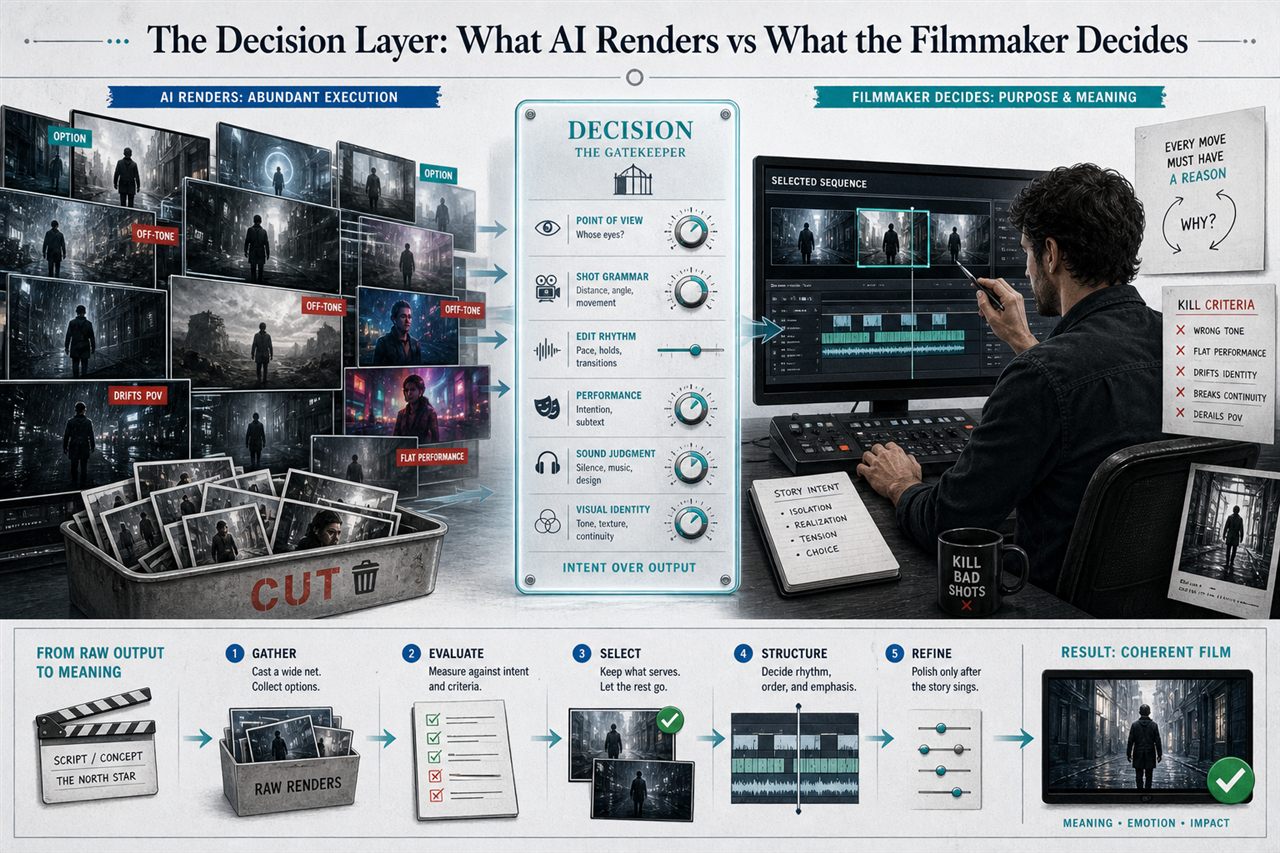
AI makes images, motion, voices, and stylistic variations cheap, but meaning still comes from human decisions: what the audience sees, when, why, and what gets cut. The real bottleneck shifts from generating shots to judging whether they belong in the story or song. Work purpose-first: state the core intention, translate it into shot grammar and motivated camera moves, set visual-identity rules, and define “kill criteria” for rejecting beautiful but harmful footage. Build sequences and usable coverage, then shape rhythm through timing, omission, silence, and contrast. Audit any piece with required shots, forbidden choices, and clear feeling-change goals.
Chapter 2. Signal vs Noise: What to Study and What to Skip in the AI Film Era
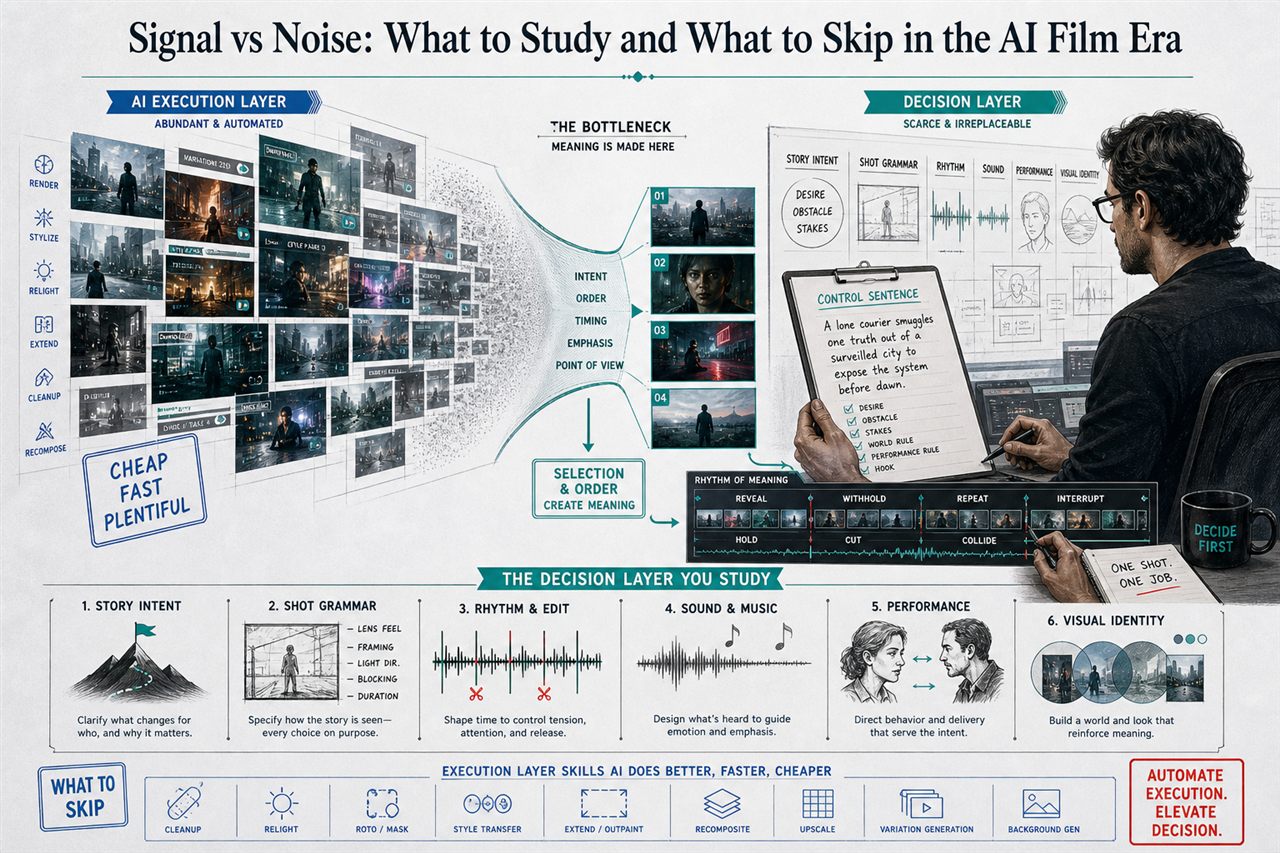
AI has made generating pixels cheap, but it hasn’t made judgment cheap, so the real advantage comes from mastering the decision layer: story pressure, edit rhythm, shot grammar, sound, performance, and a consistent visual identity. Treat AI as an execution engine that can generate endless options; your job is to choose intent, timing, emphasis, and point of view. Start with a control sentence, then replace vague prompts with specific shot language and give each shot one job. Cut sequences before polishing, name your cut types, and prioritize sound early. Avoid model-chasing, prompt-pack memorization, and over-polishing unproven shots.
Chapter 3. Taste Is the Bottleneck: Building Directorial Judgment for Screen
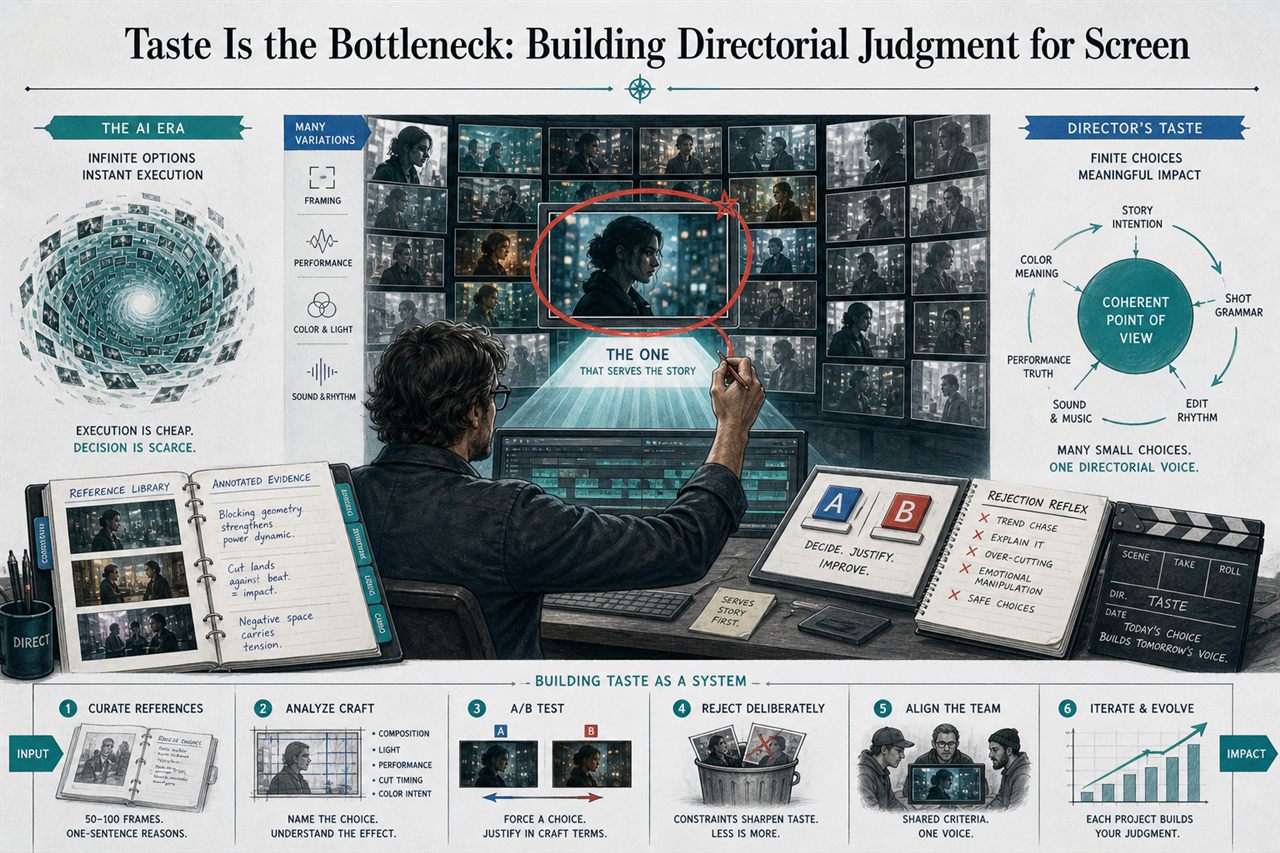
Taste is the hard-to-automate skill: choosing the right frame, cut, performance, and color when no rule dictates the answer. As AI makes endless variations cheap, the job shifts from making images to judging which option serves story, emotion, and point of view; without that, you’re just curating plausibilities. Train taste by building an annotated reference library, forcing A/B choices you can defend in craft terms, and using constraints to sharpen rejection. Study timing by mapping cuts, separate “impressive” from “effective,” and calibrate to enduring work, not the feed. Direct the same material in different genres to reveal intent-driven decisions.