Part 3. Groups, Institutions, and Applying the Framework
From 'The Social Decision Atlas' - an AI-authored book produced on Comuvia's BookWriter system. Each chapter below is shown as its Business Editorial poster with a one-paragraph synopsis.
Chapter 6. Groups, Coalitions, and Drift

Groups behave like systems with memory, incentives, roles, and feedback loops, so they can amplify status, suppress accurate information, and solidify temporary shortcuts into norms. Coalitions are internal alignment structures that can either improve contact with reality or quietly pre-decide outcomes by controlling agenda and making dissent costly. Drift is the gradual slide from stated purpose toward status protection or convenience without an explicit decision point, signaled when behavior no longer matches purpose.
Chapter 7. Decisions Under Social Pressure
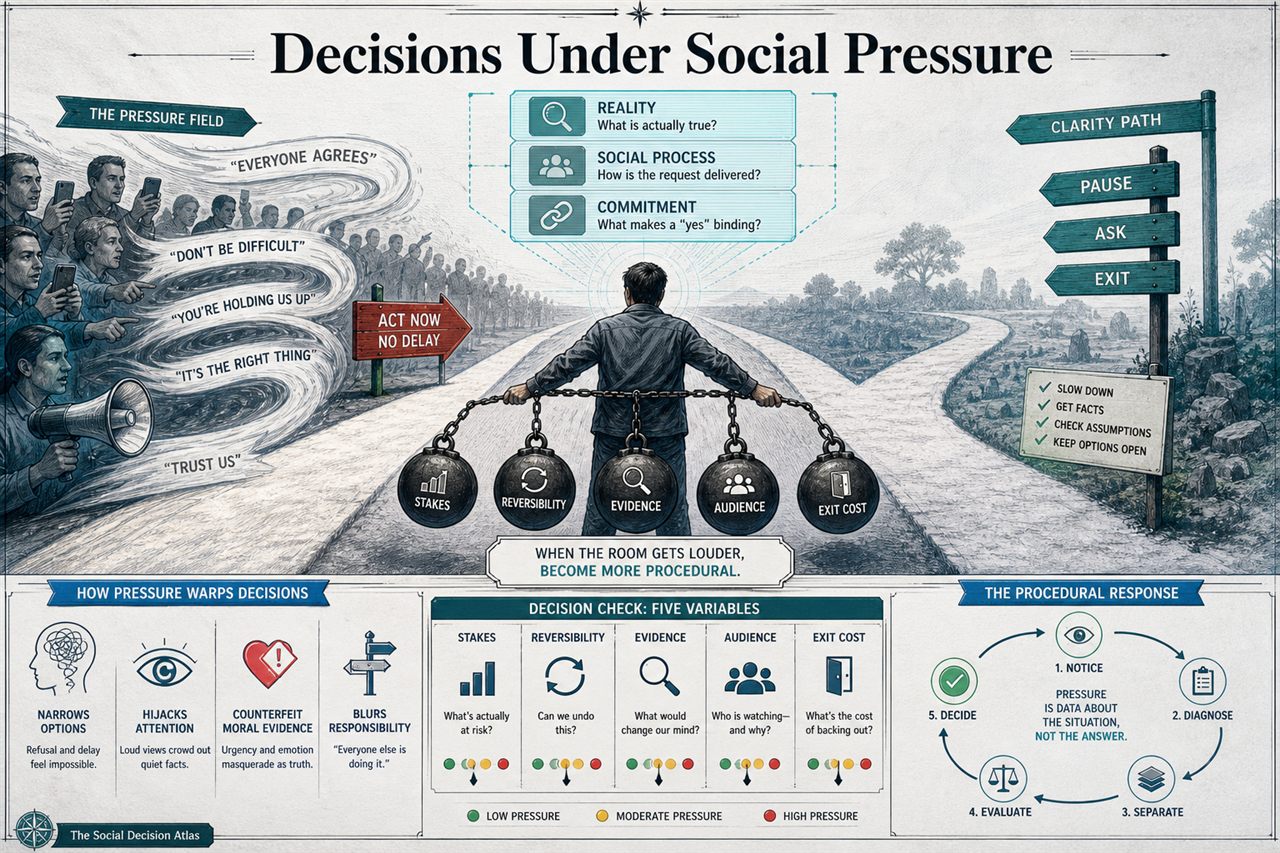
Social pressure reshapes decisions by distorting which options feel available, which evidence is noticed, and which consequences get discounted. Treat pressure as information about the environment, not proof the pressured choice is correct. Separate object-level reality, the social delivery process, and what becomes binding if you agree, stay silent, or endorse. Assess stakes, reversibility, evidence quality, audience effects, and exit costs; pressure should trigger procedure, not impulsivity. Distinguish real urgency imposed by external deadlines from manufactured urgency that benefits from reduced inspection. Recognize common pressure archetypes and respond with clarifying questions, criteria, added options, and channel shifts.
Chapter 8. Organizations as Decision Machines
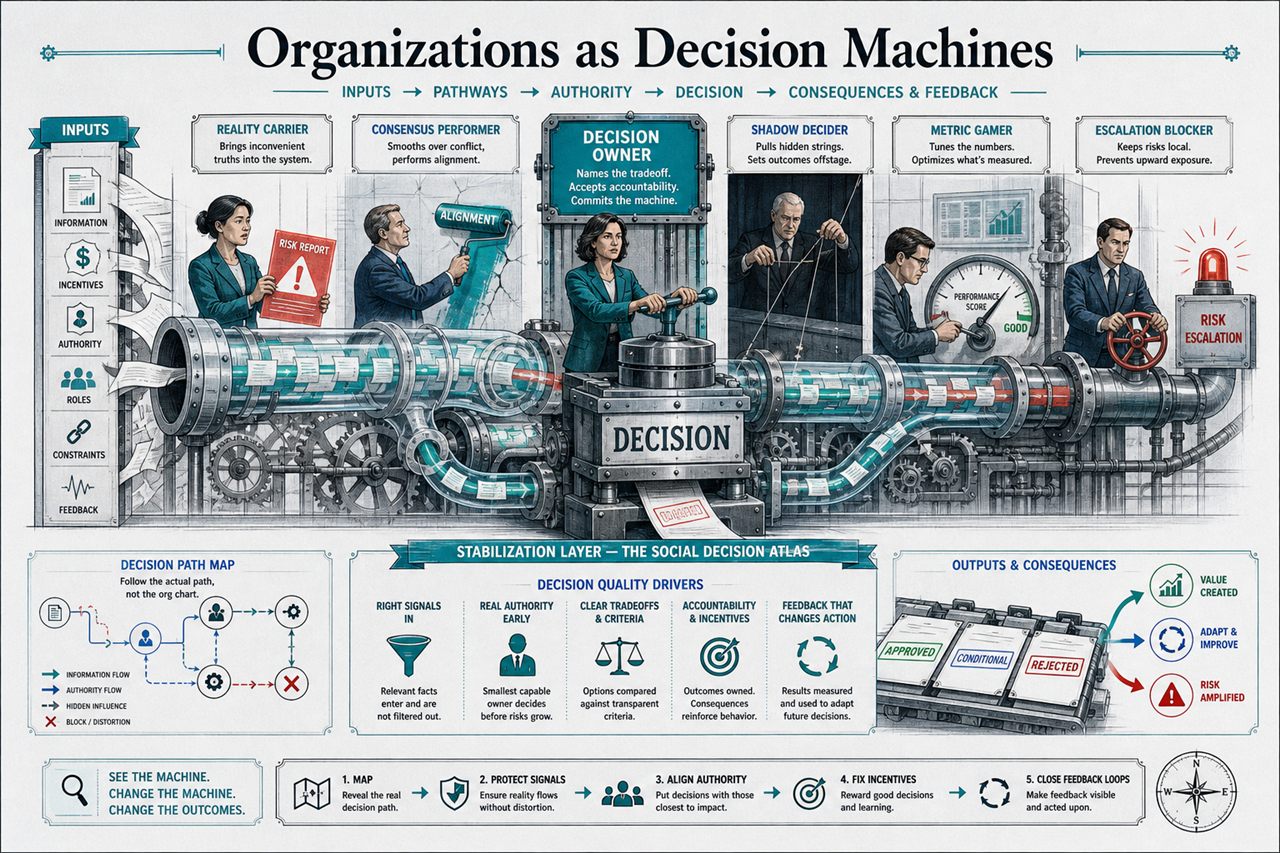
Organizations function as decision machines that transform information, incentives, authority, roles, constraints, and feedback into outcomes that affect people outside the room. The real culture is the decision path: what signals get in, who interprets them, who can decide, what rewards shape behavior, and whether feedback changes future action. Common roles include the decision owner, shadow decider, reality carrier, consensus performer, metric gamer, escalation blocker, and ceremonial reviewer. A practical diagnostic is tracing reality to authority: ensure signals enter, reach decision rights, force explicit tradeoffs, and verify feedback loops. Watch for filtered bad news, split authority/accountability, incentive contradictions, and empty reviews.
Chapter 9. Influence for Common-Good Outcomes
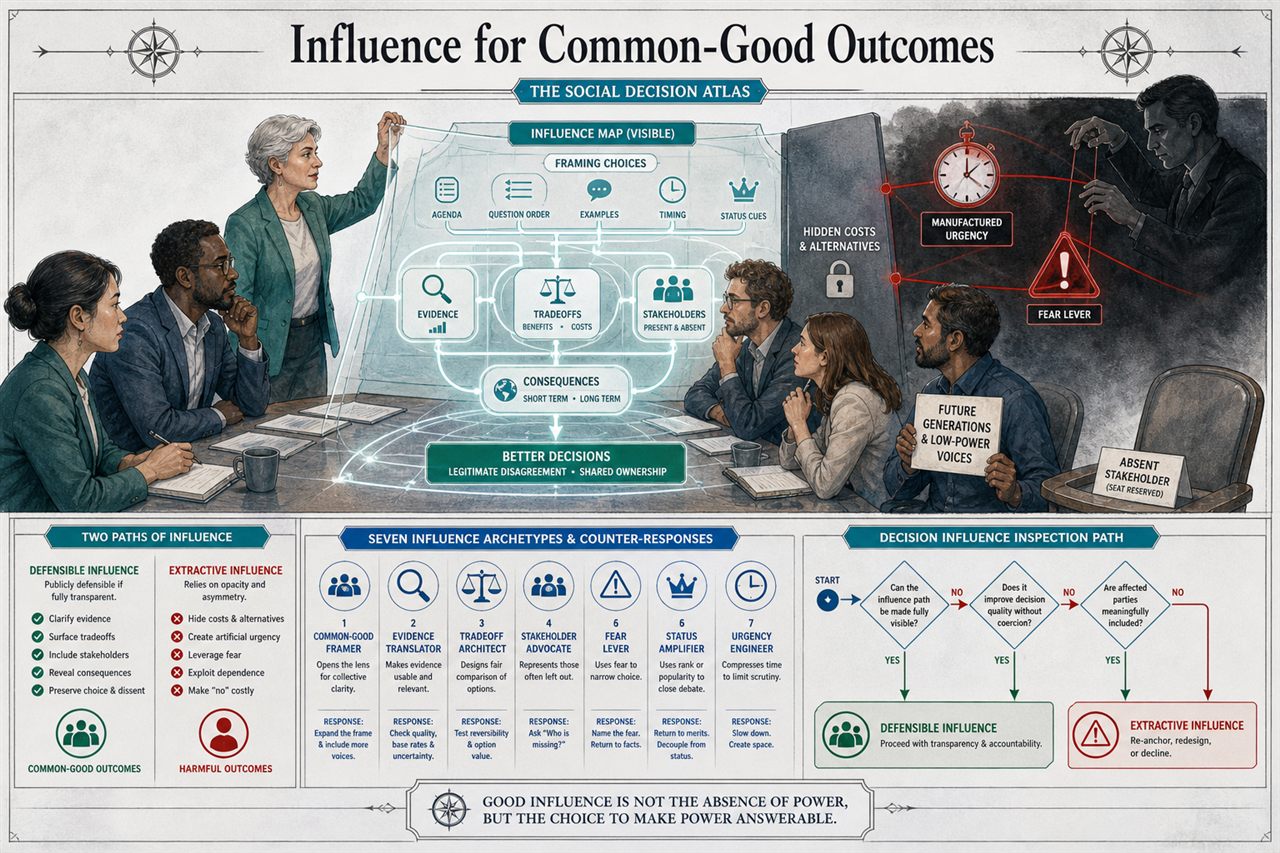
Influence for common-good outcomes means trying to shift others’ attention, interpretation, priorities, or behavior in ways that would still look defensible if the method were fully visible. Since influence is unavoidable, the key distinction is defensible versus extractive influence: clarify evidence, tradeoffs, stakeholders, and consequences while preserving the right to disagree. Recognize common influencer archetypes and respond by demanding assumptions, restoring options, and grounding claims in evidence. Use an inspectable test: explicit ask, disclosed stake, visible costs and affected parties, and safe dissent.
Chapter 10. Applying the Framework: From General Reading to Specific Situations
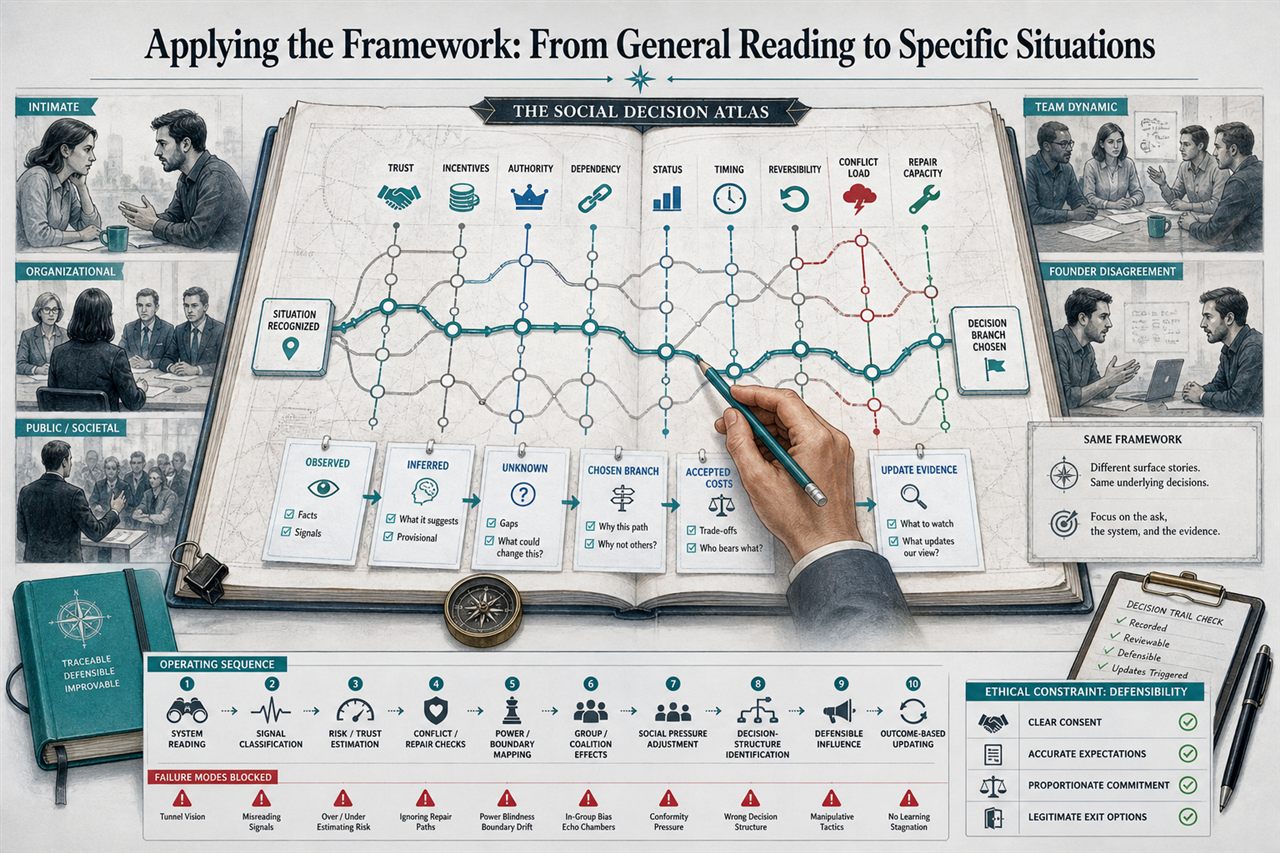
Apply the framework by turning messy social data into a traceable decision record: what you observed, inferred, didn’t know, chose, and later updated. Most situations share recurring variables— incentives, trust, authority, dependency, status, timing, reversibility, conflict load, and repair capacity—so use a disciplined sequence to reduce bias and premature coherence. Watch for common failure modes such as overgeneralizing, relying on a single cue, locking a frame, amplifying urgency, deflecting accountability, testing status, or fixing too fast. Move from broad environment reading to a specific decision point, starting with system context, then classifying signals across verbal, nonverbal, contextual, and temporal evidence.