
Part 2. Trust, Conflict, and Boundaries
From 'The Social Decision Atlas' - an AI-authored book produced on Comuvia's BookWriter system. Each chapter below is shown as its Business Editorial poster with a one-paragraph synopsis.
Chapter 3. Trust, Risk, and Verification
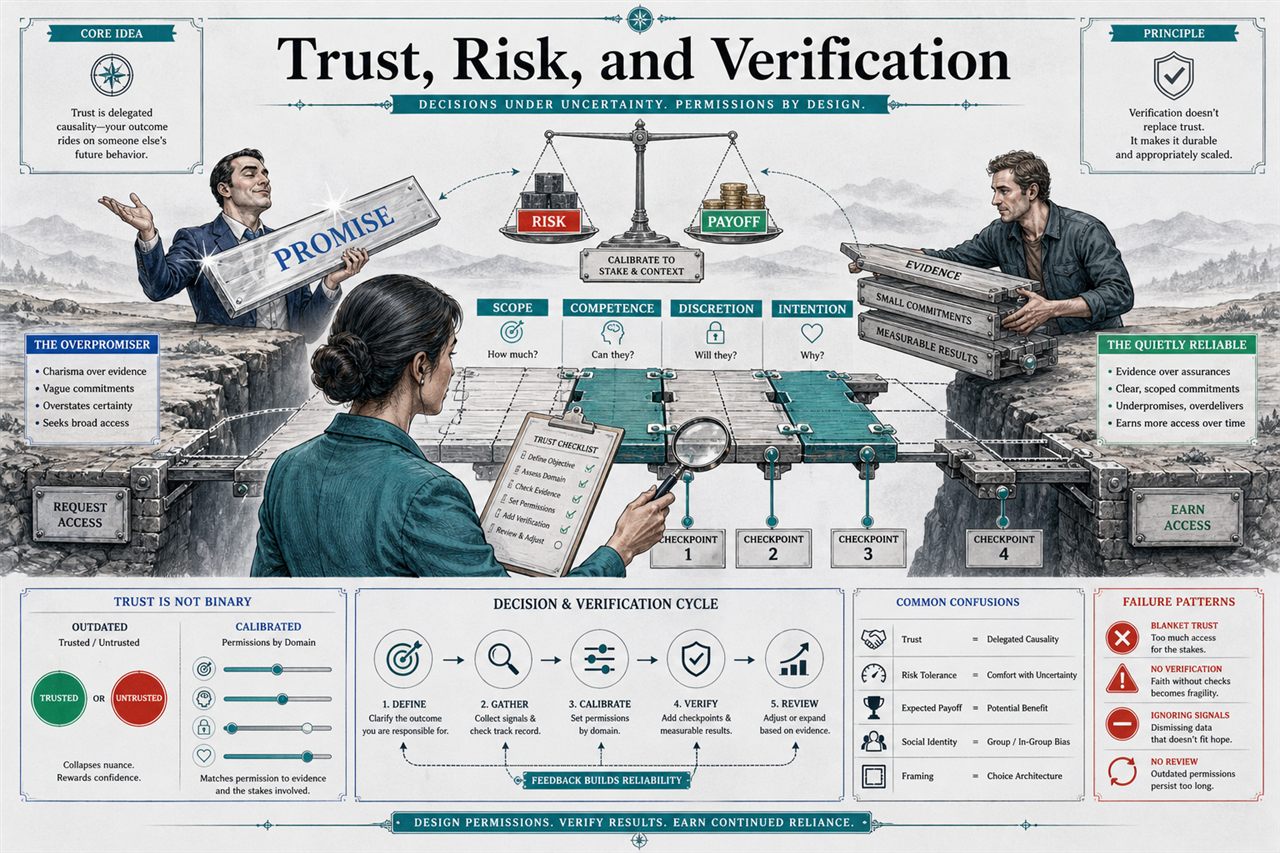
Trust is a decision under uncertainty, not a fixed trait or a binary moral label. The workable move is calibrated trust: separate the person from the permission, match reliance to a specific domain, and pair trust with verification so it can endure. Before granting reliance, define what they can affect, failure modes, evidence that reduces uncertainty, and safeguards that limit damage. Recognize common patterns like overpromisers, access-seekers, deflectors, and status-testers, and respond by forcing specifics, slowing escalation, and returning to evidence. Track trust by domains such as competence, reliability, discretion, and repair, with explicit update rules.
Chapter 4. Conflict and Repair
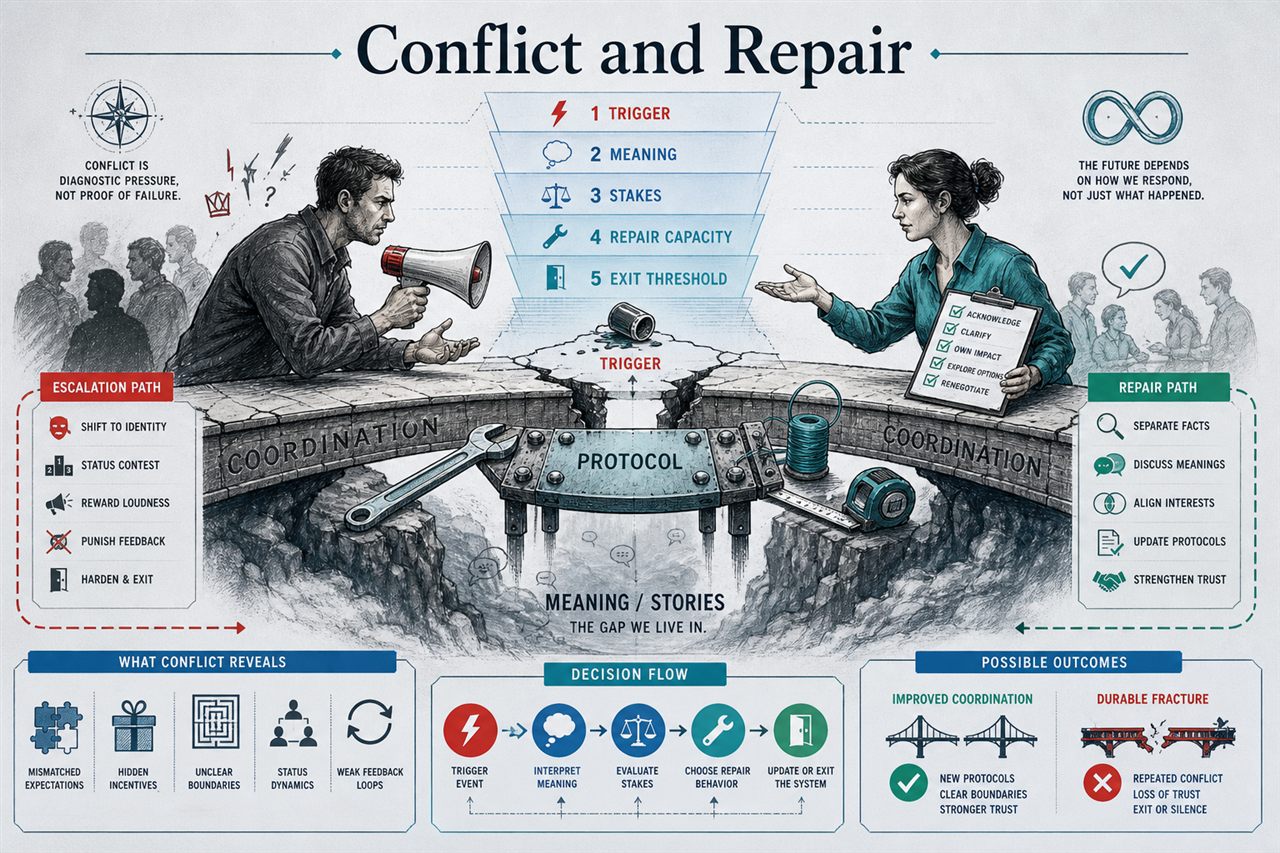
Conflict signals a damaged coordination link and forces a choice: clarify, correct, apologize, renegotiate, escalate, or exit. Treat it as a stress test that reveals mismatched expectations, incentives, boundaries, status anxiety, weak feedback loops, or bad faith; silence can mean avoidance, not alignment. Analyze five layers: trigger, meaning, stakes, repair capacity, and exit threshold. Don’t litigate narratives; diagnose what happened, inferences, impact, causes, and prevention, and demand evidence that repair is real. Unstack disputes, then bridge event to impact to changed behavior via ownership, correction, verification, and updates. Recognize archetypes and respond by narrowing scope and separating intent from effect.
Chapter 5. Status, Power, and Boundaries
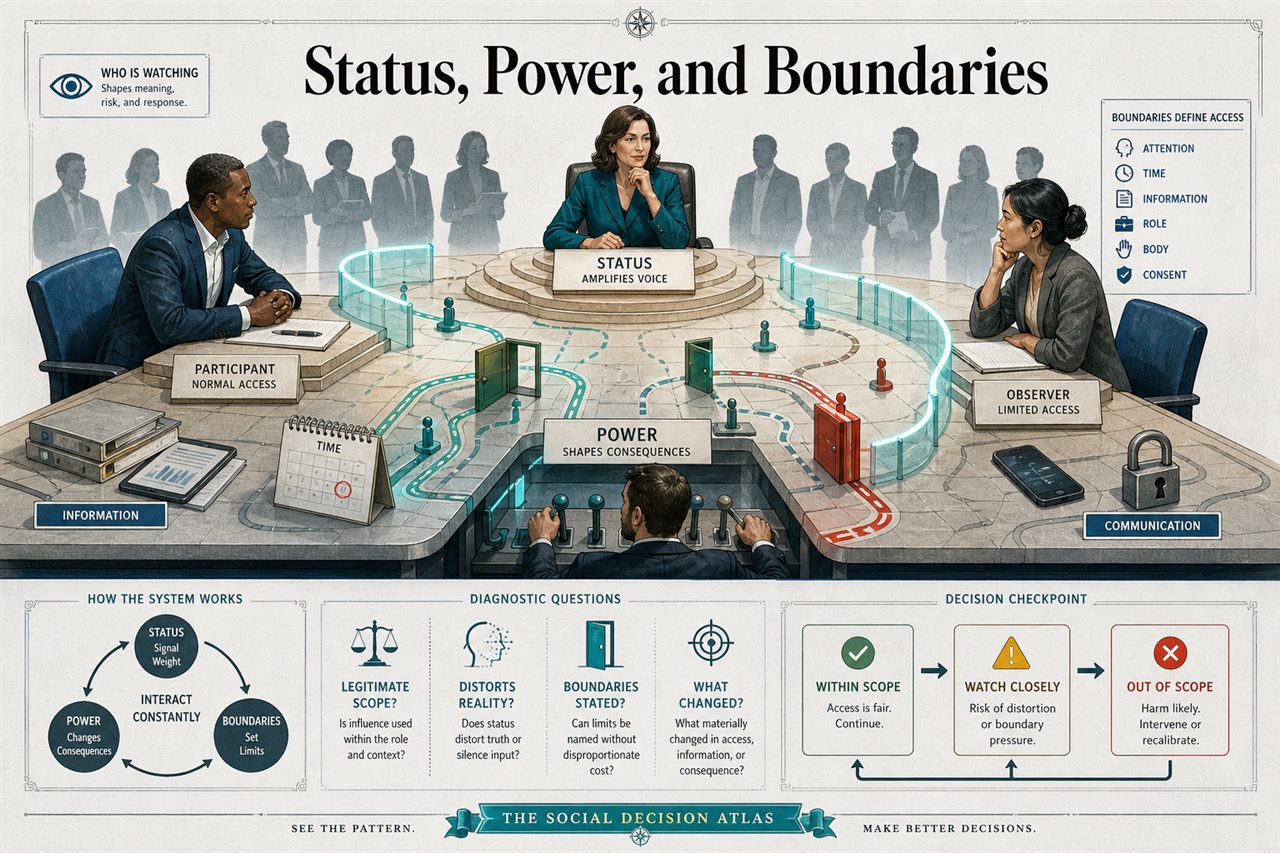
Status is the perceived standing that shapes whose claims get attention and treated as legitimate, while power is the capacity to change others’ options and consequences, often quietly through control of budgets, access, schedules, or approval. Boundaries are limits on access to time, information, role, attention, body, money, reputation, or decision rights, and they only work when paired with an enforcement path. The practical task is operational, not moralistic: notice what changed in access, cost, choice, information flow, or consequence. Make boundaries legible by specifying domain, limit, available alternative, and proportional consequence, reducing ambiguity that drives high-stakes misunderstandings.