
Part 6. Family, Duty, and Social Pressure
From 'Behavioral Realism in Drama and Romance Cinema' - an AI-authored book produced on Comuvia's BookWriter system. Each chapter below is shown as its Business Editorial poster with a one-paragraph synopsis.
Chapter 31. Pride and Prejudice (2005) — misjudgment, status and reputation, corrected first impressions
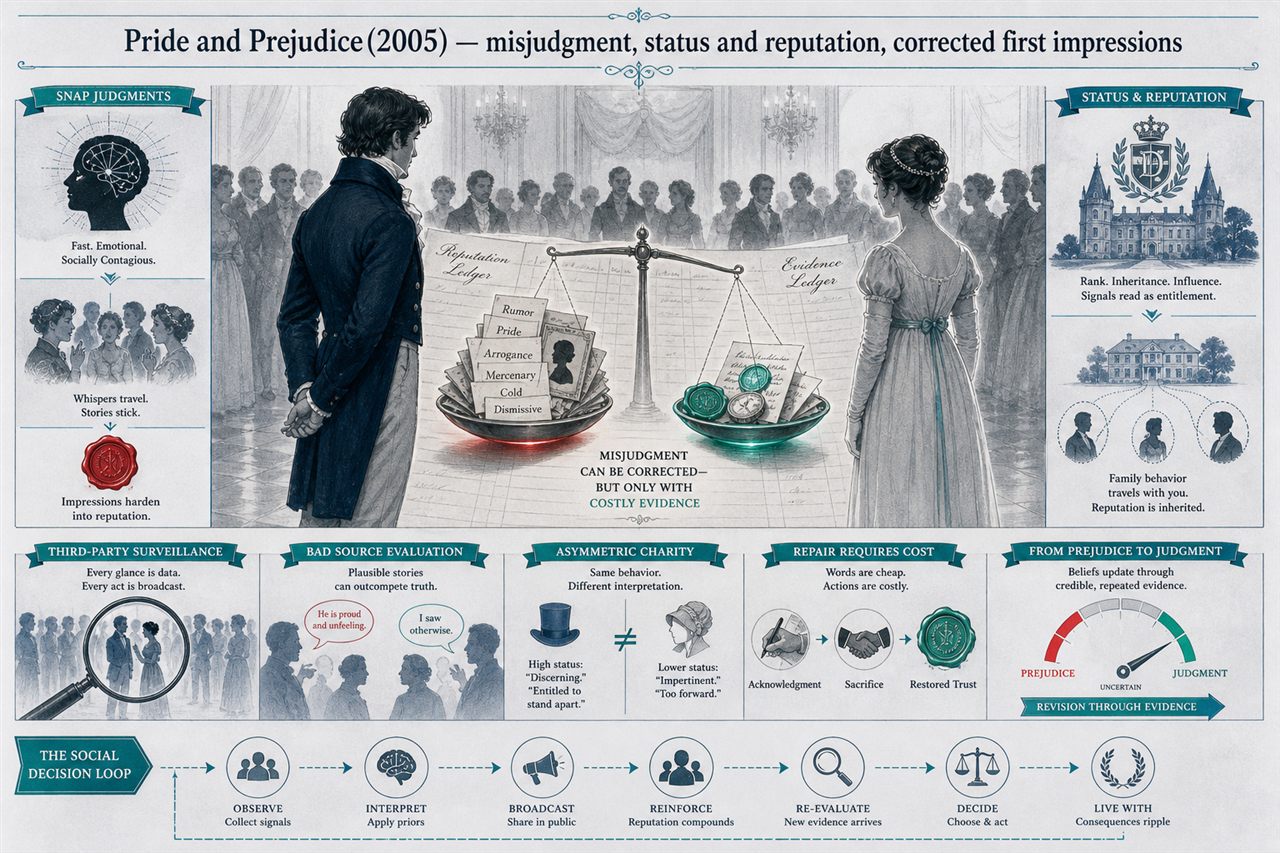
Corrected misjudgment drives the romance: status and reputation distort what Elizabeth and Darcy think they know, until repeated, costly evidence forces revision. A public insult anchors Elizabeth’s negative model of Darcy and makes her overconfidently receptive to Wickham’s fluent, self-serving narrative, showing how “hurt becomes evidence” when source-checking is weak. Private feeling is constantly constrained by a reputation market shaped by family hierarchy, inheritance, and surveillance, affecting Jane and Bingley, Charlotte’s practical match, Lydia’s scandal, and Lady Catherine’s pressure. Trust repair lands best when behavioral change precedes declarations, though belief revision is sometimes unrealistically fast.
Chapter 32. Sense and Sensibility (1995) — attachment styles contrasted, security vs. intensity
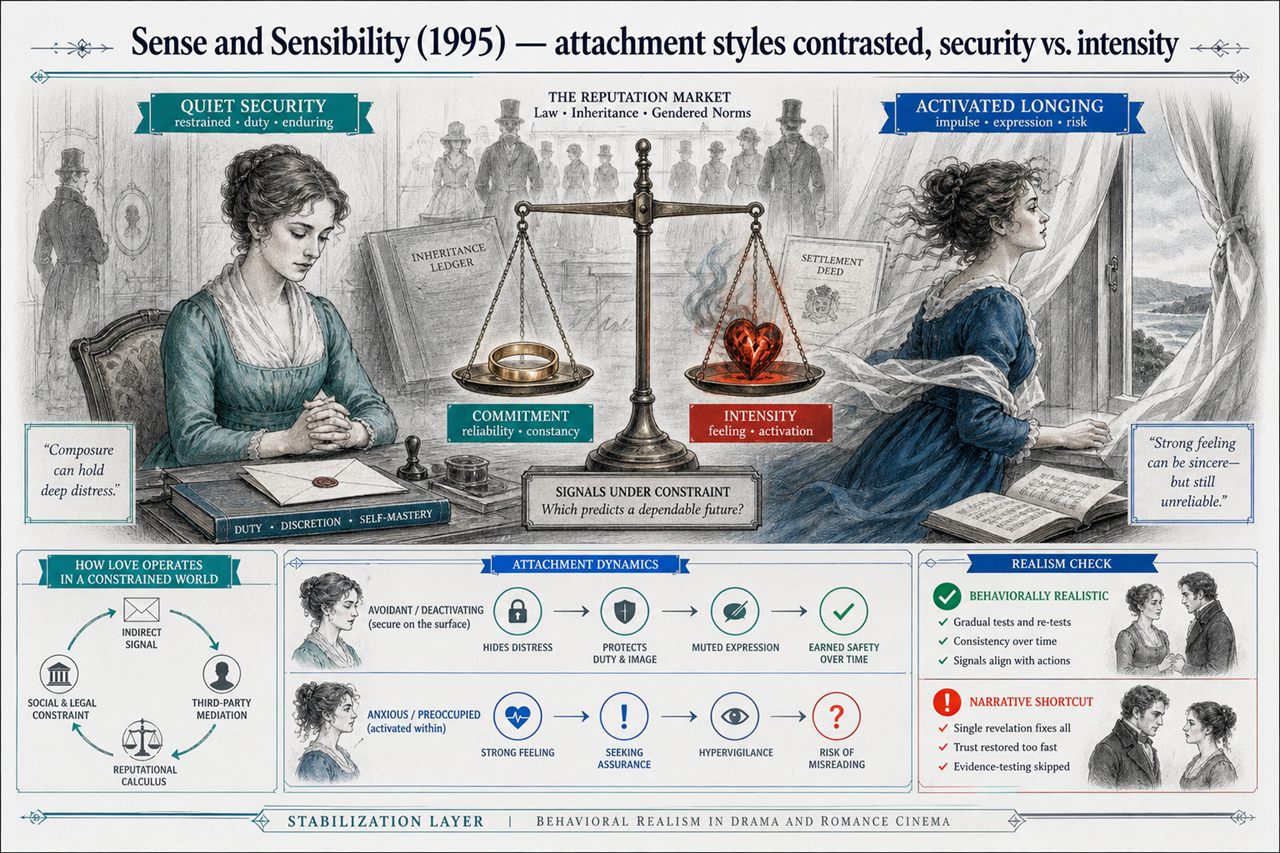
Elinor and Marianne Dashwood illustrate how attachment security can look calm while intensity can feel true yet be unreliable. Under inheritance rules and reputation pressure, courtship becomes indirect: strategic silence, third-party signals, and delayed disclosure replace open confession. Marianne reads Willoughby’s mirroring and dramatic attention as commitment, but his incentives and secrecy show that display isn’t devotion. Elinor’s low-display suffering shows that muted affect can hide deep distress, though restraint isn’t always the same as secure attachment. Colonel Brandon models dependable care that’s less exciting but more trustworthy.