
Part 4. Stage vs Digital Identity
From 'Visual Identity in Modern Music' - an AI-authored book produced on Comuvia's BookWriter system. Each chapter below is shown as its Comuvia Classification poster with a one-paragraph synopsis.
Chapter 18. Performance-Optimized Design
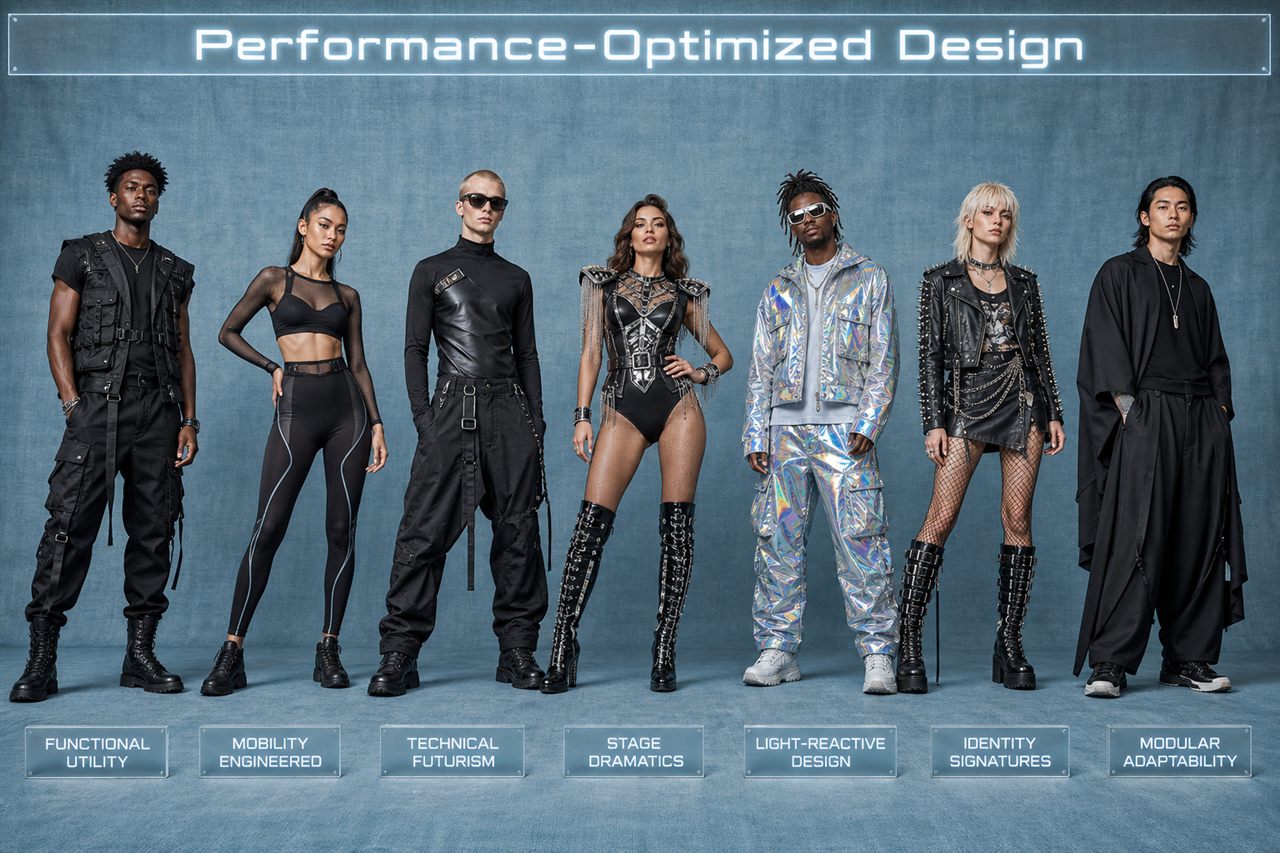
Stage visuals must function under motion, distance, sweat, lighting, and constant filming, not just in still images. Prioritize legibility across front row to livestream: silhouette and contrast beat fine details, and strong visual anchors create instant recognition; test with silhouette and blur checks. Use silhouette as a genre- and archetype-aligned language so the body itself becomes branding. Design for real movement and physical needs—breathability, flexibility, secure closures, reinforced seams, instrument and mic compatibility—so the look stays effortless. Treat color as unstable under lights, using repeatable palettes as a system. Costume changes should follow coherent era logic, not random variety.
Chapter 19. Social Media Identity Compression
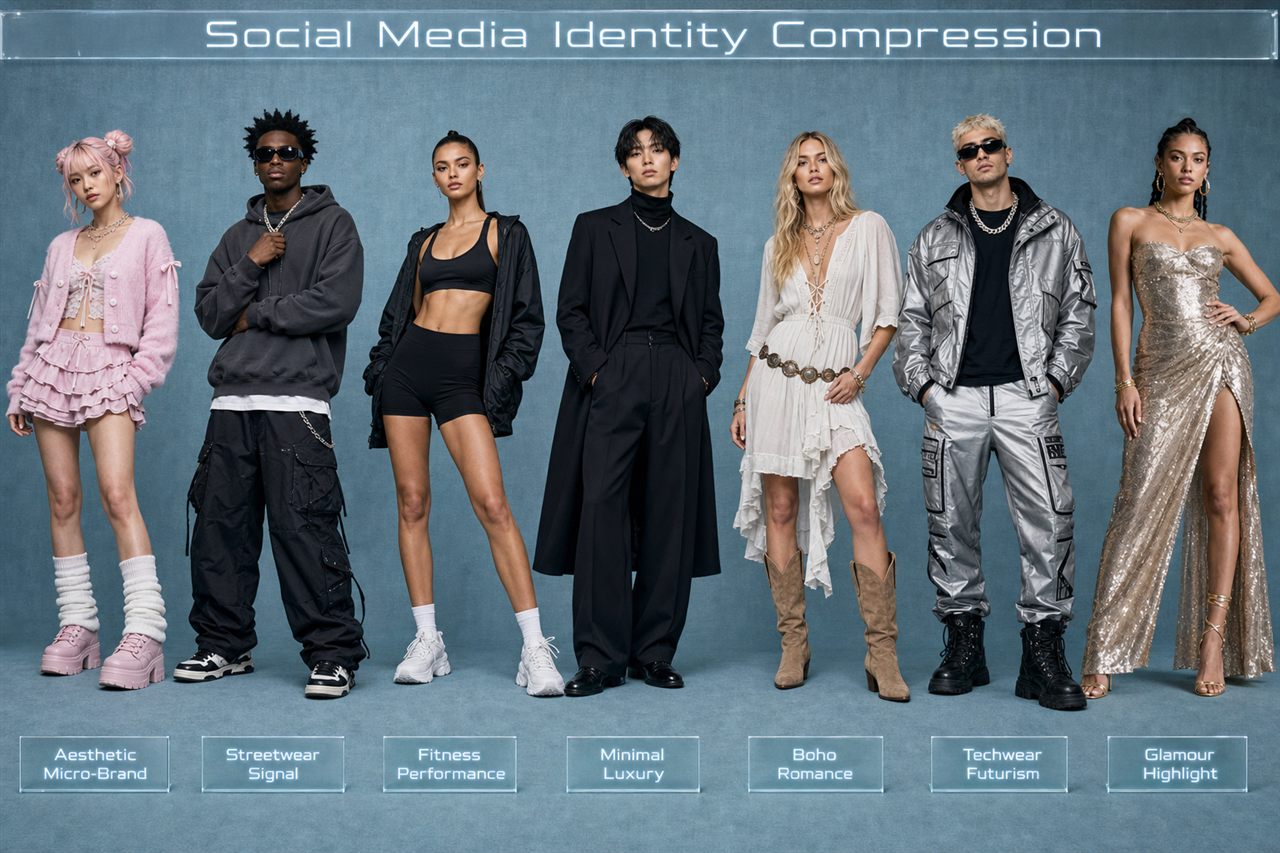
Modern artist identity now has to land in tiny, fast, fragmented formats: thumbnails, profile icons, vertical crops, three-second clips, and reposts stripped of context. This “identity compression” forces a full album world to collapse into one instantly readable signal, more like logo design than traditional styling. Strong identities survive scale (silhouette and key accessories), time (repeatable movement codes and gestures), context loss (still recognizable in blurry fan clips or memes), and emotional compression (the feeling arrives before the explanation). A practical test is whether the profile picture still carries an unmistakable anchor such as hair, color, posture, symbol, texture, environment, or atmosphere—distinctive rather than merely attractive. Treat the social feed as a contact sheet: across posts, consistency in tone, polish, vulnerability, and status cues should align with the intended persona.
Chapter 20. Viral Visual Loops
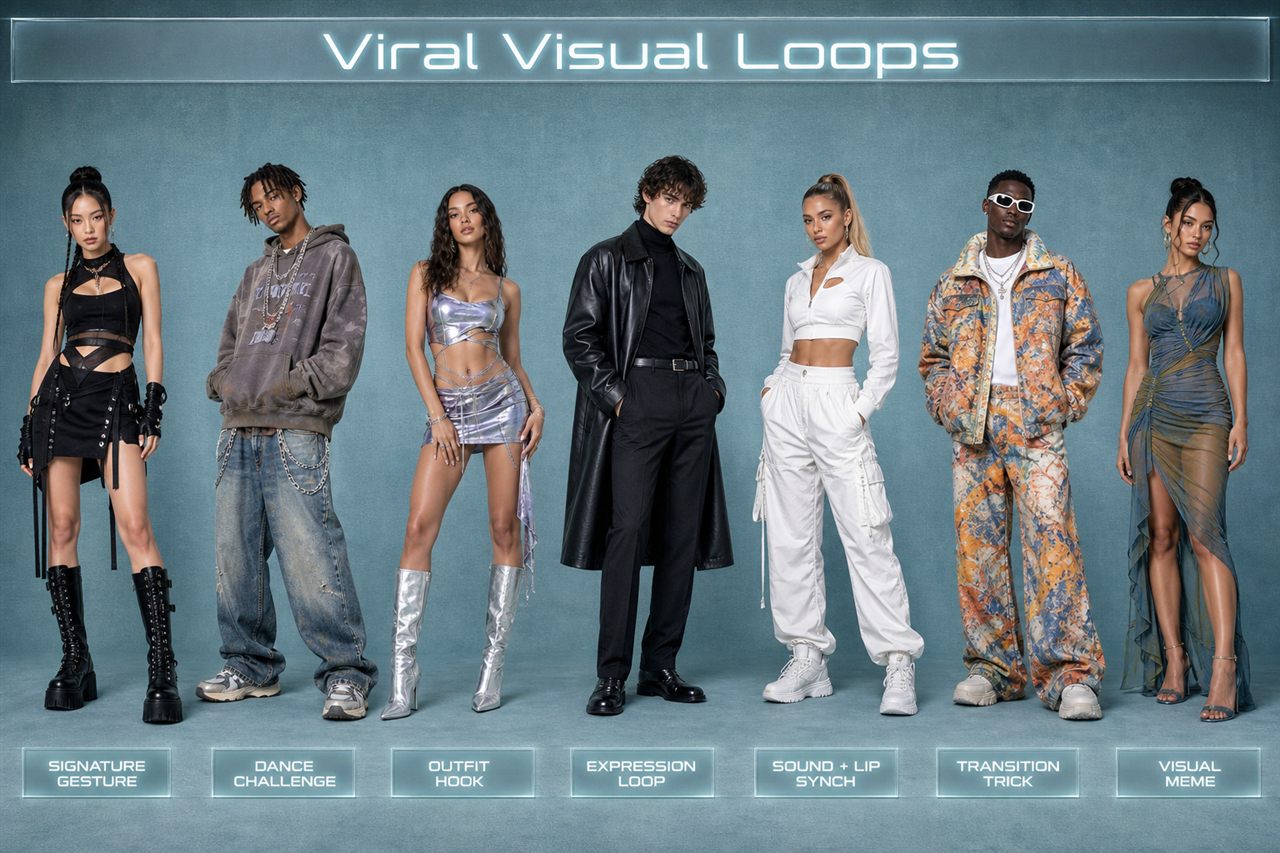
A viral visual loop is a repeatable, instantly recognizable unit that fuses a song moment with a specific look and action, designed for replay, copying, and remixing. Unlike traditional music videos built for spectators, loops function as templates for participation, forcing an artist’s identity to remain intact across millions of fan-made imitations. The shift is from image recognition to behavioral recognition: people remember what the image does and borrow it to express themselves. Strong loops combine a clear sonic trigger, a phone-readable visual hook that can be named, and a simple, satisfying action that feels inevitable on the beat.